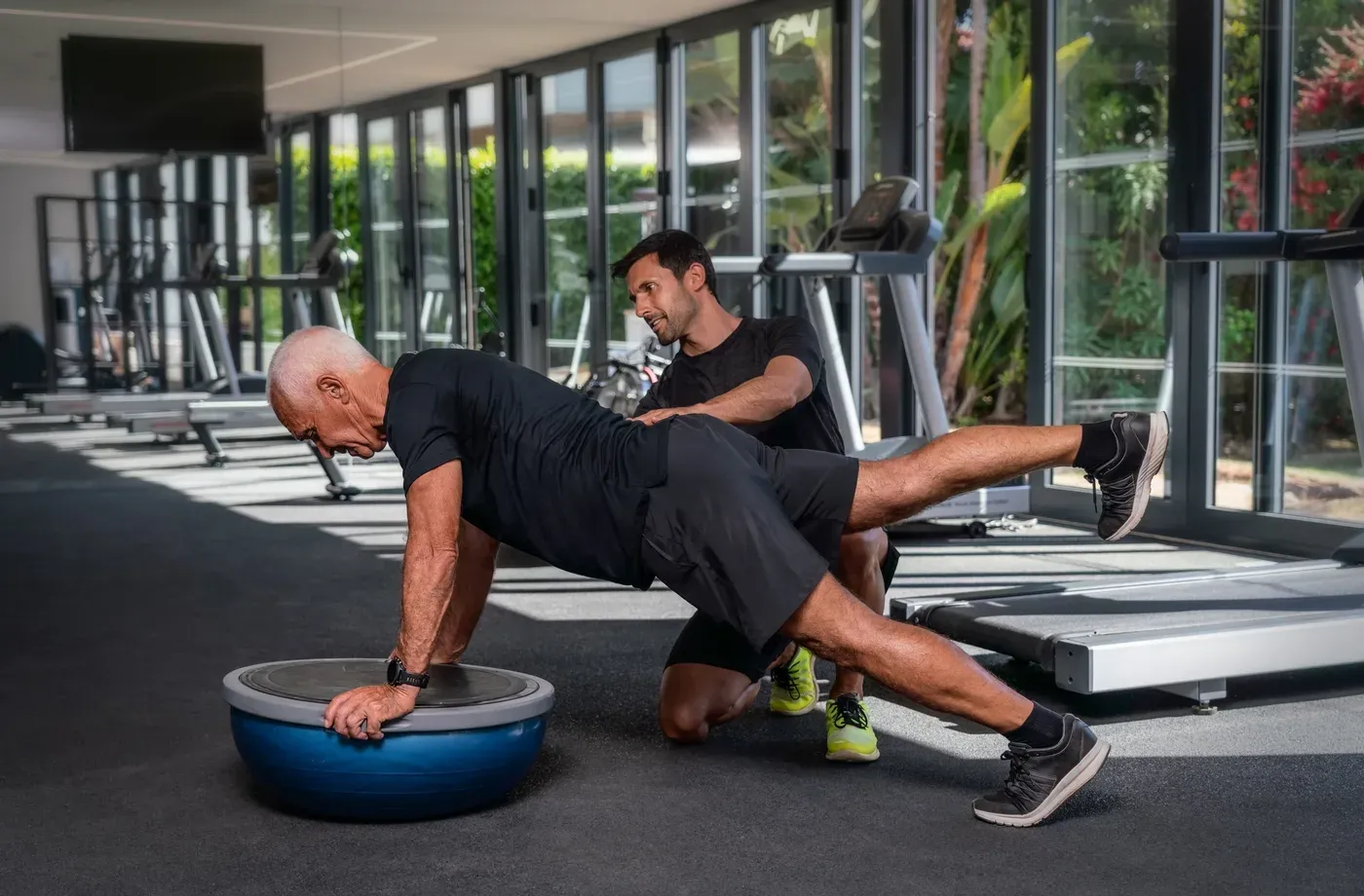
A personal trainer is worth it for a man over 35 when the thing holding him back is a plan, follow-through or technique, not information. If you’ve started and stopped three times, don’t know how heavy to lift, or are working around a sore back, a good trainer usually pays for themselves in months not wasted. If you already train consistently and progress on your own, you’re mostly paying for company, and a written program will do.
Who gets the most out of a personal trainer
The return is highest for men in one of these situations:
- You keep restarting. Most men who quit don’t lack knowledge. They lack a fixed appointment and someone who notices when they skip it. Accountability is the main thing a trainer sells, and it’s the hardest to buy any other way.
- You’re new to lifting, or back after years off. The first 8 to 12 weeks set your technique and starting weights. Getting the squat, hinge and press right early is cheaper than fixing a tweaked back later.
- You train around an old injury. A trainer can’t treat a bad knee, but they can choose variations that let you keep training while a physiotherapist handles the injury.
- You’ve plateaued. If your weights haven’t moved in months, the fix is usually programming: progression, volume or recovery. That’s the trainer’s actual craft.
Research backs the supervision part. In a 12-week study of moderately trained men, the group training under direct supervision chose heavier loads and gained more squat and bench-press strength than men following the same program alone (Mazzetti et al., 2000). The difference came from effort and load selection, not secret exercises.
When a trainer isn’t worth the money
Be honest about these, because no trainer will raise them for you:
- You already train three times a week and progress. You don’t need someone counting reps. A program review every month or two is enough.
- Your problem is food, and the trainer doesn’t coach it. If fat loss is the goal and your trainer only runs the hour in the gym, you’re paying for the smaller lever. Ask before you buy what happens with your eating between sessions.
- You can only afford one session a month. One supervised hour a month changes very little. Put that money into a good written program and train on your own.
The middle ground is a DIY program for the training, plus coaching only for what you can’t do alone.
What a personal trainer costs, and what that buys
In Toronto, one 60-minute session costs about $45 to $180 before HST, depending on where you train. The full breakdown is in the Toronto personal trainer cost guide. The useful number is monthly, because results take months:
| How you train | Typical monthly cost (Toronto, before HST) | What you get |
|---|---|---|
| 1 session a week at an independent trainer | about $350–$560 | 4 supervised hours, often nothing between sessions |
| 2 sessions a week | about $690–$1,130 | 8–9 supervised hours |
| Online or hybrid coaching | about $100–$500 | A written plan, nutrition targets, weekly check-ins, messaging |
| A written DIY program | $30–$150 once | The plan only, no feedback |
Price per hour is a poor guide to value. Two trainers at $100 a session can deliver very different things: one gives you an hour of counted reps, the other an hour plus a plan for the rest of your week and someone checking it.
How to tell in the first month whether it’s working
You don’t have to commit for a year to find out. Give it four weeks and check:
- Do you have a written plan for the days you train alone? If the only training that happens is in sessions, your progress depends on your trainer’s calendar.
- Are your weights going up on a schedule? Track the main lifts. A good program adds load or reps most weeks at the start.
- Has anyone asked about your sleep, steps and eating? Men over 35 lose more progress to bad sleep and weekend eating than to the wrong exercise choice.
- Do you show up more often than you did before? If attendance hasn’t changed, the accountability isn’t working, and that was most of what you were paying for.
If the answer to most of these is no after a month, switch trainers or switch to a program.
The bottom line
A personal trainer is worth it when you’d otherwise lose months to inconsistency, poor technique or guesswork. That describes most men starting over after 35. It isn’t worth it as a long-term habit if you’ve already learned to train and only need a plan. Many men do best with a short, intensive stretch of coaching that covers training, food and weekly check-ins, followed by a cheaper maintenance setup. Picking the right person matters as much as the decision to hire one, so read how to choose a personal trainer before you sign a package.
Questions people also ask
Is a personal trainer worth it for a beginner?
Usually yes, for the first 8 to 12 weeks. A beginner gains the most from someone teaching the main lifts, setting starting weights and building the habit. After that, many men can continue on a written program with occasional check-ins.
Is a personal trainer worth it for weight loss?
Training alone rarely drives weight loss; eating does. A trainer is worth it for weight loss only if they also coach your nutrition and check your progress weekly. A trainer who only runs workouts won't move the scale much.
Is one session a week with a trainer enough?
One session a week works if you train once or twice more on your own from a written plan. One supervised hour with nothing in between is too little volume for most strength or fat-loss goals.
When is a personal trainer not worth it?
When you already train consistently, know the lifts, and progress on your own. Then a written program, or a coach who reviews your log monthly, gives you most of the value for far less money.