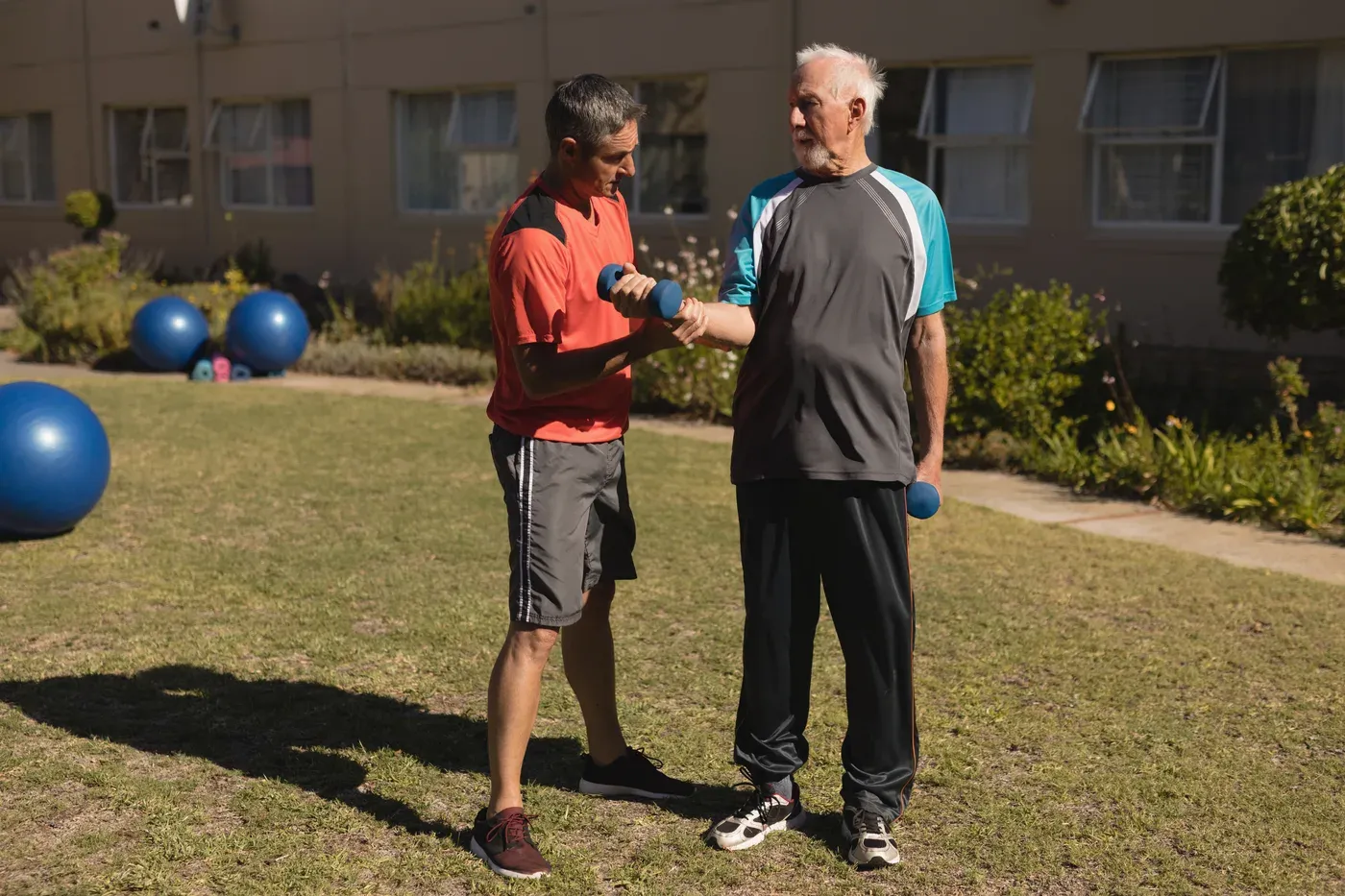
A fitness app is enough if you already know how to lift, train consistently on your own and mainly need a structured plan. A personal trainer is worth the extra money if you need someone to correct your technique, adjust the plan to your body and schedule, or notice when you stop showing up. Apps are good at plans and logging. Trainers are good at judgment and accountability. Many men end up using both.
What each one actually gives you
| Fitness app | Personal trainer or coach | |
|---|---|---|
| Cost | Low monthly subscription, sometimes free | Hundreds of dollars a month in Toronto |
| Structured program | Yes, often good | Yes, written for you |
| Adjusts to your progress | Some apps, based on what you log | Yes, based on your log and what they see |
| Watches your technique | No | Yes, live or by video |
| Works around injuries | Generic swaps at best | Specific changes, ideally coordinated with your physio |
| Notices when you skip | A push notification | A person who asks why |
| Nutrition | Often a separate app or upsell | Depends on the coach; good ones include it |
| Schedule flexibility | Total | Fixed appointments, or flexible if online |
Where apps beat trainers
Apps have real strengths, and it’s worth being honest about them:
- Cost. A year of a good app costs less than a single month of sessions.
- Flexibility. Train at 5 a.m. or 10 p.m., at home, in a hotel or in the condo gym, without booking anything.
- Logging. Most apps track your weights and reps automatically and show your history, which plenty of men with trainers never do.
- Structure for experienced lifters. If you know what a good squat feels like and just need a sensible progression, a well-built app program does the job.
If that describes you, keep your money. The guide to training yourself versus hiring a trainer has a checklist for deciding whether you’re ready.
Where trainers beat apps
The gaps show up in three places.
Technique. An app can show you a demonstration video; it can’t see that your lower back rounds on the last rep of a deadlift. For men over 35, especially those with old injuries, that feedback matters.
Effort and load. An app can only progress the weights you’re willing to lift. In a 12-week study, men who trained under direct supervision chose heavier loads and gained more strength than men doing the same program unsupervised (Mazzetti et al., 2000).
Accountability. This is the big one. Monitoring your progress helps you reach goals, and a meta-analysis found the effect was larger when progress was reported to someone else rather than kept private (Harkin et al., 2016). An app records your progress; a coach is the someone else.
A quick test: which one do you need?
Answer these honestly:
- Have you followed a structured program for at least three months before, without someone checking on you?
- Can you perform a squat, hinge, press and row with confident technique?
- Are you free of injuries that change how you train?
- When you’ve stopped training before, was it for a reason an app could have solved (boredom, no plan) rather than one it couldn’t (motivation, life getting busy)?
- Do you already eat in a way that supports your goal?
Mostly yes: start with an app. Mostly no: you’ll likely get more from a trainer or coach, at least for the first few months. A mix: consider online coaching, which sits in between on price and usually delivers the program through an app anyway.
The hybrid that works for many busy men
The choice isn’t always either-or. Common setups:
- App plus a monthly review. You follow the app’s program and see a coach once a month to check form and adjust.
- Coach who programs in an app. Your plan, logging and check-ins live in one place, and a real person reads them.
- Trainer to start, app to continue. A block of coaching to learn the lifts, then an app to keep the structure going.
If you go online, the guide to choosing an online personal trainer shows how to tell a coach from a template in an app.
Deciding this week
Take the five-question test above. If you’re a confident, consistent lifter, pick a strength-focused app and give it eight weeks. If you’ve tried apps before and drifted away by week three, the missing piece is probably a person rather than a better app, and FITWITHIM’s coaching options pair a written plan with weekly accountability, online or in person. If consistency is the specific problem, read about staying consistent with working out as well.
Questions people also ask
Can a fitness app replace a personal trainer?
For an experienced lifter who trains consistently, an app can replace most of what a trainer provides. For a beginner, someone working around an injury, or someone who keeps quitting, it usually can't, because it can't see your form or notice when you disappear.
Are AI workout apps as good as a coach?
They're getting better at adjusting weights and volume from your logged data. They still rely on what you enter, can't watch you move, and can't have a frank conversation about why you skipped three sessions.
What should I look for in a fitness app?
A structured program with progression (not random daily workouts), easy logging, exercise swaps for your equipment, and the ability to see your history. Strength-focused apps suit men over 35 better than class-style apps built around intensity.
Can I use an app and a trainer together?
Yes, and many coaches deliver their programs through an app. The app handles the plan and logging; the coach reads the data and adjusts it.