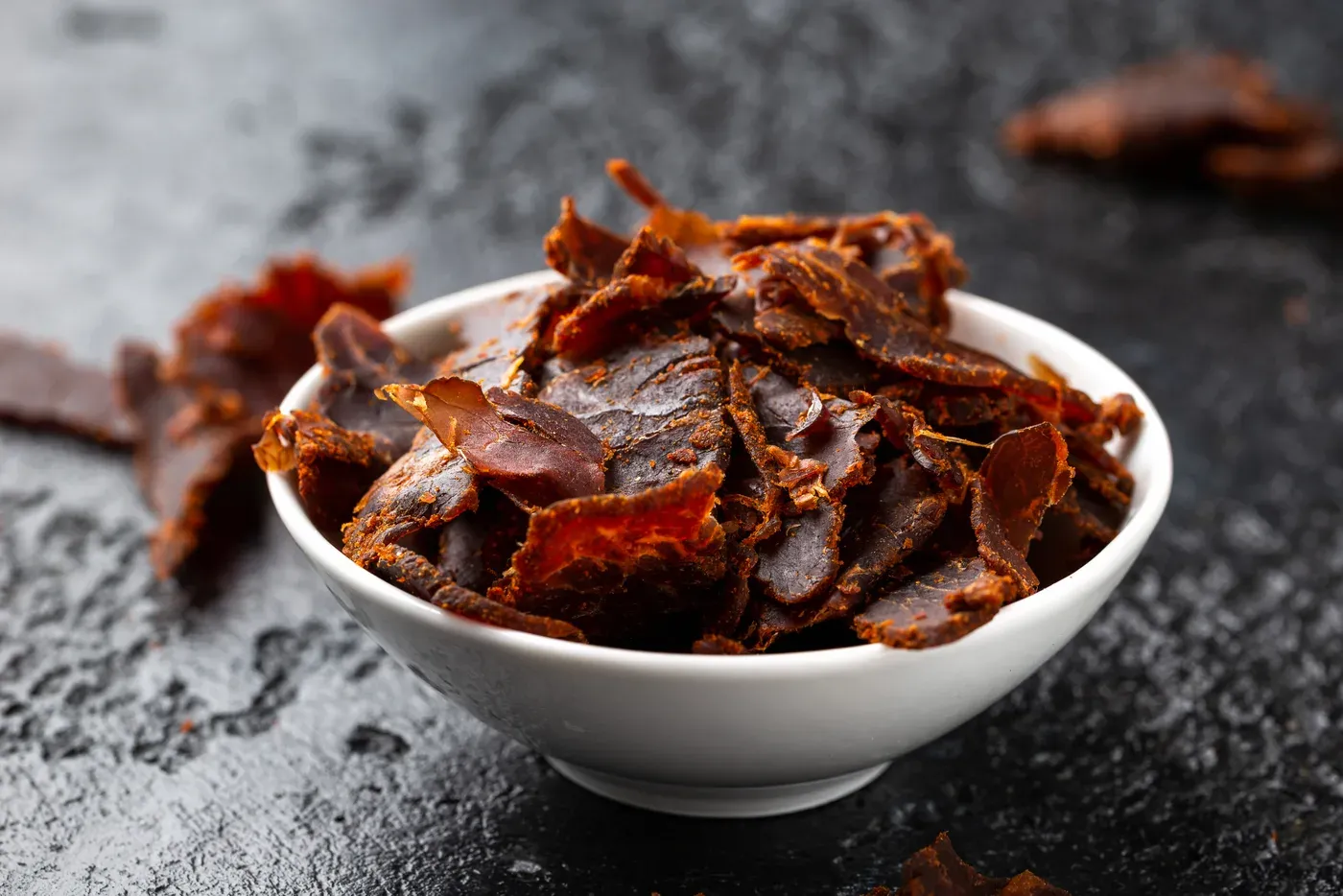
The best high-protein snacks give you 15 to 30 grams of protein for 100 to 250 calories. The most efficient are cooked shrimp, canned tuna, liquid egg whites, sliced turkey breast, plain skyr or Greek yogurt, and cottage cheese. For snacks that travel without a fridge, use jerky, canned fish, roasted chickpeas or dry-roasted edamame. Nuts and cheese have protein too, but they come with far more calories per gram of it.
Why rank snacks by protein per calorie
A snack’s job for a man trying to lose fat or build muscle is to add protein without adding many calories. Higher-protein diets are linked with modestly greater fullness and better preservation of lean mass during weight loss, according to a review in the American Journal of Clinical Nutrition (Leidy et al., 2015). A snack with a high protein-per-calorie ratio does both jobs.
Grams of protein per 100 calories is a simple way to compare. Anything above 10 g per 100 calories is a strong snack protein. Below 5, the food is mostly fat or carbs with some protein attached.
The list, ranked
Values are approximate, calculated from standard nutrition values for the portion shown.
| Snack | Portion | Protein | Calories | Protein per 100 cal |
|---|---|---|---|---|
| Cooked shrimp | 100 g | About 24 g | About 100 | About 24 g |
| Canned tuna in water | 1 can, drained | About 30 g | About 130 | About 23 g |
| Liquid egg whites (scrambled) | 1 cup | About 26 g | About 125 | About 21 g |
| Sliced turkey or chicken breast (lower-sodium) | 75 g | About 15 g | About 80 | About 19 g |
| Plain skyr | 175 g | About 19 g | About 110 | About 17 g |
| Plain 0% Greek yogurt | 175 g | About 18 g | About 105 | About 17 g |
| Low-fat cottage cheese (1%) | 250 g | About 30 g | About 180 | About 17 g |
| Lean beef or turkey jerky | 30 g | About 14 g | About 100 | About 14 g |
| Ready-to-drink protein shake | 1 bottle | 20 to 30 g | 150 to 200 | About 13 to 15 g |
| Canned salmon | 1 small can, drained | About 20 g | About 150 | About 13 g |
| Shelled edamame | 1 cup | About 17 g | About 190 | About 9 g |
| Hard-boiled eggs | 2 large | About 12 g | About 145 | About 8 g |
| 1% milk | 250 ml | About 8.5 g | About 105 | About 8 g |
| String cheese | 2 sticks | About 13 g | About 160 | About 8 g |
| Roasted chickpeas | 40 g | About 7 g | About 150 | About 5 g |
| Hummus with vegetables | 60 g hummus | About 5 g | About 180 | About 3 g |
| Almonds | 30 g | About 6 g | About 175 | About 3 g |
| Peanut butter on an apple | 2 tbsp and 1 apple | About 8 g | About 285 | About 3 g |
The bottom of the list isn’t “bad food.” Nuts and peanut butter bring healthy fats and fibre. They just aren’t efficient protein sources, so treat them as a fat portion rather than a protein snack.
The best picks by situation
| Situation | Best options |
|---|---|
| At the office (fridge) | Greek yogurt or skyr, cottage cheese, pre-cooked shrimp, sliced turkey |
| In the car or on site (no fridge) | Jerky, pull-tab canned tuna, roasted chickpeas, a ready-to-drink shake |
| After training | Greek yogurt with fruit, or a shake with milk |
| Evening, planned | Cottage cheese with berries, skyr, a glass of milk |
| Travelling | Jerky, dry-roasted edamame, a few portioned bags of nuts |
Canada’s food guide suggests prepping snacks in advance: hard-cook eggs on the weekend (Health Canada’s storage chart gives them a week in the fridge), chop extra vegetables while cooking dinner, and keep yogurt and cheese cold in a cooler bag with an ice pack when you’re out.
Reading protein bar and jerky labels
Packaged snacks vary wildly. Before buying, check the Nutrition Facts table for:
- Protein per serving: at least 15 g for a bar, 10 g for jerky.
- Serving size: some bars and jerky bags are two or more servings.
- Sugars: some “protein” bars carry as much sugar as a chocolate bar.
- Sodium: jerky and deli meat can be high. Look for lower-sodium versions.
Health Canada’s front-of-package symbol, a black and white magnifying glass reading “High in”, flags prepackaged foods that meet or exceed set levels of saturated fat, sugars or sodium. If two snacks look similar, choose the one without it.
How often to snack
Snacks are optional. If three meals with 35 to 45 g of protein each get you to your target, you may not need one. A protein snack earns its place when there are more than five hours between meals, when you train between meals, or when you’re short on protein for the day. Recipes for cottage cheese and Greek yogurt bowls turn the top of this list into something you’ll look forward to.
Stock three snacks this week
Pick three snacks from the top half of the list: one for the fridge at work, one for your bag, and one for the evening. Buy them this week. If evenings are where snacking runs away from you, read the late-night snacking guide. If you’d like a coach to fit snacks around your schedule and targets, that’s part of monthly 1:1 coaching.
Questions people also ask
What snack has the most protein?
Per calorie, cooked shrimp, canned tuna, liquid egg whites and sliced turkey breast lead the list, each giving roughly 19 to 24 g of protein per 100 calories. Per portion, a can of tuna (about 30 g) or a 250 g tub of cottage cheese (about 30 g) are hard to beat.
Are protein bars a good snack?
Some are, some are candy bars with added protein. Check the Nutrition Facts table: look for at least 15 to 20 g of protein and keep an eye on sugars. If the front of the package shows Health Canada's 'High in' symbol, compare it with other options.
How much protein should a snack have?
For a man over 40, 15 to 30 g makes a snack worth having. Less than that and it does little toward your daily target; more than that and it's really a small meal.
What are good high-protein snacks that don't need a fridge?
Beef or turkey jerky, canned tuna or salmon with a pull-tab lid, roasted chickpeas, dry-roasted edamame, nuts, and shelf-stable milk. Ready-to-drink protein shakes also travel well.