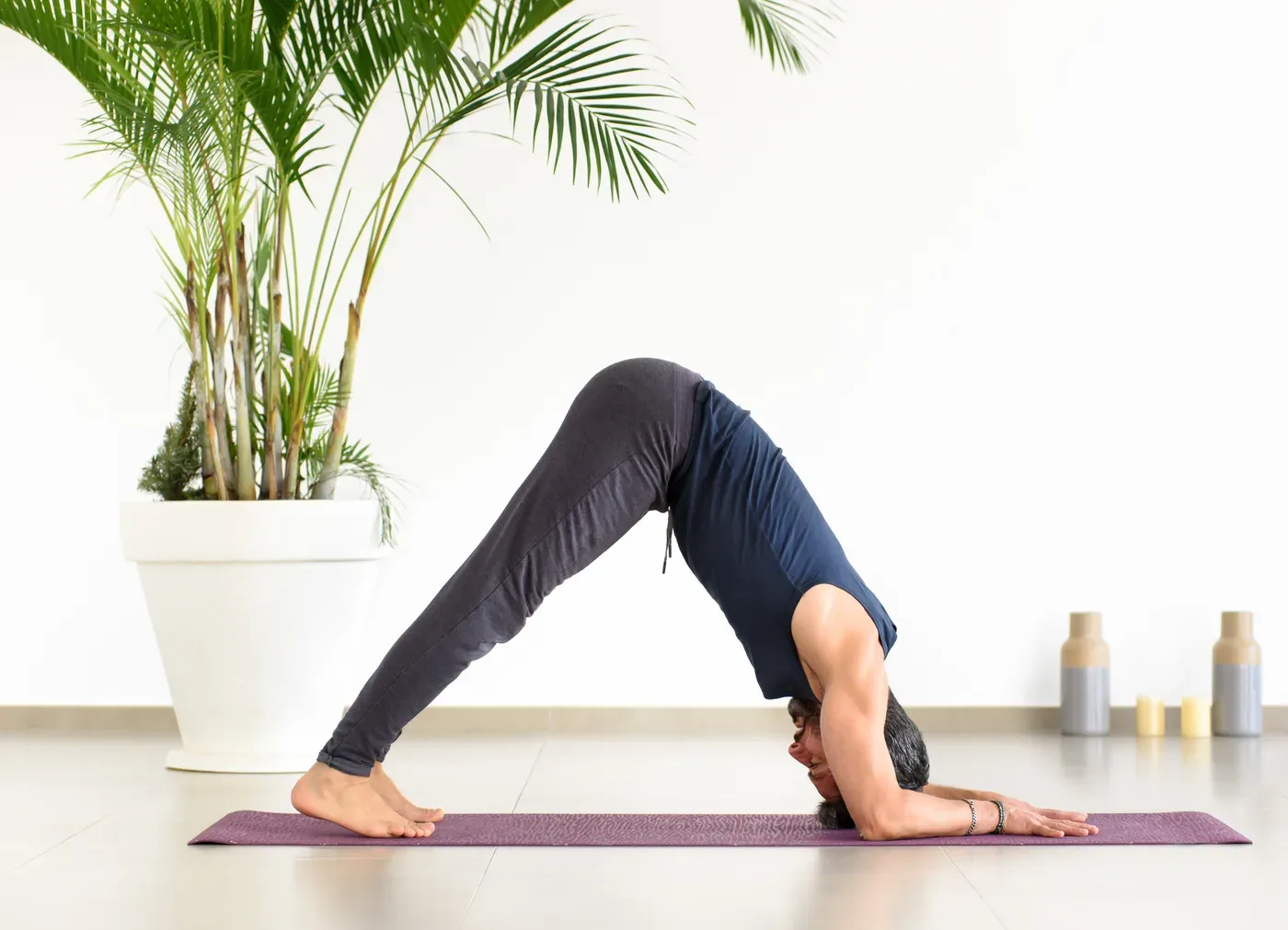
To do a side plank, lie on your side with your elbow directly under your shoulder and your legs stacked, then lift your hips until your body forms a straight line from head to feet. Hold, breathing normally, without letting your hips sag or roll forward. Start with your knees bent if the full version is too hard, and build to holds of 30 to 45 seconds per side.
Why it’s worth adding
The side plank trains the obliques and the deep trunk muscles that keep you from bending sideways. Those muscles do a lot of quiet work when you carry something on one side, get out of a car or change direction on the tennis court. Unlike crunches, the side plank trains them without bending the spine.
It’s also a good measuring stick: if one side holds much shorter than the other, you’ve found an imbalance worth working on.
Getting into position
Lie on your right side on a mat. Place your right elbow directly under your shoulder, forearm pointing forward. Stack your left foot on top of your right, or stagger it in front for more balance. Your head, hips and feet are in line. Rest your top hand on your hip or across your chest.
Cues
- Push the floor away with your forearm to lift your shoulder off your ear.
- Squeeze your glutes and brace your abs.
- Lift your hips until your body is straight from head to heels.
- Keep your top hip stacked over the bottom one; don’t let it roll forward.
- Breathe normally through the hold.
- Lower with control at the end. Switch sides.
What to correct
- Hips sagging. Your obliques are tired or the version is too hard. Shorten the hold or bend your knees.
- Hips piking back. Your body forms a V. Push your hips forward so they line up with your shoulders and feet.
- Shoulder collapsing. The shoulder sinks toward your ear. Push up through the elbow.
- Holding your breath. A long breath-hold raises tension in the wrong places. Breathe steadily.
Sets and hold times
| Level | Version | Sets × hold per side | Rest |
|---|---|---|---|
| Starting out | Knees bent | 3 × 15–20 s | 30 s |
| Standard | Feet stacked or staggered | 3 × 20–40 s | 30–45 s |
| Strong | Top leg raised or weight on the hip | 3 × 20–30 s | 45 s |
| Endurance | Repeated 10 s holds | 5–6 × 10 s | 10 s between holds |
You can also do side plank hip dips: lower your hips toward the floor and lift them back up for 8 to 12 controlled reps.
Variations and joint-friendly swaps
| Variation | When to use it |
|---|---|
| Knee side plank | Easier; good for starting out |
| Staggered-feet side plank | Easier balance |
| Straight-arm side plank | Harder on the shoulder and wrist |
| Side plank with top leg lifted | Harder; more hip work |
| Copenhagen plank | Hardest; adds inner-thigh strength |
| Suitcase carry | A standing alternative |
For sore shoulders, hold the knee version or use a standing alternative. For sore hips, a cushion under the bottom hip helps when getting into position. Pairing side planks with the dead bug gives you front and side trunk work in one short block.
Workouts using it
Side planks appear in the core workout, the hotel room workout and the mobility routine. For a full program with core work placed alongside your main lifts, look at the DIY programs.
Questions people also ask
How long should I hold a side plank?
Build to 30 to 45 seconds per side with clean form. Several shorter holds beat one long hold where your hips sag.
What muscles does the side plank work?
Mainly the obliques and the deep muscles on the side of your trunk, along with the hip muscles on the bottom leg and the shoulder stabilisers.
Is the side plank good for a sore back?
It's commonly included in back-friendly programs because it trains the trunk without bending the spine. It's not a treatment; if you have back pain, get it assessed first.
Should I do side planks on my elbow or hand?
Elbow is the standard and easier on the wrist. A straight-arm version on your hand is harder on the shoulder and wrist.