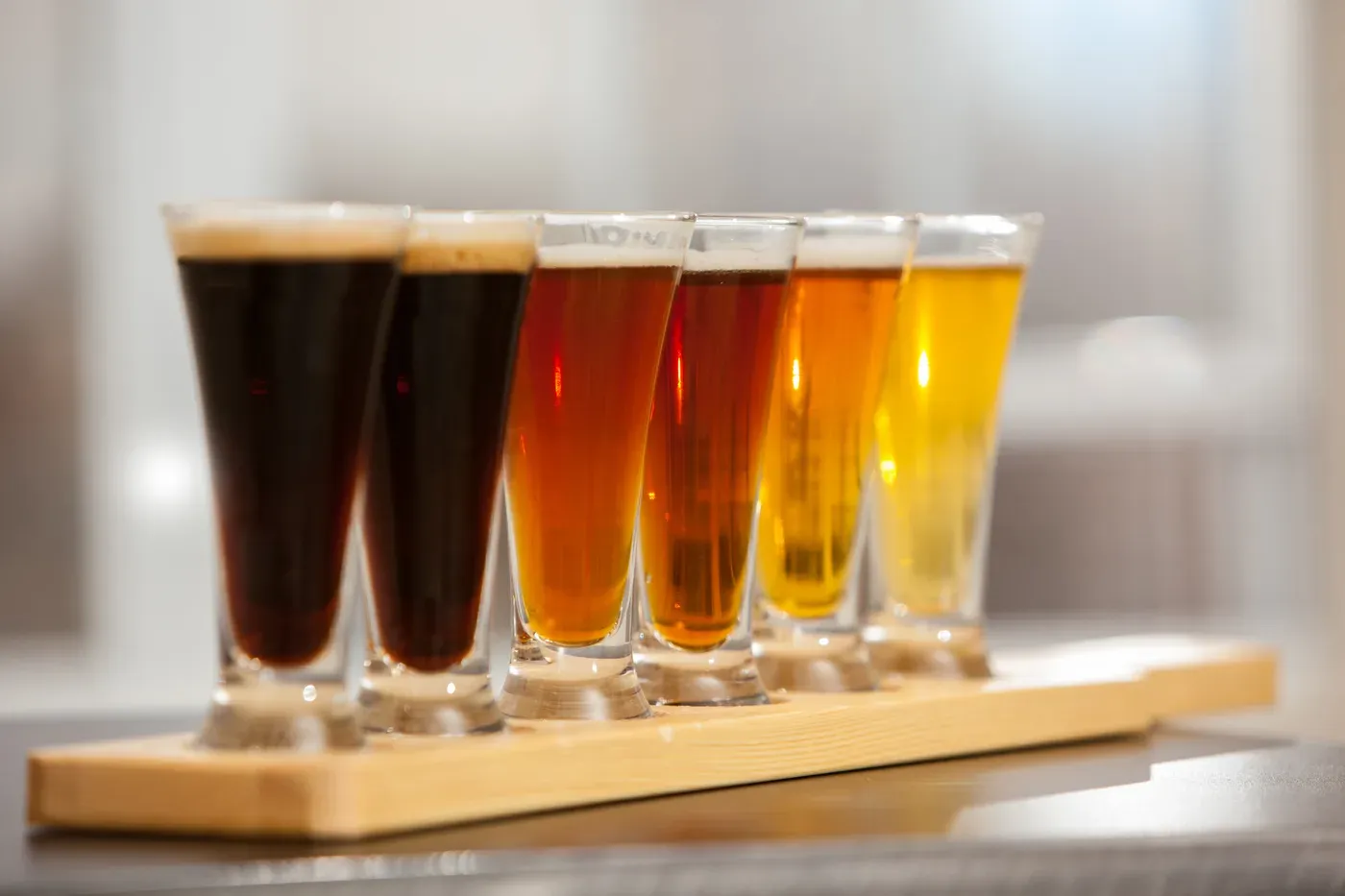
Alcohol slows weight loss for men in three ways: the drinks carry calories, people eat more food when they drink, and alcohol disrupts sleep, which pushes up next-day hunger. You can still drink and lose fat, but the total has to fit inside your calorie deficit. For most men that means a planned weekly limit, a few drinks on one or two nights, rather than one or two every evening. Canada’s guidance on alcohol and health points the same way for health reasons.
Cost 1: the calories in the drink
In Canada a standard drink contains 13.45 g of pure alcohol (Health Canada). Alcohol provides 7 Calories per gram, nearly as much as fat (CFIA). That’s about 94 Calories from the alcohol alone in every standard drink, before any carbohydrate, sugar or mixer.
| Drink | Counts as | Alcohol calories alone |
|---|---|---|
| 341 mL bottle of 5% beer | 1 standard drink | about 94 |
| 142 mL (5 oz) glass of 12% wine | 1 standard drink | about 94 |
| 43 mL (1.5 oz) shot of 40% spirits | 1 standard drink | about 94 |
| 473 mL tall can of 6.5% IPA | about 1.8 standard drinks | about 170 |
| Restaurant wine pour of 9 oz | nearly 2 standard drinks | about 175 |
Beer and wine add carbohydrate on top; cocktails and mixed drinks can add far more through syrups and pop. A tall can or a generous restaurant pour is close to two drinks, which is why counting glasses undercounts.
Cost 2: the food that comes with it
Alcohol makes you eat more, not less. A meta-analysis of controlled trials found that drinking alcohol increased food intake by about 343 kJ (roughly 80 Calories) and total intake, including the drinks, by about 1,072 kJ (roughly 255 Calories) compared with a non-alcoholic drink; people didn’t eat less to make room for the alcohol (Kwok et al., 2019). Those were single sessions with modest doses. A night out with five or six drinks, late food and next-day breakfast is a different scale.
Cost 3: sleep and the next day
Alcohol helps you fall asleep, then disrupts the second half of the night, and at moderate and higher doses it reduces REM sleep (Ebrahim et al., 2013). Poorer sleep means more hunger and less willpower the next day, a skipped or weaker workout, and more takeout. For many men, the morning after costs more than the drinks themselves.
How to fit alcohol into a fat-loss plan
1. Know your number. Count standard drinks for one normal week. Most men are surprised.
2. Set a weekly limit and plan the nights. Decide in advance when you’ll drink, for example Friday dinner and Saturday with friends, and keep the other nights dry. Canada’s guidance also advises no more than two drinks on any one occasion (CCSA).
3. Budget the calories, mostly from fat and carbohydrate. Keep protein the same on drinking days; it keeps you full and protects muscle. Trim elsewhere.
4. Eat a proper meal first. A protein-heavy dinner before drinks blunts the late-night food.
5. Alternate. One glass of water or a non-alcoholic beer between drinks slows the pace without anyone noticing.
6. Decide the end before you start. Set when the last drink is and what you’re eating afterward (ideally nothing).
Client dinners and work events need their own tactics; business dinners and drinks covers ordering, pacing and saying no without making it awkward. Weekend drinking is a big part of why five good weekdays sometimes add up to nothing, which is the subject of weekend eating that undoes progress.
What Canada’s guidance says about risk
Canada’s Guidance on Alcohol and Health, published by the Canadian Centre on Substance Use and Addiction, describes a continuum: no drinking has benefits including better sleep; two standard drinks or fewer a week is low risk; three to six is moderate risk, with rising cancer risk; seven or more significantly increases the risk of heart disease and stroke (CCSA). For a man trying to lose fat, the healthier end of that range also happens to be the easier one to diet on.
The bottom line
You don’t have to quit drinking to lose weight, but you do have to count it, cap it and plan around it. If your weekly total is high and cutting back keeps failing, try a fixed alcohol-free stretch; weight loss after quitting alcohol explains what usually changes and when. If alcohol is what keeps derailing your plan and you want someone checking in weekly, weight loss coaching for men builds drinks into the targets rather than pretending they don’t exist.
Questions people also ask
Can I drink alcohol and still lose weight?
Yes, if the total calories still leave you in a deficit. Most men manage it with a planned weekly limit on two nights rather than a drink or two every evening.
What is the best alcohol to drink when losing weight?
The one you drink the least of. Per standard drink, beer, wine and spirits all carry about the same alcohol calories; what changes the total is the serving size, sugary mixers and how many you have.
Does alcohol stop fat burning?
It doesn't block fat loss outright. What decides whether you lose fat over a week is the total: if your weekly calories, drinks included, are in a deficit, you still lose fat.
How many drinks a week is low risk in Canada?
Canada's Guidance on Alcohol and Health says two standard drinks or fewer a week is low risk, three to six is moderate risk, and seven or more is increasingly high risk. It also advises no more than two drinks on any one occasion.
Sources
- CCSA — Canada's Guidance on Alcohol and Health
- Health Canada — Low-risk alcohol drinking guidelines (standard drink)
- CFIA — Elements within the Nutrition Facts table (energy values)
- Kwok et al. (2019), Effect of alcohol consumption on food energy intake, Br J Nutr
- Ebrahim et al. (2013), Alcohol and sleep I: effects on normal sleep, Alcohol Clin Exp Res