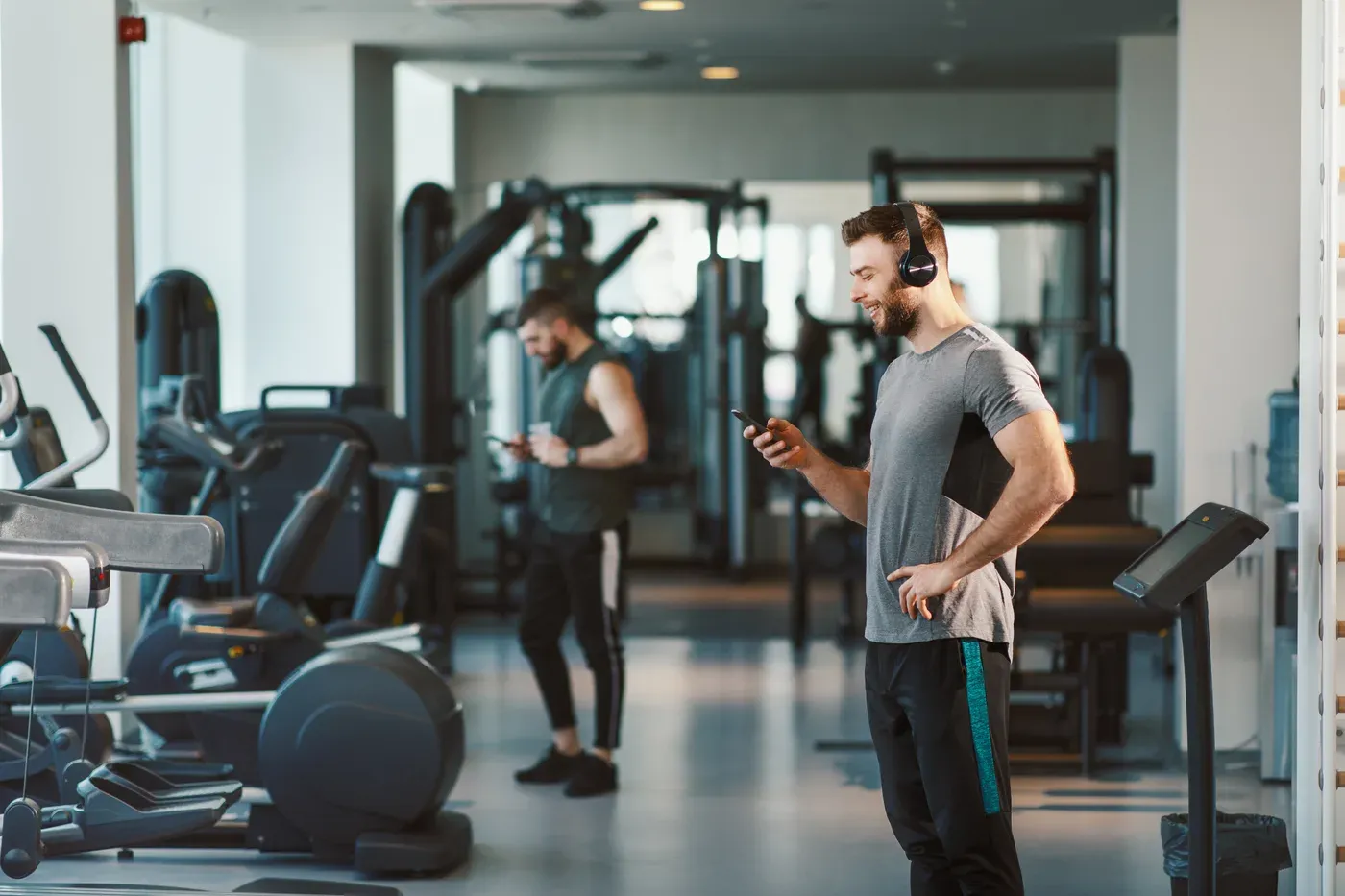
Gym anxiety starting over 40 is common, and it mostly comes from not knowing what to do, where things are, or what the unwritten rules are. Fix those three and most of the anxiety goes with them. Go at a quiet time, walk in with a written plan on your phone, start in the dumbbell area rather than the barbell racks, and give yourself four visits before you judge how it feels. Almost nobody is watching you; they’re counting their own reps.
Why it feels worse at 40 than at 20
At 20, being new at something is normal. At 40, you’re competent at work, at home and in most of your life, and walking into a room where you don’t know the routines feels like a step backwards. Add a body you’re not happy with, a memory of what you used to lift, and a room full of mirrors, and it’s no surprise many men put it off for years.
The useful reframe: the anxiety is about uncertainty, not about you. Each of the steps below removes one piece of it.
Pick the quiet hours for your first visits
Crowds make everything harder: waiting for equipment, feeling watched, rushing your sets. At most gyms the pattern is similar, though every location differs.
| Time | Typical traffic | Good for |
|---|---|---|
| Weekdays 5:30–7:30 a.m. | Busy with regulars, but quiet and focused | Men who can train before work |
| Weekdays 10 a.m.–3 p.m. | Usually the quietest | Shift workers, remote workers, flexible schedules |
| Weekdays 5–7:30 p.m. | Busiest, especially Monday and Tuesday | Avoid for your first few visits |
| Weekdays after 8 p.m. | Quieter again | Men with kids in bed by 8 |
| Weekend afternoons | Often moderate | Your first orientation visit |
Ask the front desk for their quiet hours. Many gyms can also show you a live occupancy count in their app.
Walk in with a plan, not a vague intention
Wandering is what makes people feel conspicuous. Have the session written out before you arrive: five exercises, sets, reps, and a backup for each in case the equipment is taken. Something like this:
| Exercise | Backup if it’s taken |
|---|---|
| Goblet squat (dumbbell) | Leg press |
| Dumbbell Romanian deadlift | Cable pull-through |
| Dumbbell bench press | Chest press machine |
| One-arm dumbbell row | Seated cable row |
| Farmer’s carry | Hold heavy dumbbells for 30 seconds standing still |
Everything in the left-hand column happens in the dumbbell area with a single bench, so you don’t need to claim a squat rack in your first week. The first month back at the gym guide gives you all twelve sessions.
The unwritten rules, written down
Most of what makes newcomers nervous is etiquette. There isn’t much of it:
- Re-rack your weights where they came from, and wipe down benches and handles after use.
- Ask “how many sets left?” if you want a machine someone is using. It’s a normal question. You can also ask to “work in” and alternate sets.
- Don’t stand directly in front of someone at the dumbbell rack while they’re lifting; they need the mirror and the space.
- Headphones mean “I’m training”. Wear them if you’d rather not chat, and respect them on others.
- Phones are for your plan and logging, not for filming other people.
That’s genuinely most of it. Nobody expects you to know the jargon.
Ways to make the first visits easier
- Book the orientation. Most gyms offer one; Toronto’s city-run FitnessTO memberships include a member orientation of the weight and cardio rooms.
- Go with someone. A friend who already trains, or even a friend who’s also new, halves the awkwardness.
- Book a few sessions with a trainer. Two or three sessions to learn the lifts and get a written plan can remove the guesswork. Here’s what to expect from a first session.
- Choose the right gym. A smaller, quieter gym or a community-centre weight room can feel very different from a big-box floor at 6 p.m. Our guide to choosing a gym in Toronto covers what to look for.
- Start at home if you have to. If the gym is a genuine barrier right now, a basic home gym setup lets you build strength and confidence first. Just plan the move to a gym once you’ve outgrown light dumbbells.
Give it four visits
The first visit is the worst one. By the fourth, you know where things are, which machines you use and which corner is quiet. Habit research on new gym members found that keeping the routine simple and repeating it consistently were among the strongest predictors of training becoming automatic (Kaushal & Rhodes, 2015). Same plan, same time, same corner, and the room stops feeling foreign.
If you’d rather have someone beside you for those first visits, showing you the lifts and setting the plan, weekly 1:1 coaching can start with in-person sessions in Toronto, from $99 a week.
Questions people also ask
Is it embarrassing to start going to the gym at 40?
No. Gyms are full of men in their forties and fifties, and most regulars are focused on their own sets. The people who notice a newcomer usually respect someone who shows up and works steadily.
What's the least busy time at the gym?
At most gyms, weekday mid-mornings, early afternoons and late evenings are quieter, and Monday and Tuesday evenings are the busiest. Ask the front desk; staff know their own traffic pattern.
Should I hire a trainer to get over gym anxiety?
A few sessions can help a lot. A trainer shows you where everything is, teaches the main lifts and gives you a plan, which removes most of the uncertainty that drives the anxiety.
What should I wear to the gym as a beginner?
Comfortable shorts or track pants, a plain T-shirt and flat, stable shoes. Nobody expects specialised gear, and running shoes with thick soft soles are actually worse for lifting than flat trainers.