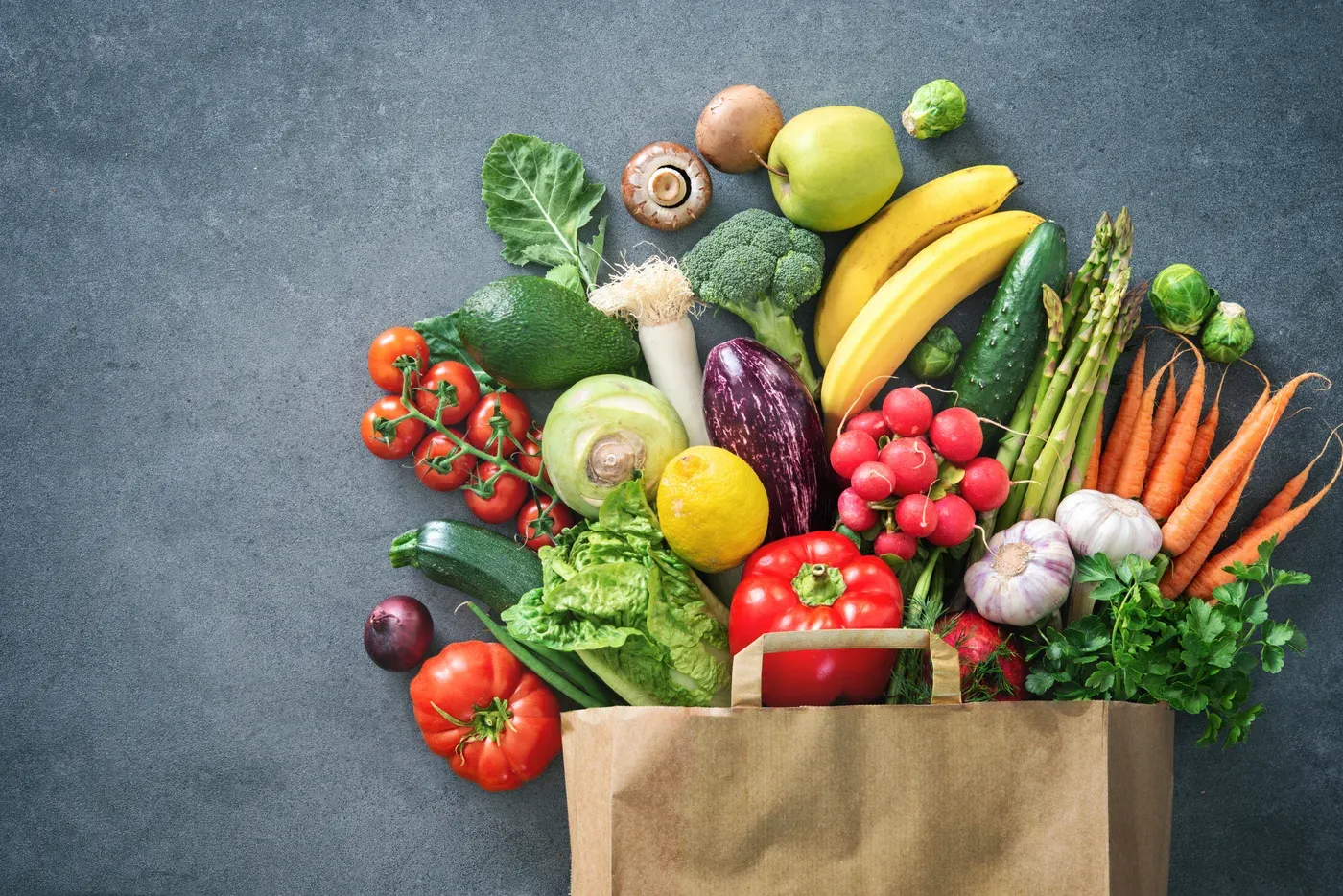
A good grocery list for weight loss is built around protein first: chicken, eggs, Greek yogurt, cottage cheese, canned fish, lean beef or pork, tofu and lentils. Fill the rest of the cart with vegetables and fruit (frozen counts), whole grains and a small amount of healthy fat. Skip the aisles of chips, cookies and sweetened drinks, because what comes home gets eaten. You can shop this list at any Canadian grocery store, including the discount banners.
How to shop for fat loss
A few rules make the list easier to use:
- Shop with a list and not hungry. Canada’s food guide notes that shopping on an empty stomach leads to buying foods you don’t need.
- Start in produce and the protein cases. Load up there before the centre aisles.
- Make half the cart vegetables and fruit. That’s the food guide’s own tip, and it leaves less room for snack foods.
- Skip the checkout-aisle grab. It’s expensive and almost never on your plan.
- Don’t bring trigger foods home. The food guide puts it directly: if highly processed foods are in your house, you’re more likely to eat them.
That last rule matters more than any other. In a controlled NIH study, people ate about 500 more calories a day on an ultra-processed diet than on an unprocessed one with similar nutrients on offer (Hall et al., 2019).
The list, by section
Protein (the base of the cart)
| Food | Why it’s on the list | Approximate protein |
|---|---|---|
| Boneless chicken breast or thighs (family pack) | Lean, versatile, freezes well | About 31 g per 100 g cooked breast |
| Eggs and liquid egg whites | Cheap, fast breakfasts | About 6 g per egg; about 26 g per cup of whites |
| Plain Greek yogurt or skyr (0 to 2%) | Breakfasts and snacks | About 10 g per 100 g |
| Cottage cheese (1 or 2%) | Snacks, high protein per calorie | About 12 g per 100 g |
| Canned tuna, salmon or sardines | Lunches with no cooking | About 25 to 30 g per can |
| Extra-lean ground beef or turkey | Chili, bowls, meatballs | About 26 g per 100 g cooked |
| Pork tenderloin | Lean and often well priced | About 26 g per 100 g cooked |
| Firm tofu | Plant protein for stir-fries | About 17 g per 100 g |
| Dried or canned lentils, chickpeas, black beans | Cheapest protein in the store | About 15 to 18 g per cooked cup |
| Milk or unsweetened fortified soy beverage | Oats, shakes, coffee | About 8 g per cup |
Vegetables and fruit
- Fresh: bagged salad, spinach, broccoli, peppers, carrots, cucumbers, cherry tomatoes, onions, apples, bananas, oranges.
- Frozen: stir-fry mixes, broccoli, green beans, berries. Health Canada’s budget tips note that frozen and canned produce are healthy and often cheaper than fresh out of season, which in Canada means most of the winter.
- Canned: diced tomatoes and tomato sauce with no added salt or less sodium.
Whole grains and starchy carbs
Oats, brown or basmati rice, whole-wheat pasta, quinoa, whole-grain bread and wraps, potatoes and sweet potatoes. Look for “whole grain” near the start of the ingredient list.
Fats and flavour
Olive or canola oil, natural peanut butter, a bag of almonds or mixed nuts (portion them out), salsa, hot sauce, mustard, spices, garlic, lemons, low-sodium soy sauce.
Reading Canadian labels in 10 seconds
Two tools on Canadian packaging make comparison fast:
- The front-of-package symbol. Health Canada now requires a black and white magnifying-glass symbol on prepackaged foods that meet or exceed set levels of saturated fat, sugars or sodium. It reads “High in” followed by whichever of those apply (Health Canada). Whole fruits and vegetables and plain single-ingredient meats are exempt. If a snack carries the symbol, it’s worth a second look.
- The % Daily Value. On the Nutrition Facts table, 5% DV or less is a little and 15% DV or more is a lot (Health Canada). Look for a lot of fibre and a little sodium and saturated fat.
Keeping the bill down
Grocery prices are a real constraint, and a fat-loss diet doesn’t need to be expensive. Health Canada’s budget advice is practical:
- Compare store brands with name brands; the difference is often just the label.
- Buy family-size packs of meat and divide them into freezer portions yourself.
- Stock up on canned fish, beans and tomatoes when they’re on sale.
- Use beans and lentils as your protein several times a week.
- Shop at discount grocery stores where you can, and avoid buying groceries at convenience stores. Around the GTA, discount banners such as No Frills, FreshCo and Food Basics stock everything on this list.
- Check the higher and lower shelves; eye-level spots often cost more.
A sample weekly basket
For one man eating about 2,000 to 2,400 calories a day, a week’s shopping might look like this:
| Section | Quantity |
|---|---|
| Chicken breast or thighs | 1.5 kg |
| Eggs | 2 dozen |
| Liquid egg whites | 1 carton (about 1 L) |
| Plain Greek yogurt | 2 large tubs (about 1.5 kg) |
| Cottage cheese | 1 large tub |
| Canned tuna or salmon | 4 cans |
| Extra-lean ground beef or turkey | 500 g |
| Lentils or beans | 2 cans |
| Vegetables (fresh and frozen) | 10 to 14 portions |
| Fruit | 7 to 10 pieces plus a bag of frozen berries |
| Oats, rice, whole-grain bread | 1 each |
| Olive oil, nuts, peanut butter | Top up as needed |
The 7-day meal plan uses ingredients from this basket, and the meal prep guide shows how to turn it into a week of meals.
Your first shop
Copy the list, cross off what you won’t eat, and do one shop this weekend with no extras. Next week, notice which foods you ran out of and which went to waste, and adjust. If you’d like your grocery list built around your calorie and protein targets and your family’s meals, that’s part of monthly 1:1 coaching.
Questions people also ask
What should I buy at the grocery store to lose weight?
Lean proteins (chicken, eggs, Greek yogurt, cottage cheese, canned fish, lean beef, tofu, lentils), lots of vegetables and fruit including frozen, whole grains, and a few healthy fats. Keep highly processed snacks out of the cart.
How do I eat healthy on a budget in Canada?
Buy family packs and divide them, use frozen vegetables in winter, rely on beans and lentils several times a week, compare store brands with name brands, and shop discount banners when you can. These are all Health Canada budget tips.
What does the 'High in' symbol on Canadian food packages mean?
It's Health Canada's front-of-package nutrition symbol, a black and white magnifying glass. It appears on prepackaged foods that meet or exceed set levels of saturated fat, sugars or sodium. Fewer of those in your cart usually means fewer calories.
Should I buy diet or low-fat products?
Not by default. Some low-fat products add sugar to make up for taste. Compare the Nutrition Facts tables and pick the one with more protein and less added sugar for the same calories.
Sources
- Health Canada — Nutrition labelling: front-of-package nutrition symbol
- Health Canada — Canada's food guide: healthier grocery shopping
- Health Canada — Canada's food guide: healthy eating on a budget
- Health Canada — Fibre (using % Daily Value on the Nutrition Facts table)
- Hall et al. (2019), Ultra-processed diets cause excess calorie intake and weight gain, Cell Metab