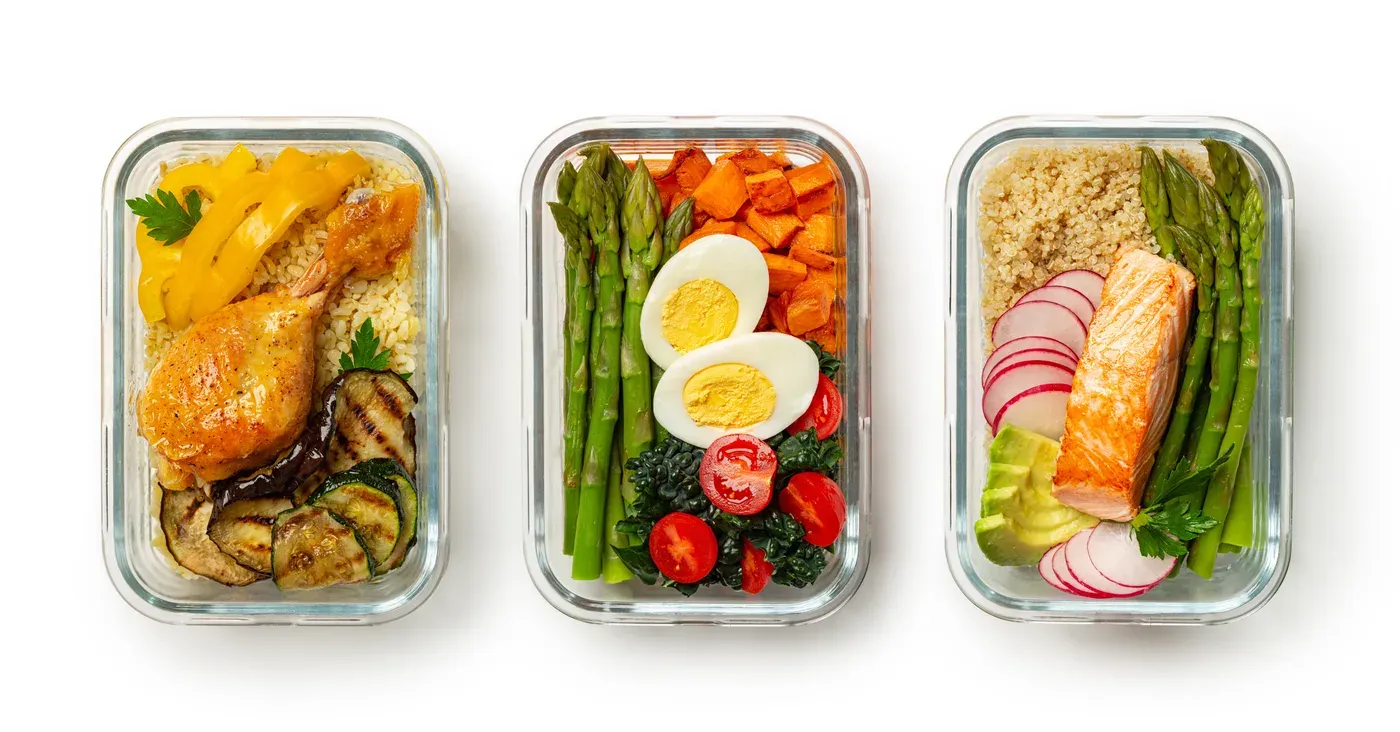
The best high-protein lunches for work give you 35 to 50 grams of protein, travel in one container and suit whatever your office has. With a fridge and microwave, reheat a batch-cooked protein with rice and vegetables. With only a fridge, pack a cold grain bowl or a wrap. With nothing at all, rely on canned fish, jerky and shelf-stable sides. The common mistake is a salad or sandwich with 15 grams of protein that leaves you raiding the vending machine at 3 p.m.
How much protein lunch should carry
The ISSN protein position stand recommends doses of about 20 to 40 grams spread every three to four hours. For men over 40, the higher end makes more sense, since older muscle needs a bigger dose to respond. A practical lunch target is 35 to 50 grams of protein inside 500 to 700 calories.
Compare that to what most office lunches deliver:
| Typical lunch | Approximate protein |
|---|---|
| Garden salad with a few chicken strips | 15 to 20 g |
| Deli sandwich on white bread | 18 to 25 g |
| Soup and a roll | 8 to 15 g |
| Food court noodle or pasta bowl | 15 to 25 g |
| Packed chicken, rice and vegetables (150 g chicken) | About 50 g |
If you have a fridge and a microwave
This is the easiest setup. Cook once and reheat:
| Lunch | Protein | Calories (approx.) |
|---|---|---|
| 150 g chicken thighs, 1 cup rice, roasted vegetables, salsa | About 45 g | About 565 |
| Lean beef and bean chili (2 cups) with a few crackers | About 40 g | About 510 |
| 150 g turkey meatballs in tomato sauce, 1 cup whole-wheat pasta | About 48 g | About 525 |
| Lentil and chicken soup (2 bowls), whole-grain roll | About 45 g | About 520 |
| Salmon, potatoes and green beans | About 44 g | About 575 |
The recipes for the lentil and chicken soup and the lean beef stir fry reheat well.
If you only have a fridge
Cold lunches need a little more thought, because reheated-style meals taste flat cold. These are built to be eaten cold:
| Lunch | Protein | Calories (approx.) |
|---|---|---|
| Tuna and white bean salad with olive oil, lemon and greens | About 48 g | About 520 |
| Wrap with 100 g chicken, hummus and vegetables, plus a small Greek yogurt cup | About 53 g | About 605 |
| Cold soba or rice noodle bowl with 150 g chicken and edamame | About 60 g | About 540 |
| Bento box: 2 hard-boiled eggs, 250 g cottage cheese, crackers, fruit, vegetables | About 45 g | About 550 |
| Greek-style quinoa salad with chickpeas, feta and 100 g chicken | About 49 g | About 660 |
See the tuna and bean salad recipe for a version that holds well for two days.
If you have no fridge and no microwave
Construction sites, client visits, field sales and long drives all fall here. Health Canada advises keeping cold food at 4 °C or below (Health Canada), so an insulated bag with an ice pack is the minimum for perishable food. Without one, use shelf-stable protein:
- Canned tuna, salmon or chicken with a pull-tab lid, eaten with whole-grain crackers and an apple. A can of tuna gives about 30 g of protein.
- Beef or turkey jerky, about 14 g of protein per 30 g. Watch the sodium on the label.
- Roasted chickpeas or edamame snacks, plus a handful of nuts.
- Shelf-stable milk or a ready-to-drink protein shake if you’re truly stuck.
If you buy lunch
Buying isn’t a failure; it just needs a rule. Order the protein first and build around it: a chicken or steak bowl rather than a noodle bowl, a double-protein option if it’s offered, a side salad instead of fries.
Ontario’s Healthy Menu Choices Act requires chains with 20 or more locations to post calories for standard menu items (Government of Ontario). That covers most food court counters, so you can check a bowl’s calories before ordering. Independent spots don’t have to post them; estimate by portion size instead.
Habits that make work lunches stick
Canada’s food guide suggests eating away from your desk when you can, and being wary of specialty coffees, which can carry a surprising amount of sugar and saturated fat. Three more habits help men in office jobs:
- Pack lunch the night before, when you’re putting dinner leftovers away.
- Keep backups at work: a few cans of tuna, oats, a box of whole-grain crackers.
- Block lunch in your calendar. Skipped lunches turn into oversized dinners and evening snacking.
If your job keeps you sitting most of the day, the desk-job weight loss guide covers the movement side.
Your lunch plan for the next two weeks
Look at your setup at work, pick three lunches from the matching table, and rotate them for two weeks. Prep them alongside dinner using one of the meal prep formats. If you’d like lunches, breakfasts and dinners planned around your schedule and checked monthly against your progress, that’s part of monthly 1:1 coaching.
Questions people also ask
What's a good high-protein lunch I don't have to heat?
A tuna or salmon and bean salad, a chicken and hummus wrap, a Greek yogurt and cottage cheese box with fruit and crackers, or a cold soba noodle bowl with edamame and chicken. All carry 35 g or more of protein.
How long can a packed lunch sit out without a fridge?
Keep cold food at 4 °C or below. Use an insulated bag with an ice pack and eat perishable food within a few hours. If there's no fridge and no ice pack, choose shelf-stable proteins such as canned fish, jerky and roasted chickpeas.
Is buying lunch every day bad for losing weight?
Not automatically, but it's harder. Restaurant and food court portions are large and protein is often small. If you buy, choose a protein-first option and check the posted calories at chains.
How many calories should my lunch be?
For most men eating 2,000 to 2,600 calories a day to lose fat, a lunch of 500 to 700 calories leaves room for breakfast, dinner and a snack. Protein should be 35 to 50 g of it.