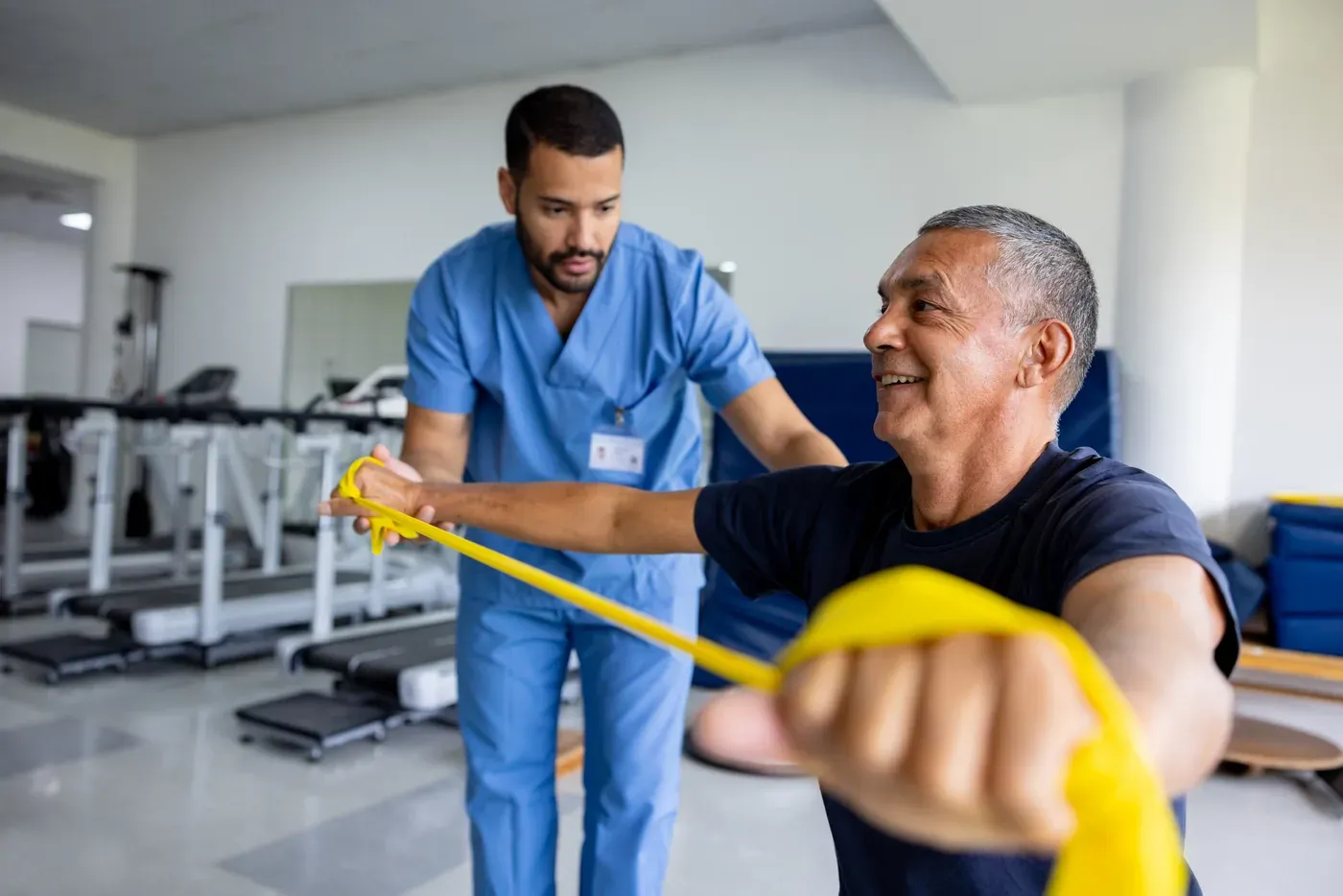
Returning to the gym after an injury works best in four stages: get the injury assessed and know your limits, keep training everything that isn’t injured, rebuild the injured area with light and controlled work, then return to your normal lifts in small steps, moving on only when the previous step caused no pain during or the day after. The mistake most men make is skipping from stage one to stage four because the pain has gone. Pain fading isn’t the same as strength coming back.
Stage 1: get it assessed
Some injuries need medical care before any training plan. The NHS guidance on sprains and strains says to get emergency care if you heard a crack when you were injured, the body part has changed shape or is pointing at an odd angle, it’s numb or tingling, or the skin looks blue, grey or cold. It advises urgent help if the injury is very painful or getting worse, there’s a lot of swelling or bruising, you can’t put weight on it or walk more than a few steps, or you also have a high temperature.
For anything that isn’t settling, see a physiotherapist or your doctor. Physiotherapists in Ontario are regulated, and you can confirm registration through the College of Physiotherapists of Ontario. Government-funded physiotherapy covers some groups, including anyone after an overnight hospital stay or day surgery within the last 12 months for a condition needing physio; otherwise expect to pay privately or through benefits.
Ask your physiotherapist three things: what you can do now, what to avoid, and how you’ll know when to progress.
Stage 2: train around it
Stopping all training because one part is hurt costs you fitness, strength and the habit. Keep everything that doesn’t provoke the injury.
| Injured area | Usually still trainable (check with your physio) |
|---|---|
| Ankle or calf | Upper body, seated or lying core work, bike if pain-free, single-leg work on the other side |
| Knee | Upper body, hip bridges, hamstring curls, swimming upper body, the other leg |
| Lower back | Walking, upper body machines, gentle core work as advised |
| Shoulder | Lower body, the other arm, walking, cycling |
| Wrist or elbow | Lower body, machines that don’t need gripping, cardio |
There’s a useful bonus to training the other side: a review of detraining research points to a “cross-transfer” effect between limbs, which it suggests using to limit losses while one limb is immobilised (Mujika & Padilla, 2000). Even if the effect is modest, keeping the uninjured side strong makes the return easier.
Stage 3: rebuild the injured area
This is where a physiotherapist’s plan matters most. In general, the progression goes:
- Range of motion. Get the joint moving comfortably through its normal range.
- Light, controlled strength. Slow reps with bands, light dumbbells or machines.
- Heavier strength. Gradually increasing load in the injured area’s main movements.
- Speed and impact. Jumping, sprinting, sport-specific moves, only if your goals need them.
Use the same rule at every step: discomfort that’s mild and settled by the next day is usually acceptable; pain that sharpens during the exercise, or is worse the next morning, means you went a step too far. Go back one level for a week.
Stage 4: return to your normal lifts
Bring the big lifts back gradually, even when you feel ready.
| Week back on the lift | Load (of your pre-injury working weight) | Sets | Move on when |
|---|---|---|---|
| 1 | 40–50% | 2 | No pain during or the next day |
| 2 | 50–60% | 3 | Same |
| 3–4 | 60–75% | 3 | Same, and technique looks normal |
| 5–6 | 75–90% | 3 | Same |
| 7+ | Back to normal progression | Normal | You feel confident and symmetrical |
These percentages are a coaching rule of thumb, not a rehab protocol. Your physiotherapist may want something more cautious for your injury. If you were out for a long time, the guide to restarting after a break covers the rest of your training.
Readiness checklist
Before going back to heavy or high-impact training, you should be able to say yes to all of these:
- Everyday activities (stairs, carrying shopping, sleeping on that side) are pain-free.
- Range of motion is back to normal, or close to the other side.
- Strength on the injured side is close to the uninjured side.
- Lighter versions of the lift are pain-free during and the day after.
- Your physiotherapist or doctor is happy for you to progress.
Preventing the next one
Men over 40 who get injured in the gym often have the same story: a big jump in load, a lift done tired, or a sudden return after time off. Keep progression steady, warm up properly, leave a couple of reps in reserve on most sets, and treat niggles early. Knowing the difference between normal soreness and an early injury helps too; see sore versus injured.
Trainers and physiotherapists do different jobs, and you may need both for a while. The comparison of a personal trainer and a physiotherapist explains who does what. Once you’ve been discharged from rehab, weekly 1:1 coaching (from $99 a week) can take over the gradual return to full training, following your physiotherapist’s guidance.
Questions people also ask
How long should I wait to go back to the gym after an injury?
It depends on the injury, so ask whoever assessed it. For minor strains, many people can train other body parts within days and gradually reload the injured area over a few weeks. For fractures, surgery or ligament tears, follow your surgeon's or physiotherapist's timeline.
Can I train the rest of my body while injured?
Usually yes, and it helps. Training the uninjured areas keeps your fitness, strength and routine, and is good for your mood. Just choose exercises that don't load or provoke the injured part.
How do I know I'm ready to lift heavy again?
When everyday activities are pain-free, you've got your normal range of motion back, the injured side is close to the other side in strength, and lighter versions of the lift cause no pain during or the day after. Your physiotherapist can test these with you.
Is it normal to be nervous about re-injury?
Yes. A graded return, where each step is a little harder than the last and you only progress when the previous one felt fine, is the best way to rebuild both strength and confidence.