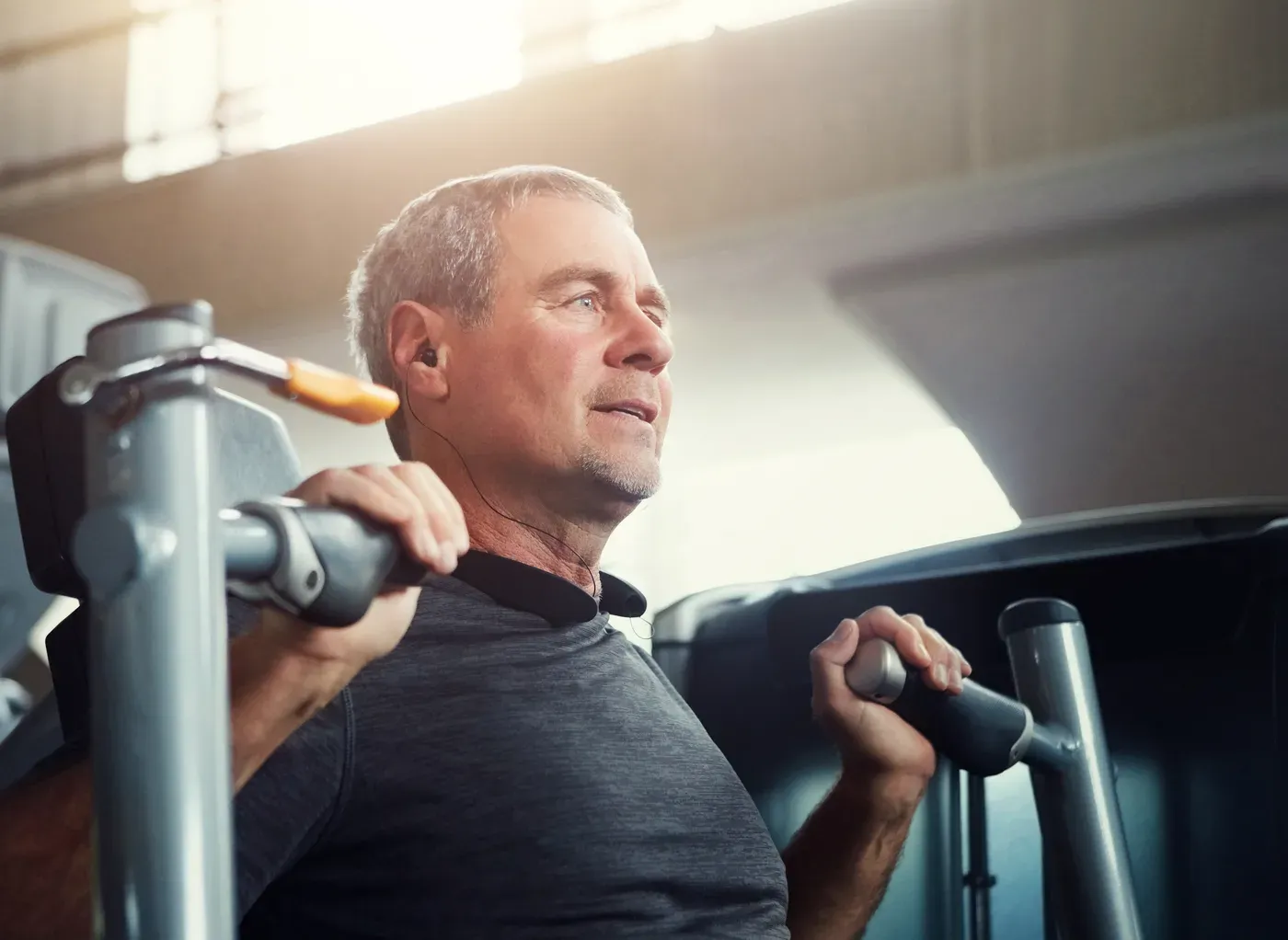
To do a seated cable row, sit with your feet braced on the platform and knees slightly bent, grab the handle, and sit tall with your chest up. Pull the handle to your stomach by driving your elbows back past your sides and squeezing your shoulder blades together, then let it return slowly until your arms are straight and your shoulders reach forward. Your torso stays nearly upright throughout; if you’re rocking, the weight is too heavy.
What the cable row offers
The seated cable row trains the middle back, lats, rear shoulders and biceps with steady tension from start to finish. You’re seated and braced, so there’s very little load on your lower back compared with a bent-over barbell row. That makes it a reliable back exercise for men who sit all day and have learned the hard way not to bend over a heavy bar.
The cable also lets you change handles and grip width in seconds, so you can find an angle your shoulders like.
Getting set
- Sit on the bench and place your feet on the foot plates, knees slightly bent.
- Lean forward to grab the handle and then sit upright, arms straight.
- Shift back until the weight stack lifts and you’re sitting tall with tension on the cable.
- Chest up, shoulders relaxed, neck long.
How to row
- Start each rep by pulling your shoulder blades back.
- Drive your elbows straight back, keeping them close to your sides for a V-handle.
- Bring the handle to your belly button or lower ribs.
- Squeeze your shoulder blades together and hold for one second.
- Let the handle travel forward slowly, arms straightening.
- Allow your shoulder blades to spread forward at the end, with a slight lean from the hips if needed.
- Sit tall again before the next pull.
Errors and corrections
| Error | Correction |
|---|---|
| Rocking the torso back to start the pull | Reduce the weight; torso moves no more than a few degrees |
| Shrugging the handle toward the chest | Shoulders down; pull to the stomach, not the neck |
| Rounding the lower back at the stretch | Hinge slightly from the hips, not the spine |
| Elbows flaring out on a V-handle | Elbows brush your sides |
| Jerky reps | Two seconds out, one-second squeeze, two seconds back |
Sets and reps
| Goal | Sets × reps | Rest | Focus |
|---|---|---|---|
| Learning | 3 × 12 | 60–90 s | Full stretch and squeeze |
| Strength | 4 × 6–8 | 2 min | Heavier with a still torso |
| Muscle | 3–4 × 10–15 | 60–90 s | 1-second hold every rep |
Increase the stack by one plate once you can hold the squeeze on every rep of every set.
Variations and swaps
- Easier: lighter stack with a long pause, or a resistance band row sitting on the floor.
- Harder: single-arm cable row with a slight rotation at the stretch, or a slower three-second return.
- Upper-back emphasis: wide-grip bar pulled to the lower chest with elbows out, similar to a face pull motion.
- Sore lower back: the chest-supported row removes even the small trunk demand here.
- Sore shoulders: neutral grip, shorter range at the stretch.
- No cable at home: the dumbbell row works the same muscles.
Plans using it
The seated cable row is a main pull in the upper body workout, the desk posture workout and the 4-day split. The DIY programs balance it against your pressing so your shoulders stay even.
Questions people also ask
Which handle is best for seated cable rows?
The close-grip V-handle is the standard and suits most shoulders. A wide straight bar shifts work toward the upper back and rear shoulders.
Should I lean forward and back on cable rows?
A small forward lean at the stretch is fine. Big rocking movements use your lower back and momentum instead of your back muscles.
Is the seated cable row good for posture?
It strengthens the muscles that pull your shoulders back, which helps if your training has been all pressing. Posture also depends on how you spend your day, so it's one piece of the picture.
Where should the handle touch?
Around your belly button to lower ribs for a V-handle. Higher, toward the lower chest, if you use a wide bar.