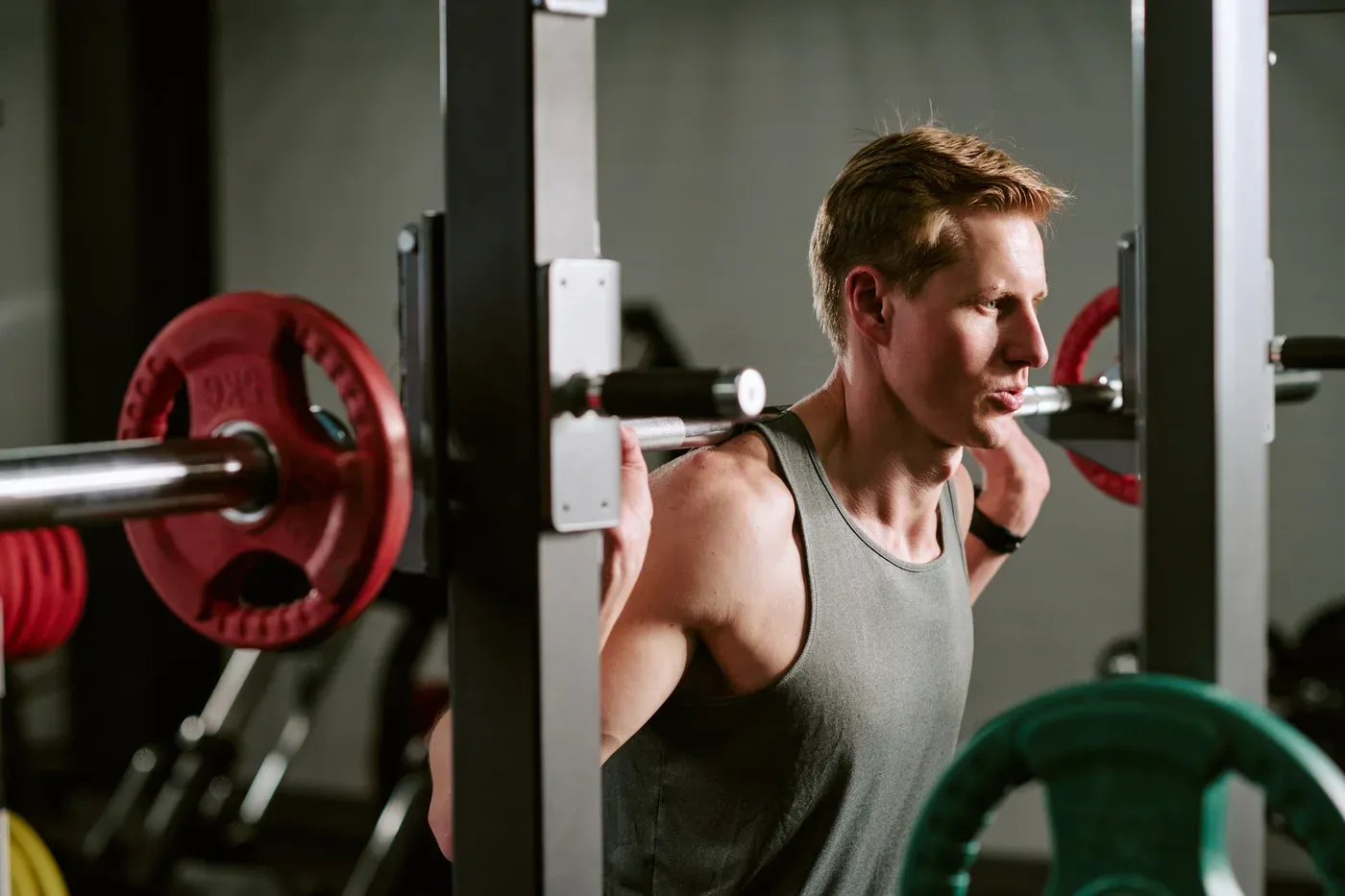
To squat safely over 40, set the bar in a rack with safety arms just below your bottom position, take a shoulder-width stance with toes turned slightly out, brace your midsection, then sit down between your heels to the deepest point you can hold a flat back, and stand up with chest and hips rising together. Start lighter than your ego wants, add weight slowly, and stop each set with a rep or two left.
Why the squat is worth learning now
The squat trains your quads, glutes, adductors and the muscles that hold your trunk upright, all at once. It is the movement behind standing up from a low couch, lifting a kid out of a car seat and climbing stairs two at a time. Few exercises let you load the legs this heavily with this little equipment.
It also has a reputation for wrecking knees and backs. That reputation comes mostly from men loading a bar they can’t control. Squat with a range you own and a load you can move with clean form, and it’s one of the better investments you can make in your fifties and sixties.
Rack setup before you touch the bar
- Set the bar hooks at mid-chest height so you unrack it with a small knee extension, not a calf raise.
- Set the safety arms or pins a few centimetres below where your hips end up at the bottom. This is non-negotiable when you train alone.
- Grip the bar just outside your shoulders. If your shoulders are stiff, go wider.
- Step under and place the bar on the meaty shelf of your upper traps, not on the bony knob at the base of your neck.
The squat, step by step
- Stand up to unrack, then take three steps back: one, two, adjust. No more walking around.
- Feet about shoulder width, toes pointed out 15 to 30 degrees, weight spread over the whole foot.
- Take a big breath through your nose into your belly, then tighten your abs as if bracing for a shove.
- Push your knees out in line with your toes as your hips travel back and down at the same time.
- Keep your chest facing the wall ahead of you, not the floor, all the way down.
- At the bottom, drive the floor away with your whole foot; hips and shoulders rise at the same speed.
- Breathe out near the top, re-brace, and start the next rep.
Mistakes that bother knees and backs
Knees diving inward. Usually a load problem or weak hips. Drop 10 to 20 percent, think “spread the floor apart” with your feet, and add split squats to build each leg on its own.
Heels peeling up. Your ankles run out of bend before your hips reach depth. Widen your stance slightly, raise your heels on small plates or lifting shoes, or switch to a front-loaded squat for a while.
Lower back tucking at the bottom. The pelvis rolls under once you pass your available range. Stop just above that point. A box squat set at that height teaches the depth for you.
Hips shooting up first. The squat turns into a good morning and your back does the work. Slow the first 10 centimetres out of the hole and try three-second pause squats with a lighter bar.
Sets and reps by goal
| Goal | Sets × reps | Rest | How hard |
|---|---|---|---|
| Learning the lift | 3 × 8 | 2 min | Finish with 3 or 4 reps left |
| Strength | 4–5 × 3–5 | 3 min | 1–2 reps left |
| Muscle | 3–4 × 6–10 | 2 min | 1–2 reps left |
Add 2.5 kg (5 lb) a session while every rep looks the same. When that stalls, add reps first, then load.
Easier, harder and joint-friendly options
| Option | Use it when |
|---|---|
| Goblet squat | You’re new, or learning to stay upright |
| Box squat | You need a consistent, pain-free depth |
| Pause squat | You want strength out of the bottom with less weight |
| Front squat | Your back tolerates an upright torso better |
| Safety squat bar | Shoulders won’t let you reach back to a straight bar |
| Leg press or belt squat | Your back can’t take an axial load right now |
For sore knees, shorten the range to just above where it hurts and slow the lowering phase. For a sore back, remove the bar from your spine entirely for a few weeks.
Where it fits in a program
The back squat is the main lower-body lift in the beginner strength program and appears in the 3-day workout and the push pull legs plan. Pick one, run it for eight weeks, and log every squat session. If you want the progression worked out for you, the DIY programs lay out the weights week by week.
Questions people also ask
How deep should a man over 40 squat?
As deep as you can go while your lower back stays flat and your heels stay down. For most men that's thighs about parallel to the floor; if you lose position higher than that, squat to a box at that height and work on depth over time.
Is the barbell back squat bad for your knees after 40?
Not for healthy knees. Squatting with knees travelling forward over the toes is normal. Knees that cave inward, or jumps in load your legs aren't ready for, are what usually irritate them.
Should I wear a belt or knee sleeves?
Neither is needed to learn the lift. Sleeves keep some men's knees warm and comfortable; a belt helps you brace on heavy sets of five or fewer once your technique is consistent.
How often should I squat?
Twice a week is a good default: one heavier day and one lighter or variation day. Once a week still works if recovery is tight.