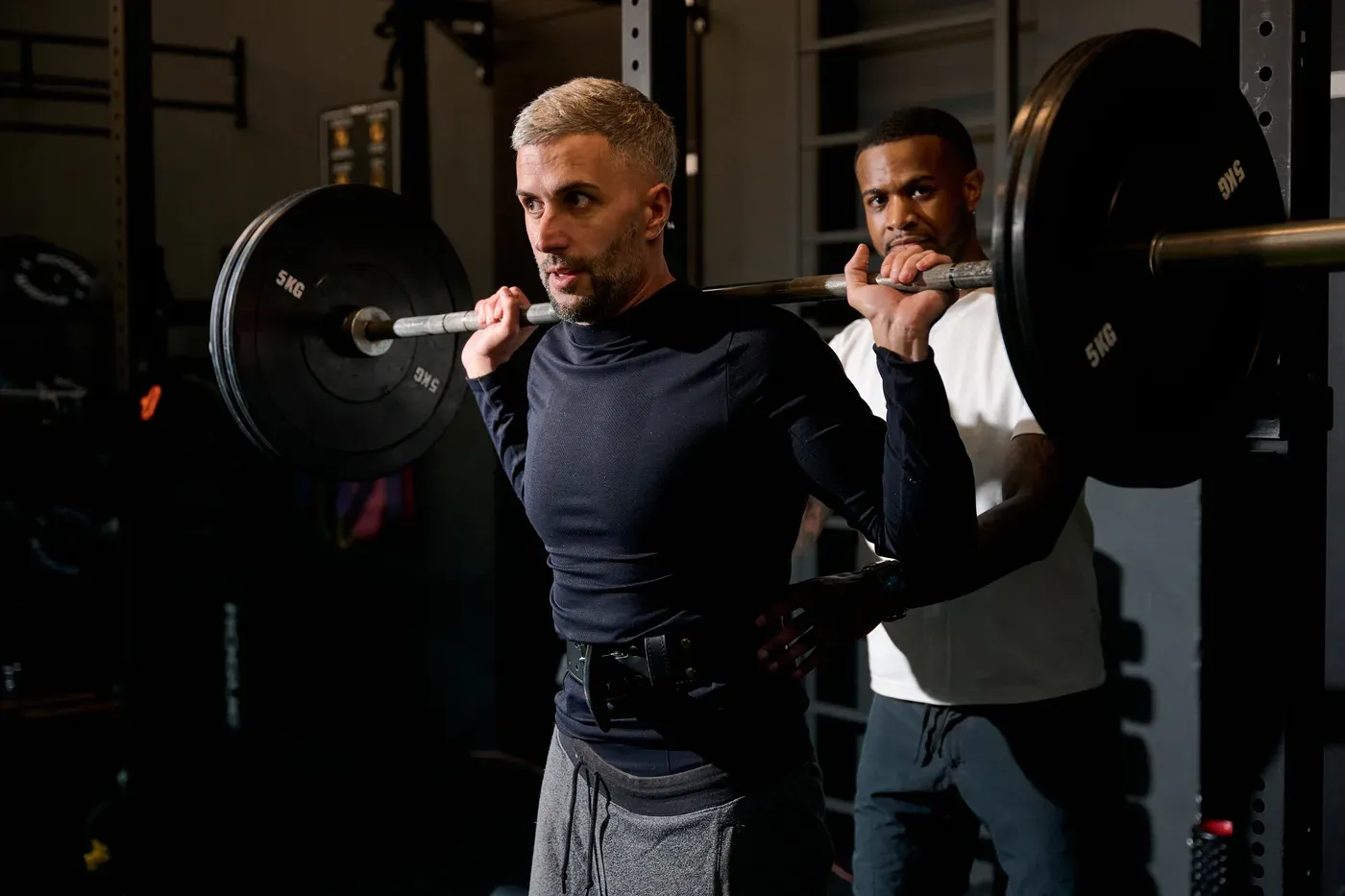
A box squat is a squat where you sit back to a box or bench, pause briefly while staying tight, and stand up again. To do it, set a box at a height where your back stays flat on contact, take your squat stance a little wider than usual, sit your hips back until you touch the box, hold for a second without relaxing, then drive up. The box gives you a consistent, controlled depth, which is why it suits men over 40 with knees or backs that don’t like a deep squat.
Why use a box
The box takes the guesswork out of depth. Every rep goes to the same place, so you can’t sink lower than your hips allow when you’re tired. The pause removes the bounce out of the bottom, which builds strength from a dead stop and lowers the stress on the knees. Many men with a cranky knee find they can squat comfortably again once they stop at a set height.
It’s also a teaching tool. If your squat turns into a forward lean or your knees cave, sitting back to a box often fixes both.
Setting the box
- Use a sturdy plyo box, a bench or stacked plates with a mat on top.
- Place it behind you inside the rack so you touch it at your chosen depth.
- Start just above parallel: when seated, the crease of your hip is slightly above the top of your knee.
- Set safety arms just below the box height.
How to box squat
- Unrack the bar and step back until your calves are a few centimetres from the box.
- Stand with feet slightly wider than your normal squat, toes turned out.
- Brace and push your hips back first, as if reaching for the box with your backside.
- Keep your shins close to vertical and your knees pushed out.
- Touch the box with control. No dropping.
- Pause for one second, staying braced. Your weight is still on your feet, not resting on the box.
- Drive your feet into the floor and stand up, chest and hips rising together.
Common faults
Crashing onto the box. The spine absorbs the impact. Lower at the same speed all the way down.
Relaxing at the bottom. You lose your brace and rock back. Sit lightly; keep tension in your legs and trunk.
Rocking forward to stand. Using momentum to get off the box hides weakness. Push straight up from a still position.
Box too low. Your back rounds before you touch it. Raise the box.
Sets and reps
| Goal | Sets × reps | Rest | Notes |
|---|---|---|---|
| Learning | 3 × 8 goblet box squat | 90 s | Light, master the sit-back |
| Strength | 5 × 3 barbell box squat | 2–3 min | Heavy, full pause |
| Muscle | 3 × 8–10 | 2 min | Slow lower, short pause |
| Speed | 6–8 × 2 at about 50–60% of your best squat | 60 s | Fast up, controlled down |
Variations and joint-friendly swaps
| Variation | Use it for |
|---|---|
| Goblet box squat | Learning, or when a bar doesn’t suit your shoulders |
| Higher box | Sore knees or hips |
| Safety squat bar box squat | Stiff shoulders; more upright |
| Lower box in small steps | Rebuilding depth |
| Free back squat | Once depth and control are consistent |
| Leg press | Back flare-ups |
Programs that use it
The box squat is the squat option in the knee friendly leg workout and the lower back friendly workout, and a variation in the beginner strength program. For a plan that lowers the box over time, see the DIY programs.
Questions people also ask
What height should a box squat box be?
Start at a height where your back stays flat when you touch it, often just above parallel. Lower it a few centimetres at a time as your control improves.
Should I sit fully on the box?
Touch and pause, but stay tight. Don't relax and rock back onto the box with a loaded bar; that's when backs get compressed.
Is the box squat good for bad knees?
It often is. Sitting back to the box keeps the shins more vertical and lets you stop at a height that doesn't hurt. Pain that persists still needs assessment.
Can I box squat with dumbbells?
Yes. A goblet box squat is a great way to learn the movement before you put a bar on your back.