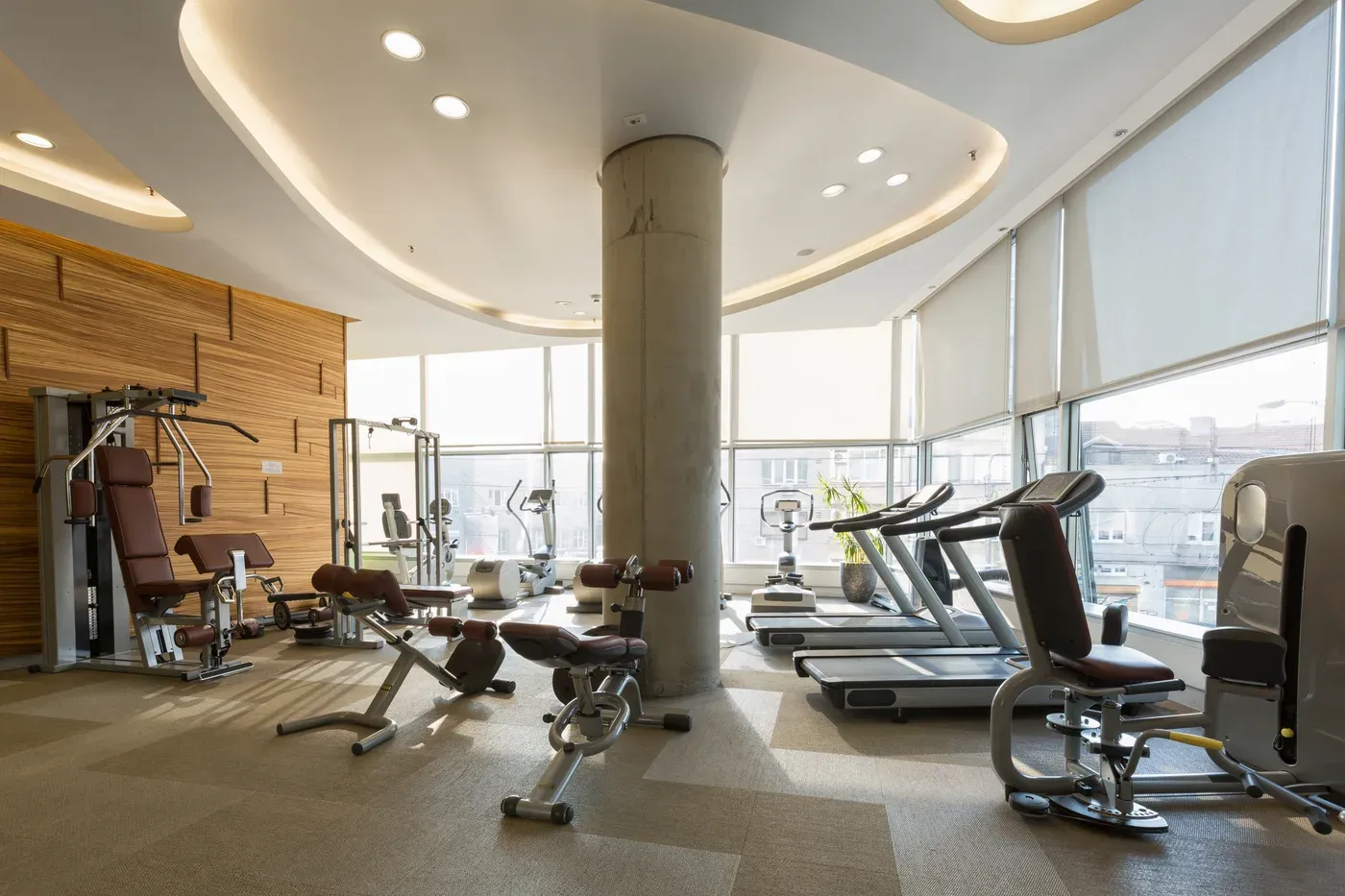
Staying fit while travelling for work comes down to a minimum you can hit in any hotel, not a perfect plan you’ll abandon on day two. For most trips, that minimum is two or three 25-minute strength sessions, a daily step floor of around 8,000, protein at every meal and a fixed bedtime. Plan it by the length of the trip, pack for it, and put the sessions in your calendar before you leave, the same way you’d book the flight.
Plan by trip length
Not every trip needs the same approach. A one-night trip to Ottawa and a two-week stint in Vancouver call for different targets.
| Trip length | Training goal | Movement | Eating goal |
|---|---|---|---|
| 1–2 nights | None required; one session if easy | 8,000+ steps a day | Normal portions; skip the minibar and late room service |
| 3–5 nights | 2 sessions of 25–30 min | 8,000+ steps; walk to meetings if possible | Protein at breakfast; one planned indulgent meal |
| 1–2 weeks | 3 sessions a week, same as home | Daily walk outside, especially on arrival | Find a grocery store on day 1; keep a stocked fridge |
| Regular road warrior (weekly flights) | Train at home Mon/Fri, 1–2 hotel sessions midweek | Steps in airports and between meetings | A fixed “travel day” eating routine you don’t think about |
If you travel every week, travel isn’t an exception; it’s your normal week, and the plan should be built around it from the start.
The 25-minute hotel session
Most hotels have a small gym with dumbbells up to somewhere between 20 and 50 lb, a bench and a treadmill. That’s enough. If there’s no gym, the hotel room workout uses bodyweight and a band.
A simple dumbbell session that works in almost any hotel gym:
- Goblet squat, 3 sets of 10–12
- One-arm dumbbell row, 3 sets of 10 per side
- Dumbbell bench press or push-ups, 3 sets of 10–12
- Dumbbell Romanian deadlift, 3 sets of 10
- Plank or dead bug, 2 sets
Rest about 60 seconds between sets, or pair exercises back to back to finish in 25 minutes. When the dumbbells are too light for your usual work, add reps and slow the lowering phase to three seconds.
Two of these on a five-night trip keeps the habit alive and holds your strength. Canada’s movement guidelines recommend muscle-strengthening activity at least twice a week; travel weeks can still meet that.
Pack for training
What goes in the carry-on decides what happens on the trip.
- Running shoes or trainers that work for walking and lifting
- One set of gym clothes (wash it in the sink if the trip is long)
- A light resistance band or loop band, about the size of a rolled sock
- A refillable water bottle
- A few protein snacks for the travel day: jerky, roasted chickpeas, a protein bar you’ve checked the label on
- Earplugs and an eye mask, because hotel sleep is the most common thing travel ruins
A sample four-night trip
Here’s what a Monday-to-Friday trip from Toronto might look like with this approach.
| Day | Plan |
|---|---|
| Monday (fly out mid-morning) | Walk the terminal instead of sitting at the gate. Protein-heavy lunch at the destination. Check the hotel gym on arrival so you know what’s there. Lights out at your usual time. |
| Tuesday | 25-minute hotel session at 6:30 a.m. Walk to the client’s office if it’s under 25 minutes away. |
| Wednesday | No training. Walk after dinner. Planned client dinner: see business dinners and drinks. |
| Thursday | Second hotel session. Hit 8,000 steps between meetings. |
| Friday (fly home) | Breakfast with protein, eat a proper lunch before the airport instead of airport snacks. Back to your normal plan on Saturday. |
That’s two sessions, five days of steps and one deliberate indulgence. Compared with a normal home week it’s a step down, but it isn’t a week off.
Sleep, time zones and the bar
Travel affects recovery more than training does. A few rules carry most of the weight:
- Keep a fixed bedtime in local time, even if dinner ran late. Use earplugs and the blackout curtains.
- Get morning daylight after flying west or east; a 10-minute walk outside helps you adjust.
- Decide your drink limit before the evening starts. Hotel bars and client dinners are where travel weeks go off track.
- Don’t train hard on a 4-hour night. A walk or mobility routine is fine; heavy lifting can wait a day.
The eating side has its own guide: eating healthy on business trips covers airports, breakfast buffets, conferences and per diem dinners.
Before your next trip
Look at your calendar now. Block two 30-minute slots for training on the next trip, check the hotel’s gym hours, and put a band in your bag. If you travel often enough that it shapes your whole year, a coach can build a program with a home version and a travel version and check in from wherever you are; coaching for busy professionals is designed for that kind of schedule.
Questions people also ask
How do I work out in a hotel with no gym?
Use bodyweight and a resistance band: split squats, push-ups, band rows, glute bridges and planks, in a circuit of 20 to 25 minutes. A band weighs almost nothing and covers the pulling movements bodyweight can't.
Should I train on the day I fly?
Only if it's easy to fit, such as a short session before an afternoon flight. On early-morning or long-haul travel days, a walk through the terminal and the step target are enough. Treat the next day as the training day.
How do I deal with jet lag and training?
Keep the first session after a long flight light, get daylight in the morning at your destination, and train at a time that matches the local day. Heavy lifting on almost no sleep is a poor trade.
Will a week of travel undo my progress?
No, not if you keep a minimum going. Strength and muscle hold up well over a week or two of reduced training. The bigger risk is the eating and drinking that often come with travel.