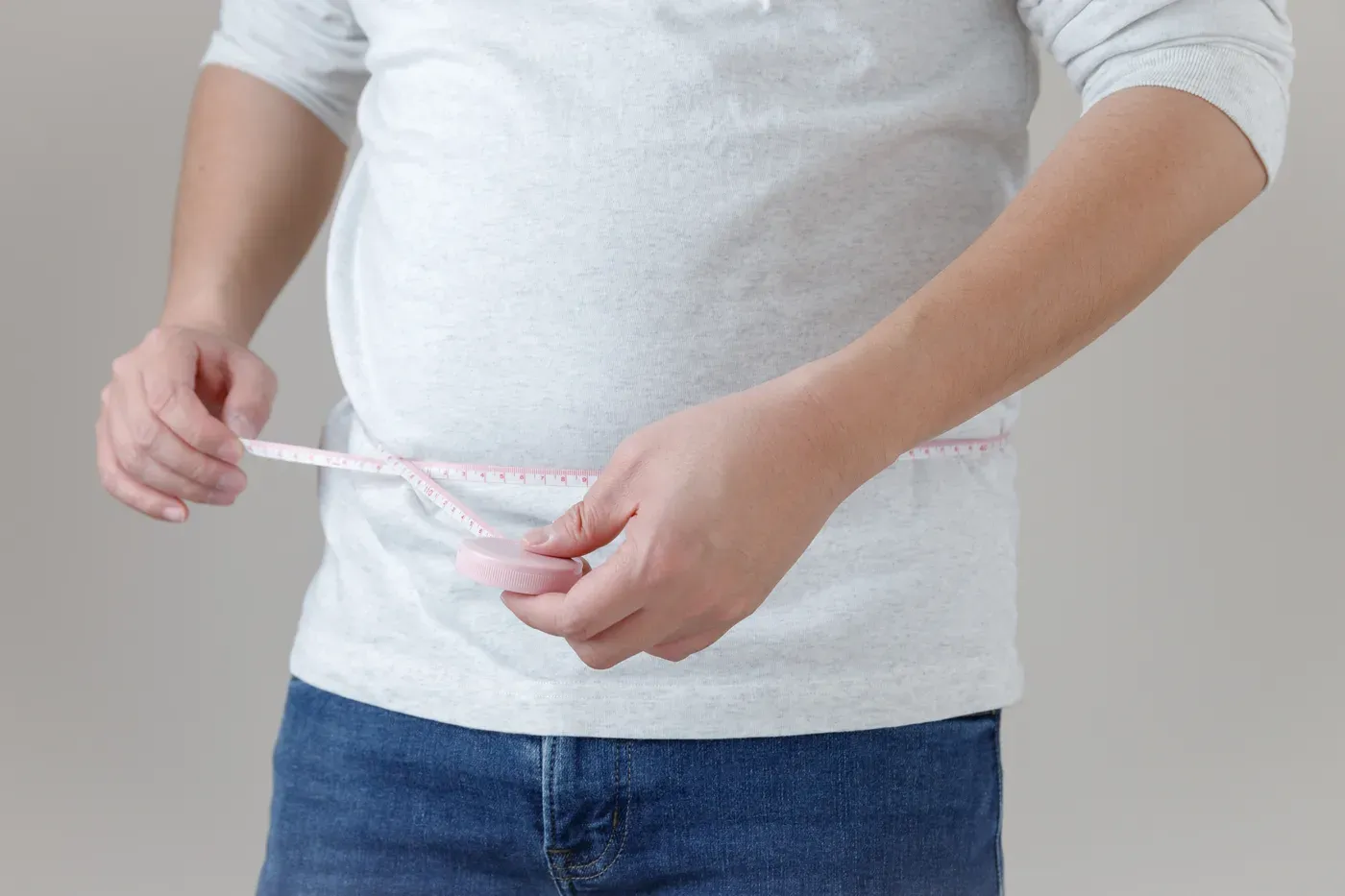
A healthy waist size for most men is less than half their height: under 89 cm (35 in.) for a man who is 178 cm (5 ft 10 in.), for example. Canadian guidance flags a waist of 102 cm (40 in.) or more as linked to increased risk of diabetes, heart disease and high blood pressure, and Heart & Stroke treats more than 94 cm (37 in.) as increased risk. The waist-to-height rule is more personal than a single cut-off because it scales with your frame, and it’s a better screening tool than BMI.
The three numbers to know
| Measure | Healthy | Increased risk | Higher risk |
|---|---|---|---|
| Waist circumference, Health Canada | Under 102 cm (40 in.) | 102 cm (40 in.) or more | Risk rises as the waist grows beyond this |
| Waist circumference, Heart & Stroke | 94 cm (37 in.) or less | More than 94 cm (37 in.) | More than 102 cm (40 in.), substantially increased |
| Waist-to-height ratio, NICE | 0.40–0.49 | 0.50–0.59 | 0.60 or more |
Sources: Health Canada, Heart & Stroke, NICE.
Health Canada stresses that the cut-offs are approximate, so a waist just under the line still deserves attention, and that a high waist carries some risk even if your BMI is normal. Heart & Stroke adds that ethnicity, medical history and family history change individual risk, so a waist below the cut-off doesn’t mean you’re risk-free.
Your target waist by height
The waist-to-height rule is simple: keep your waist under half your height. NICE uses this as its plain-language advice. Here’s what that means in practice:
| Your height | Healthy waist (ratio under 0.5) | Increased-risk band (0.5–0.59) | Higher risk (0.6+) |
|---|---|---|---|
| 168 cm (5 ft 6 in.) | under 84 cm (33 in.) | 84–100 cm | 101 cm (39.7 in.) or more |
| 173 cm (5 ft 8 in.) | under 86.5 cm (34 in.) | 86.5–103 cm | 104 cm (40.9 in.) or more |
| 178 cm (5 ft 10 in.) | under 89 cm (35 in.) | 89–106 cm | 107 cm (42 in.) or more |
| 183 cm (6 ft 0 in.) | under 91.5 cm (36 in.) | 91.5–109 cm | 110 cm (43.2 in.) or more |
| 188 cm (6 ft 2 in.) | under 94 cm (37 in.) | 94–112 cm | 113 cm (44.4 in.) or more |
| 193 cm (6 ft 4 in.) | under 96.5 cm (38 in.) | 96.5–115 cm | 116 cm (45.6 in.) or more |
The waist-to-height ratio calculator works it out for your exact height.
Why waist-to-height beats BMI for men who lift
BMI can’t tell muscle from fat, so a muscular man can look “overweight” on BMI while carrying little belly fat, and a man with thin arms and a round belly can look “normal”. In a meta-analysis of studies with more than 300,000 adults, waist-to-height ratio was significantly better than both waist circumference and BMI at picking out people with diabetes, high blood pressure and cardiovascular disease (Ashwell et al., 2012). NICE says its waist-to-height bands can be used for adults with a BMI under 35, of both sexes and all ethnicities, including adults with high muscle mass.
For the weight side of the same question, see how much a 45-year-old man should weigh.
How to measure your waist properly
Pant size isn’t your waist; most men wear trousers below the true waist. Use Heart & Stroke’s method:
- Stand in front of a mirror with your stomach bare and relaxed.
- Find the top of your hip bones on both sides.
- Wrap the tape around at that level, parallel to the floor and not twisted.
- Breathe out normally twice; after the second breath out, read the tape, snug but not pressing into the skin.
Measure in the morning before eating, and repeat every two to four weeks. One reading tells you where you are; the trend tells you where you’re going.
If your waist is over the line
Don’t panic and don’t crash diet. Do two things:
- Get checked. Ask your family doctor about blood pressure, blood sugar and cholesterol. A high waist is a reason to know your numbers. Visceral fat in men over 40 explains why the waist matters for health.
- Start with the basics. Aerobic activity most days, two to three strength sessions a week, a modest calorie deficit, fewer drinks and more sleep. For realistic timing, read how long it takes to lose belly fat.
The bottom line
Keep your waist under half your height, and treat 102 cm (40 in.) as a clear signal to get checked. Measure it properly, track it monthly, and work on the habits that move it. If your waist and your health markers need a longer runway than a quick program, the 6-Month Full Reset gives six months of coaching with a body-composition strategy and a long-term maintenance plan.
Questions people also ask
Is a 40-inch waist bad for a man?
Health Canada links a waist of 102 cm (40 in.) or more in men with an increased risk of diabetes, heart disease and high blood pressure. It's a signal to get checked and to work on bringing it down, not a diagnosis.
Is a 36-inch waist healthy for a man?
It depends on your height. At 5 ft 10 in. (178 cm), half your height is 89 cm (35 in.), so a 36-inch (91 cm) waist sits just into the increased-risk band. At 6 ft 1 in. (185 cm), it's under half your height.
Is waist size the same as pant size?
No. Pant sizes are often smaller than your true waist and are worn lower. Measure with a tape at the top of your hip bones for a real number.
Does the waist-to-height rule work for muscular men?
NICE says the waist-to-height bands can be used for adults with a BMI under 35, including adults with high muscle mass. That's one reason it's more useful than BMI for men who lift.
Sources
- Health Canada — Canadian Guidelines for Body Weight Classification in Adults (Q&A)
- Heart & Stroke — Healthy weight and waist
- NICE NG246 — Identifying and assessing overweight, obesity and central adiposity
- Ashwell et al. (2012), Waist-to-height ratio is a better screening tool than waist circumference and BMI, Obes Rev