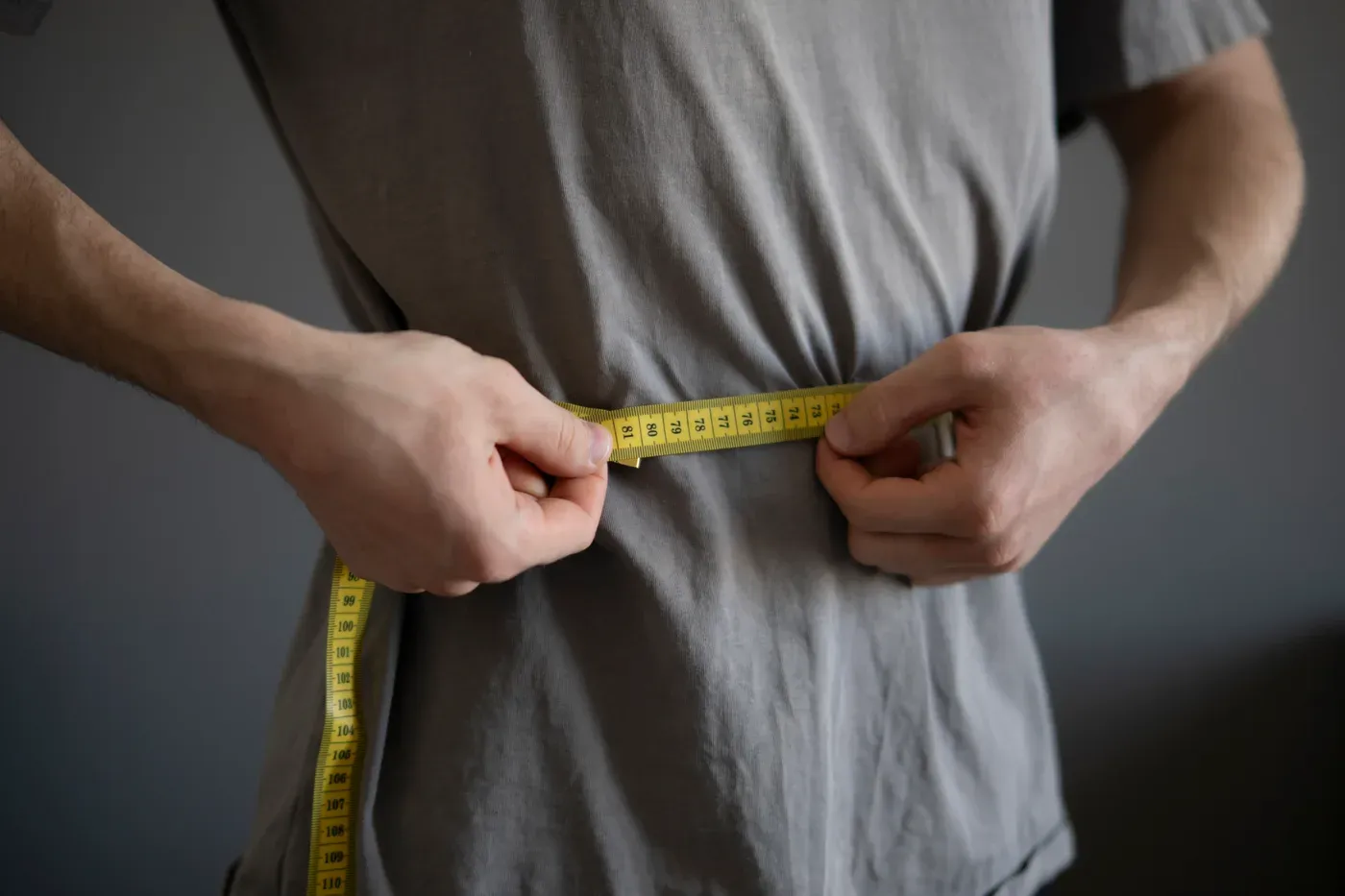
Losing belly fat usually takes three to six months for a noticeable change and longer for a flat stomach, but it happens in layers. Bloating can ease within days. Deep visceral fat, the kind packed around the organs, responds relatively quickly: exercise trials show measurable reductions in about 12 weeks, even without dieting. The softer layer under the skin, the part you can pinch, shrinks only as your overall body fat falls, which for most men over 40 takes several months of a steady deficit. Your waist measurement is the best way to watch it happen.
Belly fat comes off in three stages
Stage 1: bloat (days to two weeks). Some of what looks like belly fat is gas, food in your gut and water. Cutting alcohol, late salty meals and big carb-heavy dinners can make your stomach look and feel flatter within a week or two. Glycogen, the stored form of carbohydrate, is held with three to four parts water (Kreitzman et al., 1992), which is part of why the first drop feels fast. It’s real, but it isn’t fat loss.
Stage 2: visceral fat (about 8 to 12 weeks). Deep belly fat responds well to regular aerobic exercise. A meta-analysis of exercise trials without calorie restriction found clinically meaningful reductions, more than 40 cm² on CT scans in men, after as little as 12 weeks (Vissers et al., 2013). You can’t see this layer directly, but a firm belly getting softer and smaller is often the sign.
Stage 3: the pinchable layer (3 months and beyond). Subcutaneous belly fat leaves as total body fat drops. Because many men store a lot of fat here, it’s often one of the last places to look lean. This is the slow part.
A realistic belly-fat timeline
This assumes a modest calorie deficit, aerobic exercise most days, strength training two to three times a week, and alcohol under control. Your genetics and starting point change the pace.
| Timeframe | What you’ll likely notice |
|---|---|
| Week 1–2 | Less bloat, belt slightly easier, scale drops partly from water |
| Weeks 3–6 | Waist starts trending down on the tape; little visible change |
| Weeks 8–12 | Belly firmer and smaller; first change others notice |
| Months 3–6 | Clear change in waist size and how shirts fit |
| Months 6–12+ | Approaching a lean midsection; visible abs only for some men, at low body fat |
The more belly fat you start with, the bigger the early changes on the tape tend to be, but the longer the full process takes.
What speeds it up and what slows it down
| Speeds it up | Slows it down |
|---|---|
| 30–60 min of aerobic activity most days | Exercise only on weekends |
| Steady deficit held through weekends | Five good days, two loose ones |
| 7+ hours of sleep | Short sleep (less of the weight lost is fat) |
| Alcohol capped at a few drinks a week | Drinks most evenings |
| Lifting 2–3 times a week | Dieting without strength training |
Two of these have direct evidence. Canada’s obesity guideline rates 30 to 60 minutes of moderate to vigorous aerobic activity on most days as reducing visceral fat at the highest evidence level (Wharton et al., 2020). And in a controlled trial, the share of weight lost as fat fell by 55% when dieters slept 5.5 hours instead of 8.5, even though total weight loss was similar (Nedeltcheva et al., 2010).
The how-to is in how to lose belly fat after 40; this page is about the clock.
Health milestones along the way
You don’t need a six-pack to get the health benefits. Two waist milestones matter more:
- Under 102 cm (40 in.). Health Canada associates a waist at or above this with increased risk of diabetes, heart disease and high blood pressure (Health Canada).
- Under half your height. NICE classes a waist-to-height ratio of 0.4 to 0.49 as healthy central adiposity, with no increased health risk (NICE).
If you start well above the first line, crossing it is a realistic first-year goal for many men. The healthy waist size guide shows the target for your height.
How to track it so you don’t quit early
Measure your waist at the top of the hip bones every two weeks, in the morning, before eating. Log it next to your weekly average weight. When the scale stalls, the tape often hasn’t, and the reverse happens too. For the pace of overall weight loss, see how fast a man over 40 can lose weight.
The bottom line
Belly fat leaves in layers: bloat in days, deep fat within about three months of consistent exercise, the pinchable layer over many months. Measure it, protect your sleep and your weekends, and plan in quarters, not weeks. Twelve weeks is long enough to see the first real change, which is how the 12-Week Body Transformation is built: an assessment, training and nutrition targets, and tracked check-ins.
Questions people also ask
Can you lose belly fat in two weeks?
You can lose bloating in two weeks by cutting alcohol, late salty meals and excess carbohydrate, and that can make your stomach look flatter. Actual fat loss in two weeks is small.
Why is my weight going down but my belly isn't?
Fat comes off the whole body in an order largely set by genetics, and for many men the belly is near the end of the line. Keep measuring your waist every two weeks; it usually starts to follow.
How long does it take to see abs?
Usually much longer than losing a belly. Visible abs need a body-fat level well below the healthy range for most men over 40, which can take many months beyond the point where your waist looks normal.
Does belly fat come off faster with cardio?
Regular aerobic exercise has good evidence for reducing deep belly fat, even without diet changes. It's the most useful addition to a calorie deficit if belly fat is your main concern.
Sources
- Vissers et al. (2013), The effect of exercise on visceral adipose tissue in overweight adults, PLoS One
- Wharton et al. (2020), Obesity in adults: a clinical practice guideline, CMAJ
- Kreitzman et al. (1992), Glycogen storage: illusions of easy weight loss, Am J Clin Nutr
- Nedeltcheva et al. (2010), Insufficient sleep undermines dietary efforts to reduce adiposity, Ann Intern Med
- Health Canada — Canadian Guidelines for Body Weight Classification in Adults (Q&A)
- NICE NG246 — Identifying and assessing overweight, obesity and central adiposity