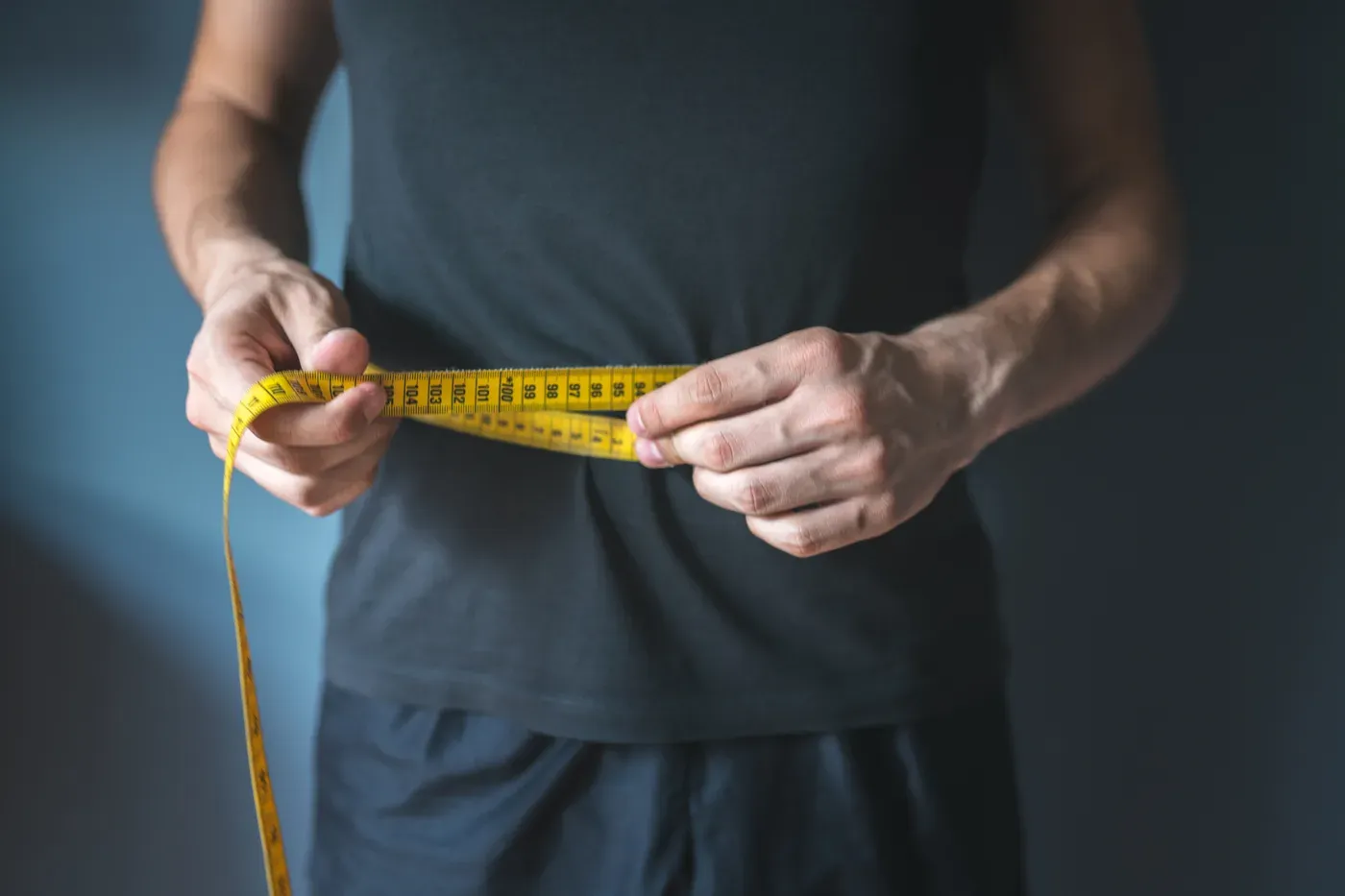
To lose belly fat after 40, a man has to lose body fat overall, because you can’t choose where fat comes off. The belly responds better than you’d expect when you combine a modest calorie deficit with regular aerobic exercise, which reduces the deep fat around your organs even before the scale moves much. Lift weights so the weight you lose is fat rather than muscle, and judge progress with a tape around your waist, not the bathroom scale.
Why belly fat shows up after 40
Belly fat in your forties is usually the sum of small changes, not one broken switch. The common story about a crashing metabolism doesn’t hold up well: a large study that measured daily energy use with doubly labelled water from infancy to old age found that energy expenditure, adjusted for body size, stays roughly stable between 20 and 60 (Pontzer et al., 2021).
What does change for most men:
- Less muscle and less movement. A desk job, a car commute and evenings on the couch cut hundreds of calories of daily movement compared with your twenties.
- More liquid calories. Two beers or two glasses of wine most nights adds up fast and tends to come with extra food.
- Worse sleep and more stress. Both push hunger toward the evening.
- Where men store fat. Men tend to store extra fat around the trunk, so a modest gain shows up at the belt line first.
None of that is permanent. The plan below targets each piece.
Belly fat comes in two layers, and they respond differently
There are two kinds of belly fat. Subcutaneous fat sits under the skin; you can pinch it. Visceral fat sits deeper, around the liver and intestines, and is the one linked to type 2 diabetes, high blood pressure and heart disease. A firm, round belly that pushes outward usually carries a lot of visceral fat. We cover the health side in detail in visceral fat in men over 40.
The useful news: visceral fat responds well to exercise. A meta-analysis of 15 trials found that aerobic exercise reduced visceral fat in overweight adults even without a calorie-restricted diet, with moderate or high intensity working best (Vissers et al., 2013). Canada’s obesity guideline makes the same point: 30 to 60 minutes of moderate to vigorous aerobic activity on most days reduces abdominal visceral fat, the strongest grade of evidence in that section (Wharton et al., 2020).
The pinchable layer is slower. It shrinks as your overall body fat drops, which takes a calorie deficit and patience.
The belly-fat plan for men over 40
The general approach to fat loss after 40 is in the four levers guide. For the belly specifically, set it up like this:
| Piece | Target | Why it matters for the belly |
|---|---|---|
| Aerobic exercise | 30–60 min, most days (brisk walking counts) | Reduces visceral fat even before weight changes much |
| Strength training | 2–3 full-body sessions a week | Keeps muscle so the weight you lose is fat |
| Calorie deficit | Small and steady, not a crash | Shrinks the pinchable layer over months |
| Alcohol | Counted and capped | The easiest calories to cut for most men |
| Sleep | 7+ hours | Short sleep shifts weight loss away from fat |
Two practical notes. Brisk walking qualifies as aerobic exercise, so you don’t need to start running; walking for weight loss over 40 shows how to build it up. And the evening drink is the first place to look: one study of men linked beer intake to a bigger waist, but through overall weight gain, which is covered in how to lose a beer belly.
Skip the ab circuit as a fat-loss tool
Doing crunches won’t burn the fat on top of your abs. In a six-week trial, adults did seven abdominal exercises five days a week while keeping their diet steady; abdominal fat, waist size and skinfolds didn’t change compared with the control group (Vispute et al., 2011).
Core training still earns a place. It protects your back and makes the big lifts safer. Just count it as strength work, not as fat loss.
Measure your waist, not just your weight
The scale is a poor belly-fat tracker. Water, food in your gut and salt can swing it from day to day, and if you’re adding some muscle while losing fat, weight can sit still while your waist shrinks.
Use a tape the way Heart & Stroke describes: find the top of your hip bones, keep the tape level, breathe out normally and read it snug but not tight (Heart & Stroke). Measure once every two weeks, same time of day, before breakfast.
For reference, Health Canada associates a waist of 102 cm (40 in.) or more in men with increased risk of diabetes, heart disease and high blood pressure (Health Canada). If you’re over that line, get a checkup with your family doctor alongside the plan. The healthy waist size guide explains the waist-to-height target.
What to do this week
- Measure your waist at the top of the hip bones and write it down.
- Add a 30-minute brisk walk on at least five days. A lunch walk counts.
- Book three short strength sessions in your calendar like meetings.
- Count your drinks for seven days without changing anything, then decide on a weekly cap.
- Set a fixed wake-up time and protect seven hours in bed.
Recheck the tape in two weeks. If your waist is going down, keep going; if it hasn’t moved in four weeks, the deficit is the likely gap. How long it takes to lose belly fat sets realistic checkpoints. If you’d rather have the targets set for you and checked every week, the 12-Week Body Transformation is built around this kind of measurable change in body composition.
Questions people also ask
Will crunches or planks burn belly fat?
No. Ab exercises strengthen the muscles under the fat, but studies of targeted ab training show no extra fat loss from the belly. Fat comes off the whole body when you eat less than you burn.
Why does belly fat seem to be the last to go for men over 40?
Men tend to store fat around the trunk first, so it's often where the most fat sits. The deep fat inside the abdomen usually responds well to exercise, while the softer layer under the skin can take longer to shrink visibly.
Is a bigger belly after 40 just a slower metabolism?
Mostly not. A large doubly labelled water study found energy expenditure, adjusted for body size, stays stable from about age 20 to 60. Less muscle, less daily movement, more drinking and worse sleep explain most of the change.
What waist size should I aim for?
Health Canada links a waist of 102 cm (40 in.) or more in men with higher health risk. A simple personal target is a waist under half your height.
Sources
- Pontzer et al. (2021), Daily energy expenditure through the human life course, Science
- Vissers et al. (2013), The effect of exercise on visceral adipose tissue in overweight adults, PLoS One
- Wharton et al. (2020), Obesity in adults: a clinical practice guideline, CMAJ
- Health Canada — Canadian Guidelines for Body Weight Classification in Adults (Q&A)
- Heart & Stroke — Healthy weight and waist
- Vispute et al. (2011), The effect of abdominal exercise on abdominal fat, J Strength Cond Res