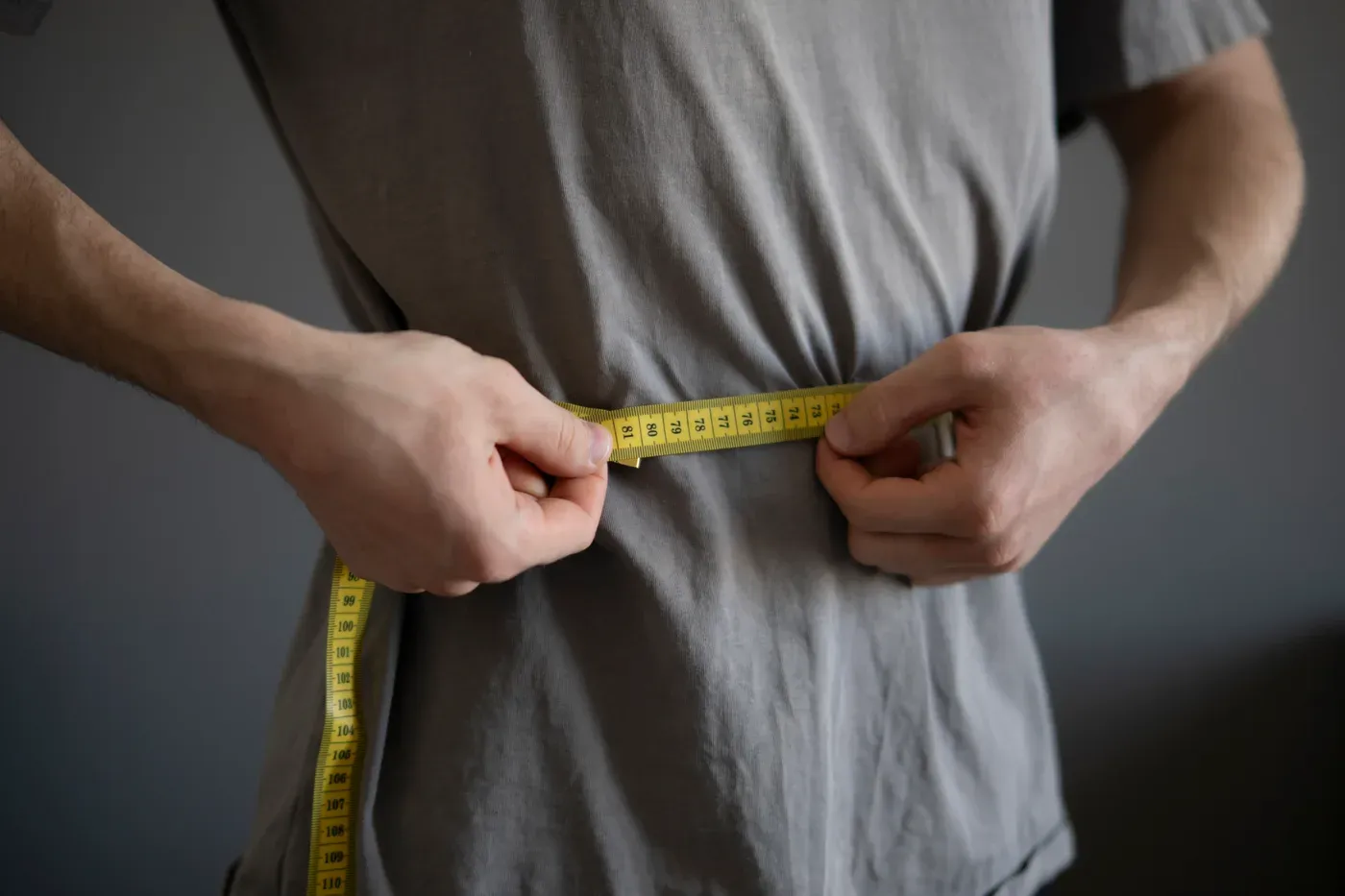
The best way to measure body fat depends on what you need. A DEXA scan gives the most detailed picture of fat, muscle and bone, and is worth doing every few months if you want hard numbers. InBody-type machines and home smart scales are convenient estimates that shift with hydration, so use them for monthly trends under identical conditions. A tape measure around your waist is free, quick and, for tracking fat loss over time, often the most useful of all. Whatever you use, measure the same way every time and compare trends, not single readings.
The main methods compared
| Method | What it measures | Strengths | Weaknesses | Where you get it |
|---|---|---|---|---|
| Waist tape | Waist circumference | Free, quick, linked directly to health risk | Doesn’t give a body-fat percentage | At home |
| Waist-to-height ratio | Waist relative to height | Strong screening tool for cardiometabolic risk | Same as above | At home |
| Home smart scale | Estimated body fat via impedance | Convenient, daily data | Hydration, meals and exercise swing readings | At home |
| InBody or similar | Segmental, multi-frequency impedance | More detail (by limb and trunk), quick | Still an estimate; hydration-sensitive | Many gyms and clinics |
| Skinfold calipers | Fat thickness at set sites | Cheap, good for trends with one skilled tester | Depends heavily on the tester | Trainers, some gyms |
| DEXA | Fat, lean mass and bone, by region | Most detailed option open to the public | Costs more; small radiation dose; still has error | Private clinics |
The tape: underrated and free
For fat loss, the tape often tells you more than any device. Waist circumference adds information about health risk beyond BMI, and an international consensus statement argues that reducing it is a critical treatment target (Ross et al., 2020). Waist-to-height ratio did better than waist alone and BMI at screening for cardiometabolic risk in a meta-analysis of more than 300,000 adults (Ashwell et al., 2012).
Measure the way Heart & Stroke describes: tape at the top of the hip bones, level with the floor, after a normal breath out, snug but not pressing into the skin (Heart & Stroke). See healthy waist size for men for the targets.
Impedance: smart scales and InBody
Bioelectrical impedance sends a small current through your body and estimates body water, then fat-free mass and fat, using equations. European clinical nutrition guidelines conclude it works well in healthy people with stable hydration and a validated equation for their age, sex and ethnicity, that tracking over time is possible in people with a BMI between 16 and 34 if hydration is normal but must be interpreted with caution, and that multi-frequency and segmental devices may have advantages but need more validation (Kyle et al., 2004).
In practice, that means:
- Test first thing in the morning, after the bathroom, before eating, drinking or training.
- Avoid testing the day after heavy drinking, a salty meal or a hard workout.
- Use the same device every time; different machines don’t agree well with each other.
- If your BMI is above about 34, treat impedance numbers with extra caution.
DEXA: the detailed option
A DEXA (dual-energy X-ray absorptiometry) scan measures fat mass, lean mass and bone mineral, and shows where your fat sits: arms, legs, trunk. It’s the reference method used in much of the research on healthy body-fat ranges (Gallagher et al., 2000). It’s especially useful during recomposition, when the scale doesn’t move but lean mass and fat mass do.
For the most useful results, scan on the same machine, at the same time of day, fasted and similarly hydrated, and leave at least three months between scans. Body-composition DEXA is a private service; costs and options in the city are covered in DEXA scans in Toronto: what they cost.
Calipers and tape formulas
Skinfold calipers can track change well if the same experienced person measures the same sites every time; between different testers, results vary a lot. Online calculators that estimate body fat from neck and waist measurements are a rough guide at best. Use their trend, not their number.
Which method should you use?
| Your goal | Use this |
|---|---|
| Lose belly fat and lower health risk | Waist tape every 2 weeks, plus waist-to-height ratio |
| Lose fat on a general plan | Waist tape plus daily weight, judged as weekly averages |
| Recomposition (lose fat, gain muscle) | Waist, lifts and photos; DEXA every 3–6 months if budget allows |
| Curiosity about your body-fat percentage | One DEXA scan, then the tape for trends |
The bottom line
Pick a method you can repeat under the same conditions, and track the trend. For most men, a tape and a training log beat a gadget. Add a DEXA when you want a precise baseline or you’re recomping. To interpret the numbers, read body fat percentage for men over 40. If you’d like a coach to track your body composition and turn the numbers into training and nutrition changes, the 12-Week Body Transformation is built around measurable change across twelve weeks.
Questions people also ask
What is the most accurate way to measure body fat?
Of the options available to the public, a DEXA scan gives the most detailed breakdown of fat, lean mass and bone by region. Even DEXA has some measurement error, so compare scans from the same machine over months.
Are smart scales accurate for body fat?
They're estimates based on electrical impedance and a prediction equation, and they shift with hydration. A single reading can be off, but the monthly trend from the same scale under the same conditions can be useful.
Is InBody accurate?
InBody-type devices use multi-frequency, segmental impedance, which is generally more detailed than a bathroom scale. They still rely on prediction equations and are sensitive to hydration, so test under the same conditions each time.
How often should I measure body fat?
Measure your waist every two weeks, use an impedance device monthly at most, and book a DEXA no more than every three months. Body fat changes slowly, and frequent testing mostly measures noise.
Sources
- Kyle et al. (2004), Bioelectrical impedance analysis part II: utilization in clinical practice, Clin Nutr
- Heart & Stroke — Healthy weight and waist
- Ashwell et al. (2012), Waist-to-height ratio is a better screening tool than waist circumference and BMI, Obes Rev
- Gallagher et al. (2000), Healthy percentage body fat ranges, Am J Clin Nutr
- Ross et al. (2020), Waist circumference as a vital sign in clinical practice, Nat Rev Endocrinol