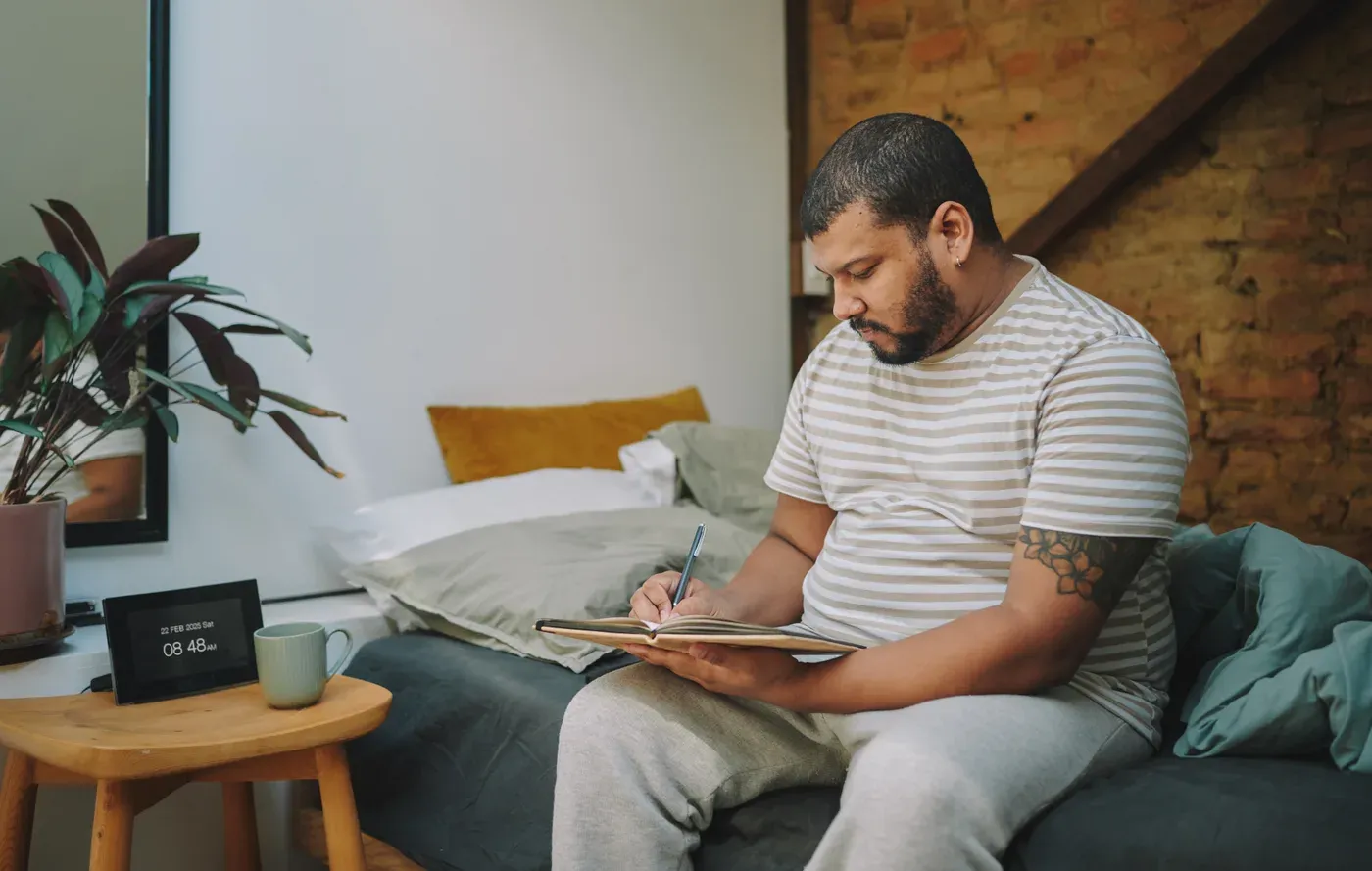
Stress is linked to belly fat in men, but cortisol isn’t a direct fat switch. Long-term stress raises the odds of storing fat around your middle mostly by changing behaviour: more evening eating, more drinking, shorter sleep and less movement. Research does tie higher long-term cortisol to a bigger waist, yet the extra fat still has to come from extra calories. To lose stress belly fat, work on the habits stress pushes you toward, especially sleep, the after-work drink and evening snacking, and keep moving every day.
What the research says about cortisol and belly fat
The link is real but often overstated.
- In a population study of 2,527 men and women aged 54 to 87, higher cortisol measured in hair (a marker of exposure over months) was associated with higher weight, BMI and waist circumference, and with obesity that persisted over four years (Jackson et al., 2017). The correlations were small, and the study can’t show which caused which.
- In a lab study of women, those with more central fat produced more cortisol in response to stress and reported more chronic stress (Epel et al., 2000). It’s often quoted as proof that stress causes belly fat; it was a cross-sectional study of women, so it supports a link rather than proving cause in men.
The fair summary: chronic stress and cortisol go along with fat around the middle, and they may influence where fat is stored. But no study shows stress building fat without the energy to build it.
How stress actually adds fat around your middle
For most men over 40, stress works through four routes:
| Stress route | What it looks like | What it does |
|---|---|---|
| Evening eating | Grazing after the kids are in bed | Adds calories when you’re least likely to track them |
| Alcohol | A drink to switch off, then a second | Calories plus extra food; people eat more when drinking (Kwok et al., 2019) |
| Short sleep | Lying awake at 2 a.m. thinking about work | More hunger, and less of any weight lost is fat |
| Less movement | Skipping the gym because there’s no time | Fewer calories burned, more stiffness, worse sleep |
The sleep route is well studied. In a controlled trial, dieters who had 5.5 hours of sleep opportunity instead of 8.5 lost similar weight, but less of it was fat and they reported more hunger (Nedeltcheva et al., 2010).
About “hormonal belly fat”
You’ll see “hormonal belly fat” in ads for supplements and test kits. Hormones do affect appetite and where fat is stored, but the term is marketing, not a diagnosis. No over-the-counter supplement has good evidence for removing it.
There are real medical conditions that change fat distribution, including rare disorders of cortisol production. They come with other signs, such as rapid weight gain in the face and trunk, easy bruising, muscle weakness or high blood pressure. If that sounds like you, see your doctor rather than trying to fix it with diet or training.
Breaking the stress–belly fat loop
Start with whatever stress is pushing you toward most.
- Protect sleep first. Canada’s guidelines recommend 7 to 9 hours of good-quality sleep with consistent bed and wake times (CSEP). A fixed wake-up time, even on weekends, is the easiest place to start.
- Replace the decompression drink. Keep the ritual (a walk, a shower, a non-alcoholic beer on the porch) but swap what’s in the glass most nights.
- Move after work. A 20- to 30-minute walk between work and home life helps you switch off and adds to your daily energy burn. Regular aerobic exercise is also one of the best-supported ways to reduce visceral fat (Vissers et al., 2013).
- Set a kitchen closing time. Decide when eating ends, and have a planned evening snack if you need one. How to stop late-night snacking has a step-by-step approach.
- Keep training sessions moderate. Three 45-minute strength sessions you recover from beat two punishing ones that wreck your sleep.
Exercise for stress relief goes deeper on using training to manage stress, and sleep for fat loss and muscle covers the sleep side.
When stress needs more than a plan
If stress is constant, your mood is low most days, or you’re drinking to cope, talk to your doctor. Exercise helps, but it’s one part of looking after your mental health, not all of it.
The bottom line
Stress belly fat is real in the sense that stressed men often gain fat around the middle. The mechanism is mostly behavioural, which is good news: sleep, drinking, evening eating and daily movement are all things you can change. The general approach to the belly is in how to lose belly fat after 40. If you’d rather rebuild sleep, recovery and habits alongside your body, the 12-Week Lifestyle Reset covers lifestyle strategy, a sleep and recovery strategy and habit development, not only training.
Questions people also ask
Can stress alone cause belly fat?
Not without extra calories. Stress is linked to belly fat, but the extra fat still has to come from eating more than you burn. Stress makes that much more likely through evening eating, drinking and short sleep.
What is hormonal belly fat?
It's a marketing term, not a diagnosis. Hormones influence where fat is stored and how hungry you feel, but supplements sold for hormonal belly fat haven't been shown to remove it. If you suspect a hormone problem, see your doctor for proper testing.
Do cortisol-lowering supplements work for belly fat?
There's no good evidence that any over-the-counter cortisol supplement reduces belly fat. Sleep, regular exercise and fewer drinks are better-supported ways to manage both stress and weight.
Does exercise raise cortisol and make belly fat worse?
Exercise raises cortisol briefly, which is normal. Regular exercise is consistently linked to less visceral fat, not more. Very long, hard sessions on little sleep can leave you run down, so match training to your recovery.
Sources
- Epel et al. (2000), Stress and body shape: stress-induced cortisol secretion is consistently greater among women with central fat, Psychosom Med
- Jackson et al. (2017), Hair cortisol and adiposity in a population-based sample of 2,527 men and women aged 54 to 87 years, Obesity
- Nedeltcheva et al. (2010), Insufficient sleep undermines dietary efforts to reduce adiposity, Ann Intern Med
- Kwok et al. (2019), Effect of alcohol consumption on food energy intake, Br J Nutr
- Vissers et al. (2013), The effect of exercise on visceral adipose tissue in overweight adults, PLoS One
- CSEP — Canadian 24-Hour Movement Guidelines for Adults 18–64