Most men with high blood pressure can and should exercise once their doctor has cleared them, and regular training is one of the lifestyle changes Canadian heart organizations recommend. In pooled trials, aerobic exercise, strength training and isometric holds all lowered resting blood pressure, typically by a few points each, with larger average drops in people whose pressure was already high (Edwards et al., 2023). Exercise sits alongside medical care: it doesn’t replace medication, and your doctor decides how your blood pressure is treated.
Get cleared, then measure properly
Before you start, talk to your family doctor. Heart & Stroke tells anyone with high blood pressure to speak to a healthcare provider before beginning a physical activity program (Heart & Stroke). Bring three questions:
- Are there any limits on intensity or lifting for me right now?
- Do my medications change how I should judge effort? Some blood pressure drugs affect how your heart rate responds to exercise, so heart-rate zones from an app may not apply.
- How often should I check my blood pressure at home, and when should I call you?
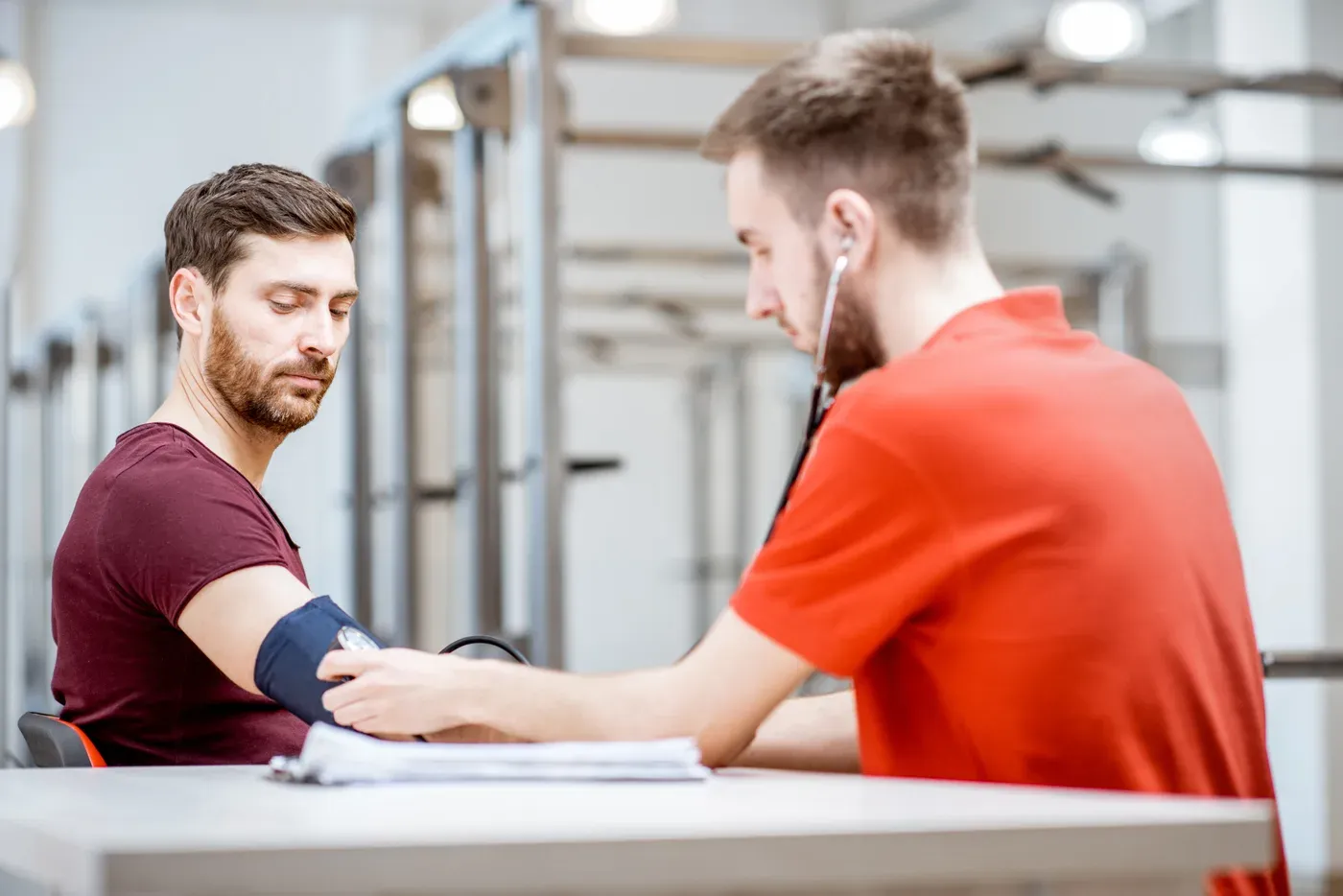
Measure the way your provider shows you, because technique changes the number. Heart & Stroke advises against exercising, smoking or having caffeine in the 30 minutes before a reading, and says one high reading should be rechecked on at least two more days. A diagnosis comes from repeated, properly taken readings interpreted by your provider, not from a single pharmacy machine.
What the research says each type of exercise does
The largest analysis to date pooled 270 randomized trials with 15,827 participants (Edwards et al., 2023). Average drops in resting blood pressure versus no exercise:
| Type of training | Average change (systolic / diastolic, mmHg) | What it looks like |
|---|---|---|
| Aerobic | −4.5 / −2.5 | Brisk walking, cycling, swimming, jogging |
| Dynamic resistance | −4.6 / −3.0 | Weights or machines through a full range of motion |
| Aerobic plus resistance | −6.0 / −2.5 | Both in the same week |
| High-intensity intervals | −4.1 / −2.5 | Short hard efforts with recovery |
| Isometric | −8.2 / −4.0 | Static holds such as a wall sit or handgrip squeeze |
An earlier meta-analysis found the effect of endurance training was larger in groups with hypertension (about −8.3/−5.2 mmHg) than in people with normal readings (Cornelissen & Smart, 2013). These are averages from supervised studies. Your own response may be bigger, smaller or nothing measurable, which is why the home log matters.
A sensible starting week
Heart & Stroke recommends at least 150 minutes a week of moderate to vigorous aerobic activity for people managing blood pressure. Once cleared, a first month for a man who hasn’t trained in years might look like this:
| Day | Session | Effort |
|---|---|---|
| Mon | 30-minute brisk walk | You can talk in sentences but not sing |
| Tue | Full-body strength, 5–6 exercises, 2 sets of 10–12 | Stop 2–3 reps short of failure |
| Wed | 30-minute walk or easy bike | Conversational |
| Thu | Rest or a short walk | Easy |
| Fri | Full-body strength, same exercises | Add reps before adding weight |
| Sat | 45–60 minutes of something you enjoy: hike, bike, swim | Moderate |
| Sun | Rest | — |
If your doctor agrees, short isometric holds can be added later, such as two or three wall sits of 30 to 60 seconds. They’re the type with the largest average effect in the 2023 analysis, but they’re also hard, so they belong after you’ve built a base, not on day one. For the walking side, the guide to walking over 40 shows how to build volume without sore shins.
How to lift safely with high blood pressure
Strength training is useful, but a few habits keep the pressure spikes during a set reasonable:
- Keep breathing. Breathe out as you push or pull and in as you lower. Holding your breath and straining raises blood pressure sharply during the effort.
- Use moderate loads. Sets of 8 to 15 reps that stop a couple of reps short of failure give the benefit without grinding.
- Skip true maxes. One-rep max testing and all-out grinders aren’t worth the spike.
- Be careful with head-down positions and sudden standing. Some medications can make you light-headed when you change position quickly.
- Warm up and cool down. Five to ten minutes of easy movement on each side of the session.
Stop and get help if you feel chest pain, pressure or discomfort, pain spreading to the arm, neck, jaw or back, unusual shortness of breath, dizziness or fainting. Heart & Stroke’s emergency guidance is to call 9-1-1 for heart attack signs (Heart & Stroke).
Exercise works best with the other changes
Training is one of several lifestyle steps that Hypertension Canada and Heart & Stroke list, and they add up:
- Salt. Hypertension Canada suggests aiming for about 2,000 mg of sodium a day and points to processed foods such as frozen pizza and canned soup as the biggest sources (Hypertension Canada).
- Eating pattern. The same page recommends the DASH diet: plenty of vegetables, fruit, whole grains, legumes, nuts and lower-fat dairy.
- Weight. Heart & Stroke notes that losing 5% to 10% of body weight, if you carry extra, can help lower blood pressure.
- Alcohol. Hypertension Canada says heavier drinking can raise blood pressure and make medications less effective.
If cholesterol came back flagged on the same blood work, the cholesterol guide covers the food side, which overlaps a lot.
What to do this week
Book the appointment, ask the three questions above, and start a home blood pressure log. Then walk most days and add two short strength sessions. Bring the log to your next visit so your doctor can see the trend. If you want the training, eating and weekly tracking organized into one long-term plan that works alongside your doctor’s care, the 6-Month Full Reset is built around that kind of steady, measured change. For the wider picture of training for your heart, read exercise for heart health after 40.
Questions people also ask
Is it safe to lift weights with high blood pressure?
For most men whose doctor has cleared them, yes, and dynamic resistance training lowered resting blood pressure in pooled trials. Use moderate loads you can move with control, breathe out during the effort, and avoid straining to a max or holding your breath. Ask your doctor first if your readings are very high or not yet controlled.
What is the best exercise to lower blood pressure?
In a 2023 analysis of 270 trials, every type studied lowered resting blood pressure, and isometric exercise such as wall sits showed the largest average drop. In practice, the best type is the one you will repeat most weeks, ideally aerobic work plus some strength training.
How long does it take for exercise to lower blood pressure?
The trials pooled in the major reviews lasted from a few weeks to several months, so think in months of consistent training, not days. Keep measuring at home the way your doctor or pharmacist showed you and bring the log to your appointments.
Can I stop my blood pressure medication if I exercise?
That decision belongs to your doctor alone. Exercise and diet are part of managing blood pressure, and Hypertension Canada notes that many blood pressure medications also help prevent heart attacks and strokes. Never stop or change a dose on your own.
Should I check my blood pressure right after a workout?
No. Heart & Stroke advises not exercising, smoking or having caffeine for 30 minutes before a reading, so a post-workout number won't reflect your resting blood pressure.
Sources
- Heart & Stroke — High blood pressure
- Hypertension Canada — How do I maintain a healthy blood pressure?
- Edwards et al. (2023), Exercise training and resting blood pressure: a large-scale pairwise and network meta-analysis of randomised controlled trials, Br J Sports Med
- Cornelissen & Smart (2013), Exercise training for blood pressure: a systematic review and meta-analysis, J Am Heart Assoc
- Heart & Stroke — Signs of a heart attack and emergency steps