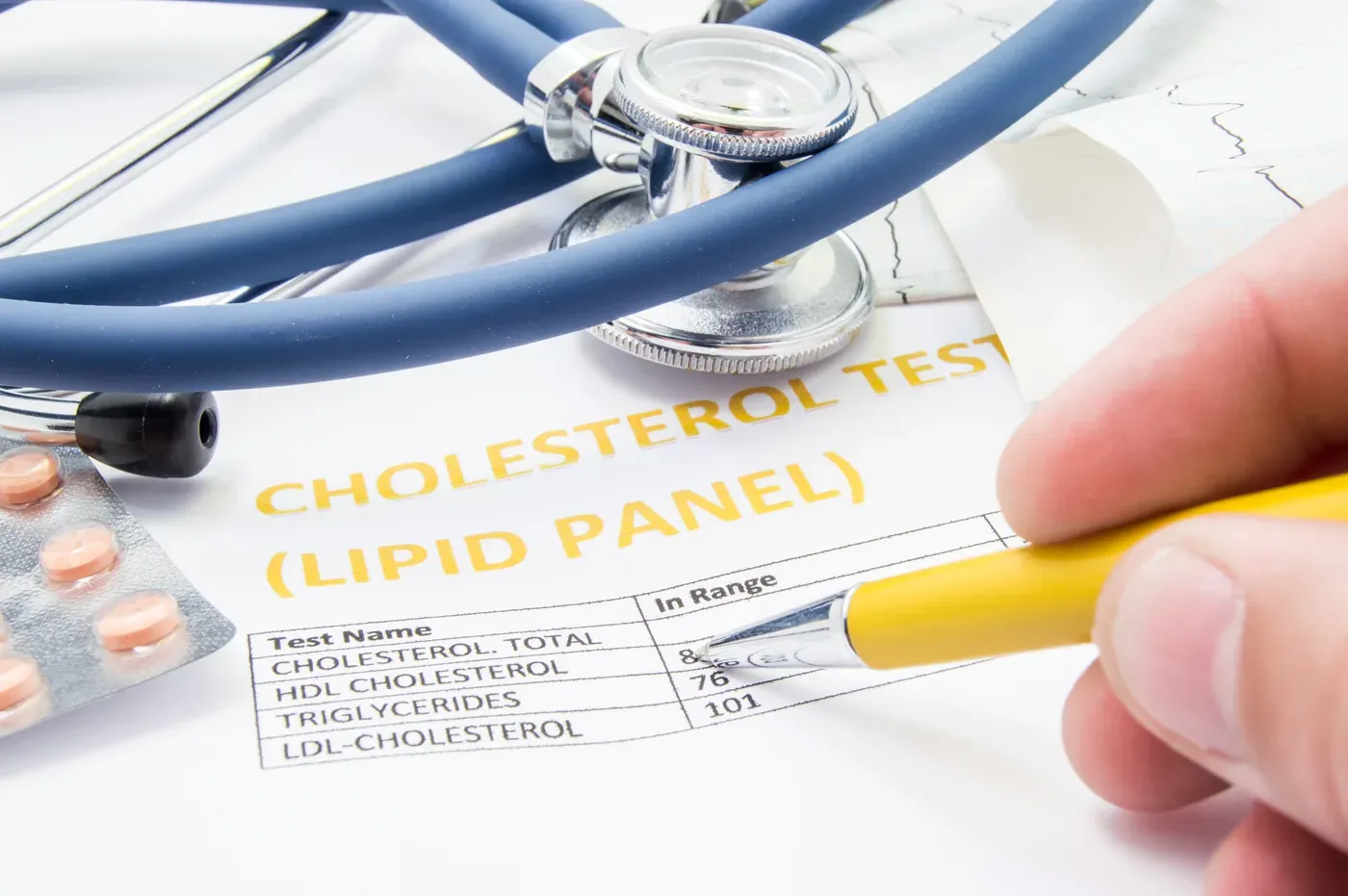
For high cholesterol, food does more of the heavy lifting than exercise. Cutting saturated fat and adding soluble fibre, nuts, soy and plant sterols lowered LDL (“bad”) cholesterol by about 13% in a six-month Canadian trial (Jenkins et al., 2011). Exercise raises HDL (“good”) cholesterol modestly and improves blood pressure and fitness, so the two together lower heart risk more than either alone (Kodama et al., 2007). Your doctor reads your results in context and decides whether you also need medication.
What your cholesterol numbers are measuring
Your blood test usually reports a few things, and they respond to different changes. Heart & Stroke explains them this way (Heart & Stroke):
| Measure | What it is | What tends to move it |
|---|---|---|
| LDL cholesterol | Carries cholesterol that can build up as plaque in artery walls | Saturated fat intake, soluble fibre, plant sterols, weight, genetics |
| HDL cholesterol | Carries excess cholesterol back to the liver | Regular aerobic exercise, not smoking, weight |
| Triglycerides | Another blood fat | Weight, alcohol, sugary drinks and refined carbs |
| Non-HDL / total | All the cholesterol that can contribute to plaque | The combination of the above |
Heart & Stroke also notes that carrying extra weight may raise LDL, lower HDL and increase triglycerides. Your doctor weighs these numbers together with blood pressure, smoking, diabetes and family history, so don’t judge your own result from one line on the report.
The food changes with the best evidence
Some of the strongest evidence is Canadian: the “portfolio” approach, tested at four centres in Quebec City, Toronto, Winnipeg and Vancouver. In a randomized trial of 351 adults with high cholesterol, people advised to eat a portfolio of plant sterols, soy protein, viscous (soluble) fibre and nuts lowered LDL by about 13% to 14% over six months, compared with 3% on a standard low-saturated-fat diet (Jenkins et al., 2011). People did it on their own, with as few as two clinic visits.
Heart & Stroke’s own advice points the same way. Here’s how it translates into a week of normal meals:
| Change | Easy ways to do it |
|---|---|
| More soluble fibre | Oatmeal or oat bran at breakfast, barley in soup, beans or lentils in chili and salads |
| Nuts most days | A small handful of almonds, walnuts or peanuts as the afternoon snack |
| Soy and other plant protein | Tofu stir-fry, edamame, soy milk; beans and lentils a few times a week |
| Plant sterols | Heart & Stroke notes guidelines suggest 2 g a day, available in some fortified margarines and dressings |
| Less saturated fat | Leaner cuts, poultry without skin, less butter, processed meat and full-fat cheese |
| Healthier fats | Olive or canola oil, fatty fish a couple of times a week, avocado, seeds |
| Fewer ultra-processed foods | Compare labels: Heart & Stroke says 5% Daily Value or less is low, 15% or more is high |
Eggs come up a lot with men. Heart & Stroke says dietary cholesterol in eggs, meat and dairy has less effect on blood cholesterol than saturated and trans fat, though your provider may still suggest limiting yolks depending on your numbers. A Mediterranean-style pattern covers most of this table; the Mediterranean diet guide shows what that looks like for a man over 40, and the fibre guide helps you hit the soluble fibre part.
What exercise does for cholesterol
Exercise is a real but smaller lever on the lipid panel itself. A meta-analysis of 25 trials found regular aerobic exercise raised HDL by about 0.065 mmol/L on average, a modest change (Kodama et al., 2007). A few details from that analysis are useful:
- The minimum weekly dose for a measurable effect was roughly 120 minutes of exercise.
- Longer sessions mattered more than frequency or intensity; each extra 10 minutes per session was linked to a slightly bigger HDL rise.
- People with higher starting cholesterol tended to respond more.
Strength training belongs in the plan too, for reasons beyond the lipid panel: a meta-analysis of cohort studies linked muscle-strengthening activity with a 10% to 17% lower risk of cardiovascular disease and death from any cause (Momma et al., 2022). Heart & Stroke recommends 150 minutes of moderate to vigorous activity a week for cholesterol and heart health.
A realistic exercise week for cholesterol:
- Three 40- to 50-minute sessions of brisk walking, cycling or swimming (longer sessions rather than many short ones).
- Two full-body strength sessions of 30 to 45 minutes.
- Daily walking on top, especially if you sit for work.
Weight, alcohol and smoking
Three other changes show up on the same blood test. If you carry extra weight, gradual fat loss tends to improve triglycerides and HDL, per Heart & Stroke. If triglycerides are the flagged number, ask your doctor whether alcohol could be a factor, and track how much you actually drink for two weeks. And Heart & Stroke lists quitting smoking as one of the best things you can do for your heart, partly because smoking lowers HDL.
When food and exercise aren’t enough
Sometimes they aren’t, and that isn’t failure. Heart & Stroke notes that medications may be needed when lifestyle changes don’t bring cholesterol down enough, and that those medications don’t replace a healthy lifestyle. Inherited high cholesterol (familial hypercholesterolemia) causes very high LDL from a young age and usually needs early medical treatment. If close relatives had heart disease young or very high cholesterol, ask your doctor about it.
Whether you start or continue a medication is your doctor’s decision. Your part is to make the food and training changes stick so the next test reflects them.
What to do this week
Add one soluble-fibre food a day, swap one processed-meat or fast-food meal for a home-cooked one with beans or fish, and schedule three longer aerobic sessions plus two strength sessions. Ask your doctor when to retest. If you’d like a coach to build the training and eating plan and keep it on track across several months, that’s what the 6-Month Full Reset is for. Since blood pressure and cholesterol often get flagged together, the high blood pressure guide is worth reading next.
Questions people also ask
Can exercise lower LDL cholesterol?
Exercise alone has a small effect on LDL. Its clearer effect is a modest rise in HDL, plus lower blood pressure and better fitness, which all count toward heart risk. Diet changes, especially less saturated fat and more soluble fibre, plant sterols, soy and nuts, move LDL more.
Are eggs bad for high cholesterol?
Heart & Stroke says dietary cholesterol in foods such as eggs has less effect on blood cholesterol than saturated and trans fat. Depending on your results, your provider may still suggest limiting egg yolks, so follow their advice for your case.
How long does it take to lower cholesterol with diet?
In a six-month Canadian trial of a cholesterol-lowering food portfolio, LDL fell about 13% to 14% on average over the study. Your doctor will tell you when to retest; give a new routine a few months before judging it.
If my cholesterol is genetic, will diet and exercise help?
They still help your overall heart risk, but inherited high cholesterol often needs medical treatment. Heart & Stroke advises talking to your provider about genetic testing if close family had very high cholesterol or early heart disease.
Sources
- Heart & Stroke — Managing cholesterol
- Jenkins et al. (2011), Effect of a dietary portfolio of cholesterol-lowering foods given at 2 levels of intensity of dietary advice on serum lipids in hyperlipidemia, JAMA
- Kodama et al. (2007), Effect of aerobic exercise training on serum levels of high-density lipoprotein cholesterol: a meta-analysis, Arch Intern Med
- Momma et al. (2022), Muscle-strengthening activities are associated with lower risk and mortality in major non-communicable diseases, Br J Sports Med