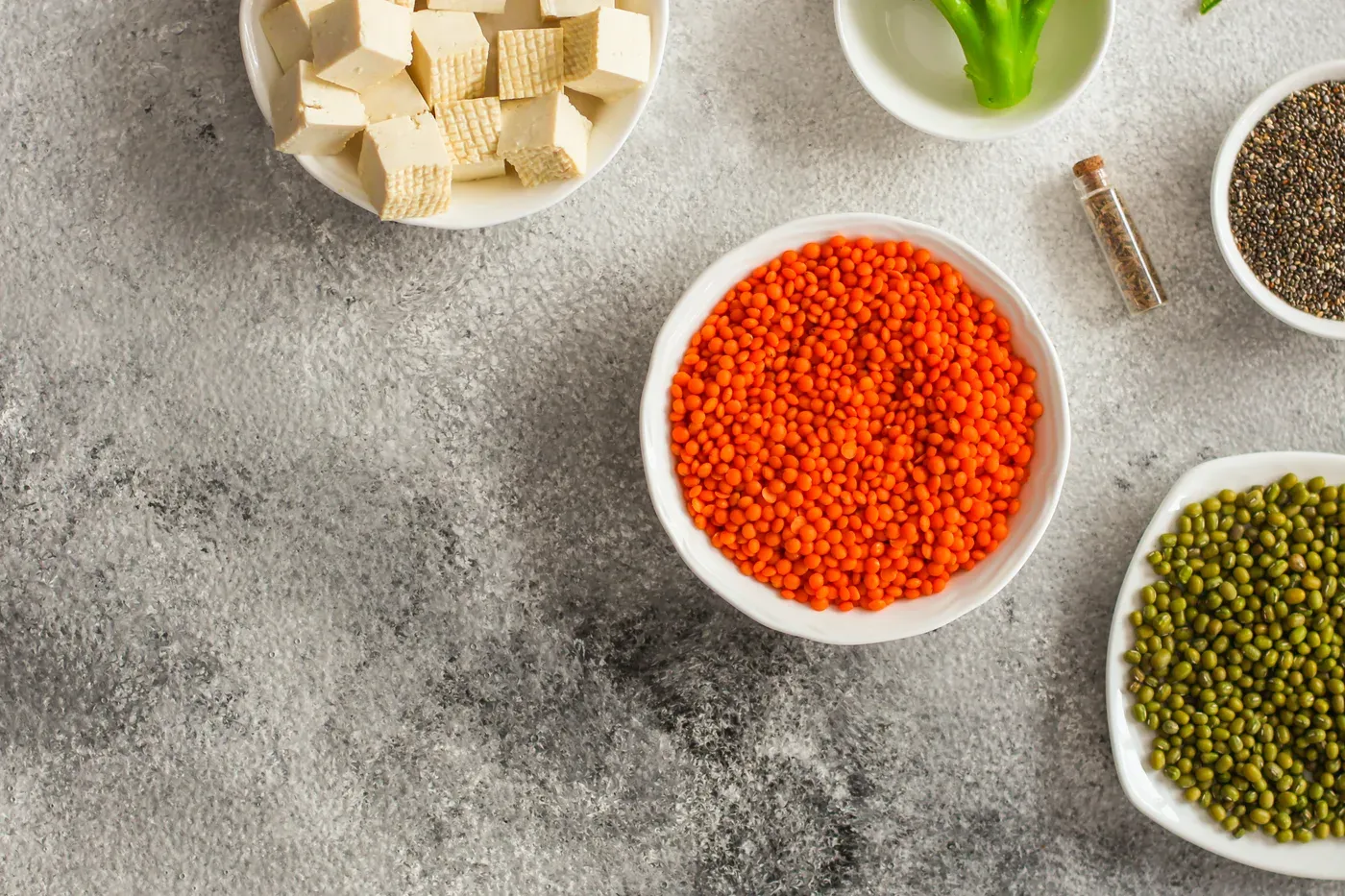
A man aged 19 to 50 should eat about 38 grams of fibre a day, and a man aged 51 to 70 about 30 grams, according to Health Canada. Most Canadians get only about half of that. You can close the gap with oats or a high-fibre cereal at breakfast, a serving of beans or lentils most days, whole grains instead of white, and vegetables or fruit at every meal. Increase slowly and drink more fluid as you do.
The numbers from Health Canada
Health Canada’s adequate intakes for fibre in men are:
| Age | Total fibre a day |
|---|---|
| 19 to 30 | 38 g |
| 31 to 50 | 38 g |
| 51 to 70 | 30 g |
These come from Health Canada’s reference values for macronutrients. The values are based on 14 g of fibre per 1,000 calories, multiplied by typical calorie intakes, which is why the number drops after 50 as average energy needs fall. A man over 50 who’s eating 2,800 calories a day because he’s active would reasonably aim higher than 30.
Health Canada’s fibre page adds a blunt point: most Canadians get only about half the fibre they need.
Why it matters after 40
The best summary of the evidence is a 2019 series of systematic reviews in The Lancet, covering 185 prospective studies and 58 clinical trials (Reynolds et al., 2019). It found:
- People with the highest fibre intakes had a 15 to 30% lower risk of death from all causes and from cardiovascular disease, and lower rates of coronary heart disease, stroke, type 2 diabetes and colorectal cancer, than people with the lowest.
- In clinical trials, higher fibre intakes lowered body weight, systolic blood pressure and total cholesterol.
- The largest risk reductions came at 25 to 29 g a day, with signs that more might help further.
Those are the conditions that start to show up for men in their 40s and 50s. Fibre is one of the cheapest, simplest dietary changes with solid evidence behind it.
High-fibre foods, by the numbers
Values are approximate, from standard nutrition values for the portion shown.
| Food | Portion | Fibre |
|---|---|---|
| Lentils, cooked | 1 cup | About 15 g |
| Black beans, canned and drained | 1 cup | About 15 g |
| Chickpeas, canned and drained | 1 cup | About 12 g |
| Raspberries | 1 cup | About 8 g |
| Whole-wheat pasta, cooked | 1 cup | About 6 g |
| Pear, with skin | 1 medium | About 5.5 g |
| Large-flake oats, dry | 50 g | About 5 g |
| Broccoli, cooked | 1 cup | About 5 g |
| Chia seeds | 1 tbsp | About 4 g |
| Apple, with skin | 1 medium | About 4.5 g |
| Almonds | 30 g | About 3.5 g |
| Whole-grain bread | 2 slices | About 4 to 6 g |
| Brown rice, cooked | 1 cup | About 3.5 g |
| Potato, baked with skin | 1 medium | About 4 g |
Legumes are the standout: one cup of lentils or beans gets you a third of the way to 38 g.
A day that reaches 38 grams
Here’s what a high-fibre, high-protein day can look like for a man over 40:
| Meal | Food | Fibre |
|---|---|---|
| Breakfast | 50 g oats with 1 cup raspberries and 1 tbsp chia, Greek yogurt | About 17 g |
| Lunch | Chicken and black bean bowl (½ cup beans), brown rice, salsa, peppers | About 13 g |
| Snack | Apple and 30 g almonds | About 8 g |
| Dinner | Salmon, 1 cup broccoli, a baked potato with skin | About 9 g |
| Total | About 47 g |
That’s well above the target, which leaves room for days that don’t go to plan.
How to increase fibre without discomfort
Going from 15 g to 40 g overnight is a recipe for bloating. A smoother approach:
- Add about 5 g a day each week. Start with breakfast, the easiest meal to change.
- Drink more fluid as fibre goes up. The water guide covers how much.
- Rinse and drain canned beans, which Canada’s food guide suggests to cut the sodium.
- Spread it through the day rather than having one huge serving.
- Choose whole grains by checking that “whole grain” appears near the start of the ingredient list, as Health Canada suggests.
Using labels to find fibre fast
On the Nutrition Facts table, Health Canada’s rule is that 5% Daily Value or less is a little and 15% or more is a lot. For fibre, the Daily Value is based on 25 g, so a food with 15% DV has about 4 g per serving. Look for “a lot” on breads, cereals and crackers.
Canada’s food guide plate, half vegetables and fruit with a quarter whole grains, delivers plenty of fibre without counting.
Count your fibre for one day
Add up your fibre for one ordinary day using the table. If you’re under 25 g, start with oats at breakfast and one serving of beans or lentils a day, then build from there over three or four weeks. If you’re changing how you eat for fat loss as well, the fat-loss grocery list includes the high-fibre staples. For a plan that balances fibre, protein and calories for your goals, see monthly 1:1 coaching.
Questions people also ask
How much fibre should a man over 50 eat?
Health Canada's adequate intake for men aged 51 to 70 is 30 g a day, down from 38 g for men 19 to 50. The lower figure reflects lower average calorie needs, not a lower need for fibre per calorie.
Can you eat too much fibre?
Raising it quickly can cause gas, bloating and cramping. Add about 5 g a day each week and drink more fluid as you go. If you take medication and want to use a fibre supplement, ask a pharmacist how to time the two.
Do fibre supplements count?
They count toward the number, but food is better: high-fibre foods also bring vitamins, minerals and other plant compounds. Use a supplement only if you can't reach your target with food or your doctor recommends one.
Does fibre help with weight loss?
It can help. High-fibre foods take up more room for fewer calories, and the Lancet review of fibre found lower body weight in trials comparing higher and lower fibre intakes.