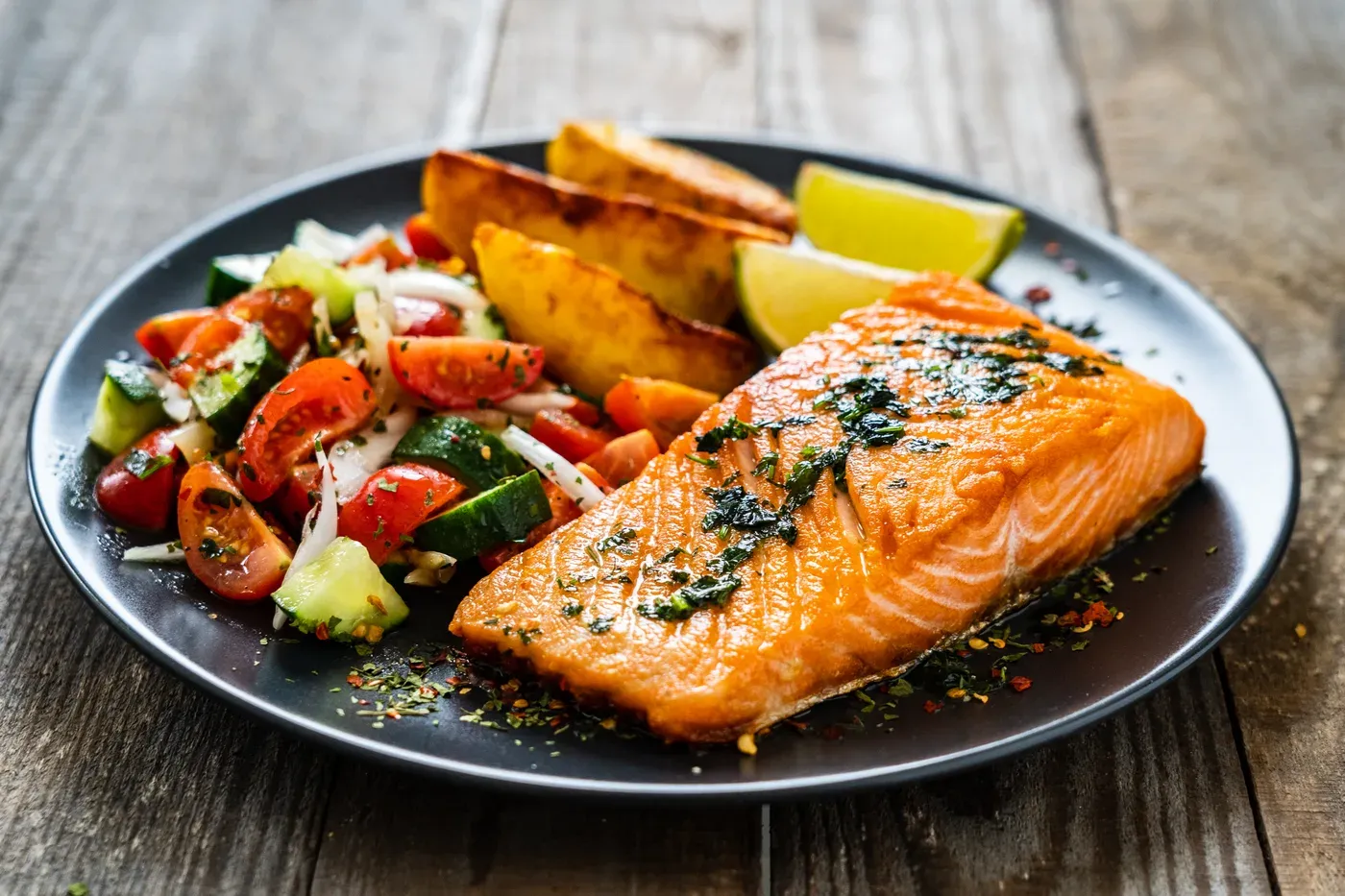
The Mediterranean diet is one of the best-supported eating patterns for men over 40, mainly for heart health. It’s built on vegetables, legumes, whole grains, fish, nuts and olive oil, with less red meat and few sweets. On its own it isn’t designed for muscle or fat loss, so men who lift should add more protein at each meal and keep an eye on portions of oil and nuts.
What the evidence shows
The best-known trial is PREDIMED, run across Spain with 7,447 people aged 55 to 80 who were at high risk of heart disease but didn’t have it yet. They were assigned to a Mediterranean diet with extra-virgin olive oil, a Mediterranean diet with mixed nuts, or a control diet with advice to cut fat. After a median of 4.8 years, both Mediterranean groups had fewer major cardiovascular events (heart attacks, strokes and cardiovascular deaths) than the control group: 3.8% with olive oil and 3.4% with nuts, compared with 4.4% (Estruch et al., 2018).
Two caveats are worth knowing. The trial was republished in 2018 after problems with how some participants were randomized, and the corrected analysis still found the benefit. And the participants were older and higher-risk than most men in their 40s.
The diet is also rich in fibre and whole grains. A large Lancet review of fibre and whole grains found the biggest drops in risk of heart disease, stroke, type 2 diabetes and colorectal cancer at fibre intakes of about 25 to 29 g a day (Reynolds et al., 2019).
What it looks like on a Canadian plate
You don’t need imported specialty food. Most of it is in any grocery store:
| Eat often | Eat regularly | Eat less often |
|---|---|---|
| Vegetables and fruit (fresh or frozen) | Fish and seafood: salmon, trout, sardines, canned tuna | Red meat |
| Beans, lentils and chickpeas | Chicken and eggs | Processed meat: bacon, deli meat, sausages |
| Whole grains: oats, barley, whole-wheat bread, brown rice | Plain yogurt and cheese | Sweets, pastries, sugary drinks |
| Olive or canola oil, nuts and seeds | Herbs, garlic, lemon for flavour | Butter and cream |
This lines up closely with Canada’s food guide, which recommends replacing saturated fats with unsaturated ones such as olive and canola oil and choosing fish over higher-fat meats.
The protein upgrade for men who lift
A traditional Mediterranean diet gets much of its protein from legumes, fish and dairy in modest portions. That’s often not enough for a man over 40 aiming for about 1.6 g of protein per kg of body weight. The ISSN protein position stand puts the range for exercising adults at 1.4 to 2.0 g/kg.
The fix is to raise protein within the pattern:
| Meal | Traditional version | High-protein version |
|---|---|---|
| Breakfast | Bread, olive oil, tomato, coffee | 250 g Greek yogurt with walnuts and fruit, plus whole-grain toast |
| Lunch | Lentil soup and bread | Lentil soup with 100 g chicken added, side salad |
| Dinner | Pasta with vegetables, a little cheese | Salmon fillet, roast vegetables, small portion of whole-wheat pasta |
| Snack | Fruit and a few almonds | Cottage cheese with fruit, or a can of sardines on crackers |
Each high-protein meal lands around 35 to 45 g of protein, without leaving the diet’s spirit. The salmon traybake recipe is a good weeknight Mediterranean-style dinner.
Watch the calorie-dense parts
Olive oil and nuts are core to this diet, and they’re healthy fats. They’re also dense: a tablespoon of oil has about 120 calories, and a small handful of almonds (30 g) about 175. A heavy pour of oil on every meal can quietly add 400 to 500 calories a day. If fat loss is a goal, measure oil with a spoon and portion nuts into a small container.
What about the wine?
Red wine is often described as part of the Mediterranean diet, but you don’t need it. Canada’s Guidance on Alcohol and Health states that less is better for health and that two standard drinks or fewer a week is the low-risk range. If you drink, keep it to that, and never add alcohol for supposed health benefits.
Mediterranean vs other popular diets
Compared with keto, the Mediterranean diet is easier to follow socially, includes carbs that support training, and has stronger long-term heart evidence. Compared with intermittent fasting, it’s a “what to eat” pattern rather than a “when to eat” one, so the two can be combined. The best diet comparison puts all of them side by side.
Three Mediterranean swaps to make now
Start with three swaps this week: cook with olive or canola oil instead of butter, have fish twice, and replace one red-meat dinner with a bean or lentil dish. Add a protein anchor to every meal. If heart health is part of why you’re changing how you eat, the heart health exercise guide covers the training side. For a plan built around your targets and adjusted monthly, see monthly 1:1 coaching.
Questions people also ask
What do you eat on a Mediterranean diet?
Mostly vegetables, fruit, legumes, whole grains, nuts and olive oil, with fish and seafood several times a week, moderate amounts of poultry, eggs and dairy, and little red or processed meat or sweets.
Is the Mediterranean diet good for losing weight?
It can be, if calories are controlled. Olive oil and nuts are healthy but dense in calories, so portions matter. Its main strength is long-term heart health and how easy it is to stick with.
Do I have to drink wine on the Mediterranean diet?
No. Canada's Guidance on Alcohol and Health says less alcohol is better for health at every level. If you don't drink, there's no reason to start for this diet.
Is the Mediterranean diet high enough in protein for building muscle?
Not automatically. A traditional version can fall short for a man aiming at 1.6 g per kg. Add Greek yogurt, more fish, chicken, eggs and legumes to each meal to close the gap.
Sources
- Estruch et al. (2018), Primary prevention of cardiovascular disease with a Mediterranean diet supplemented with extra-virgin olive oil or nuts (PREDIMED), N Engl J Med
- Health Canada — Canada's food guide: choosing foods with healthy fats
- Canadian Centre on Substance Use and Addiction — Canada's Guidance on Alcohol and Health
- Jäger et al. (2017), ISSN position stand: protein and exercise, J Int Soc Sports Nutr
- Reynolds et al. (2019), Carbohydrate quality and human health: systematic reviews and meta-analyses, Lancet