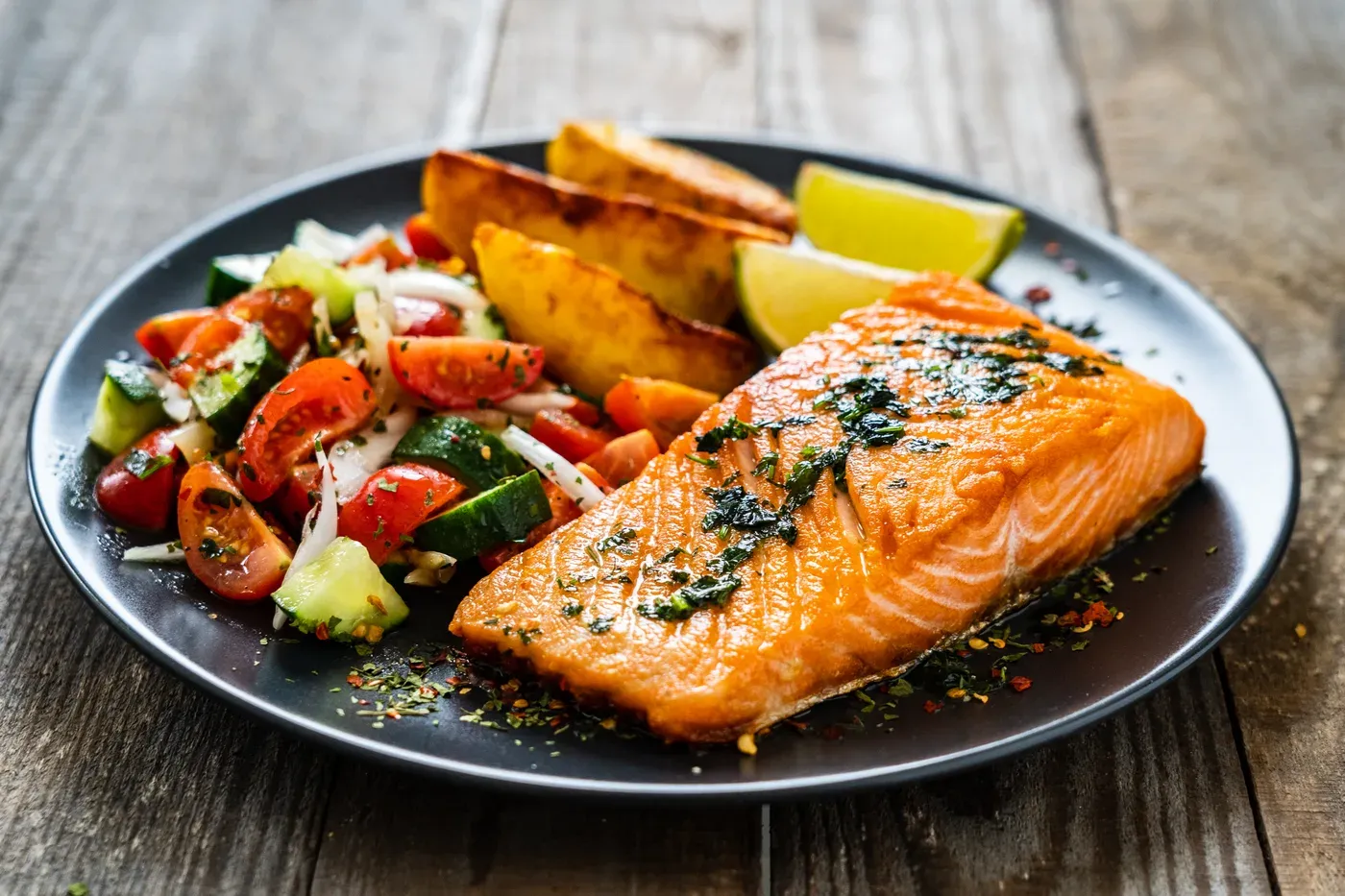
There is no single best diet for men over 40. When researchers put low-carb and low-fat diets head to head for a year, people lose about the same amount of weight. The best diet for you is the one that keeps you in a calorie deficit (or at maintenance), gets you 1.6 g of protein per kg of body weight, and that you can still follow on a Friday night in month four.
What the head-to-head trials found
The best evidence comes from trials that randomly assign people to different diets and follow them for a year:
- DIETFITS (2018): 609 adults aged 18 to 50 followed either a healthy low-fat or a healthy low-carb diet for 12 months. Average weight loss was 5.3 kg on low-fat and 6.0 kg on low-carb, a difference that wasn’t statistically significant. Neither genetics nor insulin response predicted who did better (Gardner et al., 2018).
- Atkins vs Ornish vs Weight Watchers vs Zone (2005): each diet modestly reduced weight and several heart-risk factors at one year. Adherence was low across the board, and the people who stuck more closely to any of the four lost more (Dansinger et al., 2005).
The International Society of Sports Nutrition reached the same conclusion from the wider literature: fat loss is driven by a sustained calorie deficit, and a wide range of approaches, from low-fat to ketogenic, can work similarly well for body composition (Aragon et al., 2017).
The popular diets compared for men over 40
Each approach has a real strength and a real cost. This table is the short version; each diet has its own page.
| Diet | What it does well | Where men struggle | Best fit |
|---|---|---|---|
| Mediterranean | Strongest heart-health evidence; flexible; family-friendly | Can run low on protein without planning | Men with heart risk factors or a family to feed |
| Low-carb / keto | Simple rules; fewer snack foods; some men feel less hungry | Social eating, beer, training performance; LDL rises in some | Men who’d rather cut a food group than count |
| Intermittent fasting | Fewer eating decisions; fits men who skip breakfast | Hard to fit protein into a short window; no extra fat loss | Men who aren’t hungry before noon |
| Calorie and protein tracking | Most precise; works with any food | Tedious; can become obsessive | Men who like data and want faster feedback |
| Carnivore | Very simple; removes processed food | No fibre; high saturated fat; little long-term data | Rarely the best first choice |
Read the detailed takes on keto, the Mediterranean diet and intermittent fasting before committing to any of them.
Four tests to choose your diet
Rather than picking by headline, run each option through these four questions:
- Can you eat this way at a work lunch, a family dinner and a hockey tournament? If the diet only works when you control every meal, it’ll break the first busy week.
- Does it get you to your protein target without strain? After 40, protein protects muscle. A diet built around salads and smoothies often falls short.
- Can you afford it? Grass-fed beef every night and specialty products add up quickly at Canadian grocery prices.
- Would you still eat this way in a year? If the honest answer is no, plan how you’ll come off it before you start.
The diet that passes all four is your best diet, even if it doesn’t have a name.
What every diet that works has in common
Strip away the branding and successful diets share a few features. They reduce ultra-processed food, which matters: in a controlled NIH study, people ate about 500 more calories a day when served ultra-processed meals versus unprocessed meals matched for nutrients, and gained weight (Hall et al., 2019). They also tend to raise protein, cut liquid calories and create structure around when and what you eat.
Canada’s food guide captures most of this in a single plate: half vegetables and fruit, a quarter protein foods, a quarter whole grains, and water as your usual drink. For a man trying to lose fat and keep muscle, the main adjustment is a bigger protein quarter.
When a diet isn’t the problem
If you’ve tried three diets and none worked, the issue is rarely which diet you chose. Common culprits for men over 40 are weekend eating that cancels out the weekdays, alcohol, underestimated portions, and poor sleep driving evening hunger. A diet change won’t fix those. Tracking for two weeks will show you which one applies.
Men with diabetes, high blood pressure, high cholesterol or kidney disease should also know that some diets change medication needs. Keto, for example, can lower blood sugar quickly. That’s a conversation for your doctor or a registered dietitian before you start.
Choosing your diet this month
Choose the eating pattern you’ll still follow in a year, set calories and protein inside it, and judge it on four weeks of weigh-in averages rather than how you feel on day three. If you’ve cycled through diets and want someone to build the pattern around your actual week and adjust it monthly, that’s the work of monthly 1:1 coaching. If you’d rather start with the numbers yourself, begin with how many calories you need.
Questions people also ask
What is the healthiest diet for a man over 40?
For long-term health, the best-supported pattern is a Mediterranean-style or Canada's food guide-style diet: mostly vegetables, fruit, whole grains, legumes, fish and unsaturated fats. For fat loss, any pattern that holds a calorie deficit and keeps protein high will work.
Is low-carb better than low-fat for men?
Not for weight loss on average. In the DIETFITS trial, 609 adults lost 6.0 kg on healthy low-carb and 5.3 kg on healthy low-fat over a year, a difference that wasn't statistically significant. Pick the one you find easier.
Should I follow a diet my wife or partner is on?
Sharing the same meals makes life easier, but your portions and protein will differ. Men usually need more calories and more protein than their partners, so eat the same dinner with a bigger protein portion.
How long should I try a diet before deciding it doesn't work?
Give it three to four weeks of consistent eating with weekly weigh-in averages. If your weight hasn't moved and you've been honest about intake, the calories are too high, not the diet type.
Sources
- Gardner et al. (2018), Effect of low-fat vs low-carbohydrate diet on 12-month weight loss (DIETFITS), JAMA
- Dansinger et al. (2005), Comparison of the Atkins, Ornish, Weight Watchers, and Zone diets, JAMA
- Aragon et al. (2017), ISSN position stand: diets and body composition, J Int Soc Sports Nutr
- Hall et al. (2019), Ultra-processed diets cause excess calorie intake and weight gain, Cell Metab
- Health Canada — Canada's food guide