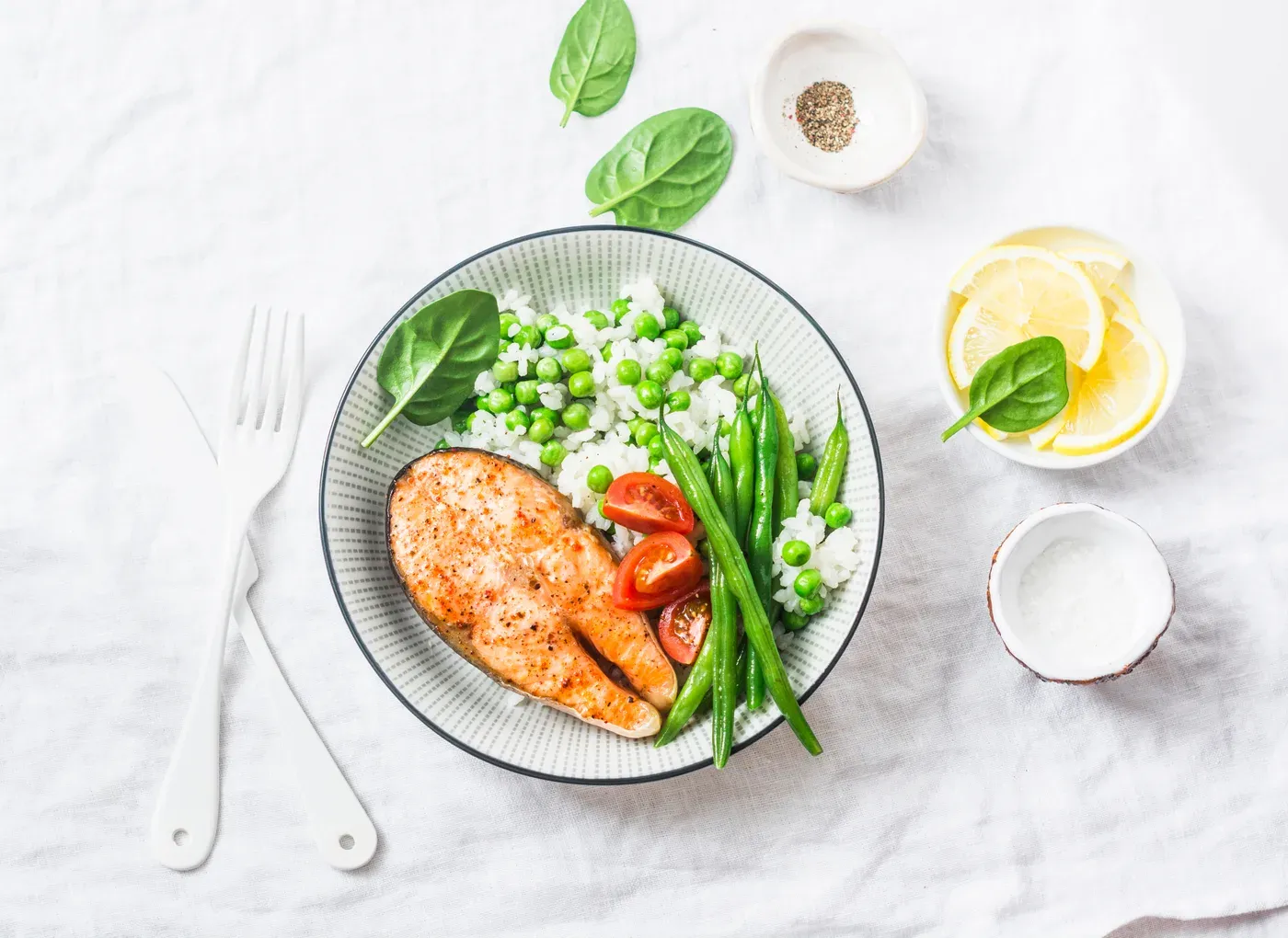
To gain weight after 40, eat about 300 to 500 calories a day above your maintenance, get at least 1.6 g of protein per kg of body weight, and lift weights three times a week so the gain is mostly muscle. Aim to put on about 0.25 to 0.5% of your body weight a week. For men with small appetites, energy-dense foods and liquid calories do most of the work. If you’ve lost weight without trying, see your doctor first.
Rule out a medical cause first
Before setting out to gain weight, make sure there isn’t a reason you lost it. Unintentional weight loss in men over 40 can come from thyroid problems, diabetes, digestive conditions, depression, medication side effects or more serious illness. If your weight has dropped without a change in diet or activity, see your family doctor before anything else. A coach can help you gain healthy weight, but can’t diagnose why you’re losing it.
If you’ve always been thin, your weight is stable and your doctor is happy, this page is for you. Check where you sit with the healthy weight guide for a 45-year-old man.
Step 1: Find maintenance, then add a modest surplus
Use Health Canada’s energy equations or the calorie guide to estimate maintenance, then track your actual intake for a week. Thin men often overestimate how much they eat: a big lunch followed by a light dinner and a skipped breakfast averages out lower than it feels.
Then add a surplus. A review of muscle-gain nutrition suggests about 10 to 20% above maintenance, with weight gain of 0.25 to 0.5% of body weight a week for novice and intermediate lifters (Iraki et al., 2019). For most men over 40, that’s 300 to 500 calories a day.
| Body weight | Weekly target gain | Monthly |
|---|---|---|
| 60 kg (132 lb) | 0.15 to 0.3 kg | About 0.6 to 1.2 kg |
| 65 kg (143 lb) | 0.16 to 0.33 kg | About 0.7 to 1.3 kg |
| 70 kg (154 lb) | 0.18 to 0.35 kg | About 0.7 to 1.5 kg |
| 75 kg (165 lb) | 0.19 to 0.38 kg | About 0.8 to 1.6 kg |
The ISSN notes that muscle gain is driven by a sustained surplus alongside increasing resistance-training demands, and that training status shapes how much of the gain is muscle (Aragon et al., 2017).
Step 2: Work around a small appetite
The hard part for most underweight men isn’t knowing what to eat. It’s eating enough of it. Protein is the most filling nutrient: in one controlled study, raising protein from 15 to 30% of calories cut how much people chose to eat by about 440 calories a day (Weigle et al., 2005). That’s great for fat loss and a problem for gaining. Keep protein at your target, around 1.6 g/kg, but don’t push it much higher, and get the extra calories from carbs and fats.
Tactics that help:
- Eat four or five times a day, not three. Smaller, more frequent meals are easier than giant plates.
- Drink some of your calories. Liquids are less filling than solid food.
- Choose energy-dense foods, which pack more calories into the same volume.
- Add calories to what you already eat: olive oil on vegetables, nut butter on toast, cheese on eggs.
- Don’t fill up on water or salad right before a meal.
Step 3: Use energy-dense foods (healthy ones)
Gaining weight doesn’t mean living on fast food. Canada’s food guide recommends choosing foods with unsaturated fats, such as nuts, seeds, avocado and olive or canola oil, over saturated fats, and many of those are naturally calorie-dense. Values below are approximate:
| Add this | Approximate calories |
|---|---|
| 1 tbsp olive oil on vegetables or rice | 120 |
| 2 tbsp natural peanut butter | 190 |
| 30 g mixed nuts | 175 to 200 |
| 250 ml whole (3.25%) milk instead of water in oats | About 150 |
| ½ avocado | About 120 |
| 40 g dried fruit | About 120 |
| 60 g whole-grain granola on yogurt | About 270 |
| 1 extra cup cooked rice or 250 g potatoes | 200 to 230 |
Step 4: A 700-calorie shake
For men who simply can’t eat more food, one shake a day closes most of the gap. Blend 250 ml whole milk, 1 scoop whey or plant protein, 1 banana, 40 g oats and 2 tbsp peanut butter. That’s roughly 700 calories and about 45 grams of protein. Drop the peanut butter for about 525 calories. Drink it between meals rather than with them so it doesn’t replace food. If you’d rather skip powder, there are protein smoothies without powder that work the same way, and the protein powder guide explains when a powder is worth buying.
Step 5: Lift so the weight is muscle
Eating in a surplus without training adds mostly fat. Three full-body strength sessions a week, adding weight or reps over time, give the extra calories somewhere useful to go. The muscle-building diet guide covers protein timing and training nutrition in more detail.
Track and adjust every two weeks
Weigh yourself each morning and compare two-week averages. If you’re gaining slower than 0.25% a week, add 150 to 200 calories. If you’re gaining faster than 0.5% a week and your waist is growing quickly, trim 150. Measure your waist monthly; weight going up with a roughly stable waist means you’re adding mostly muscle.
Starting your gain
Get a checkup if your weight loss was unexplained. Then track a normal week of eating, add 300 to 500 calories mostly from the tables above, and start lifting three times a week. If you’d like a coach to set your targets and adjust them every couple of weeks as you gain, that’s what monthly 1:1 coaching does.
Questions people also ask
Why can't I gain weight even though I eat a lot?
Usually because you eat a lot at some meals and much less at others, and the weekly total is lower than it feels. Track for a week: men who feel they eat a lot are often at or below maintenance on average.
What foods help a man gain weight quickly?
Energy-dense, nutritious foods: whole milk, nuts and nut butters, olive oil, cheese, whole-grain granola, dried fruit, avocado, rice and potatoes. Liquid calories such as smoothies are the easiest way to add 400 to 600 calories without feeling stuffed.
Is there a weight gain coach for men?
Yes. Coaching for weight gain looks like coaching for fat loss in reverse: set a calorie surplus, a protein target and a training program, then adjust weekly from your weigh-ins. FITWITHIM's monthly 1:1 coaching works this way.
How fast should a man over 40 gain weight?
About 0.25 to 0.5% of body weight a week, or roughly 0.7 to 1.5 kg a month for a 70 kg man. Faster gains are mostly fat.
Sources
- Iraki et al. (2019), Nutrition recommendations for bodybuilders in the off-season: a narrative review, Sports (Basel)
- Aragon et al. (2017), ISSN position stand: diets and body composition, J Int Soc Sports Nutr
- Health Canada — Dietary reference intakes tables: equations to estimate energy requirement
- Weigle et al. (2005), A high-protein diet induces sustained reductions in appetite and ad libitum caloric intake, Am J Clin Nutr
- Health Canada — Canada's food guide: choosing foods with healthy fats