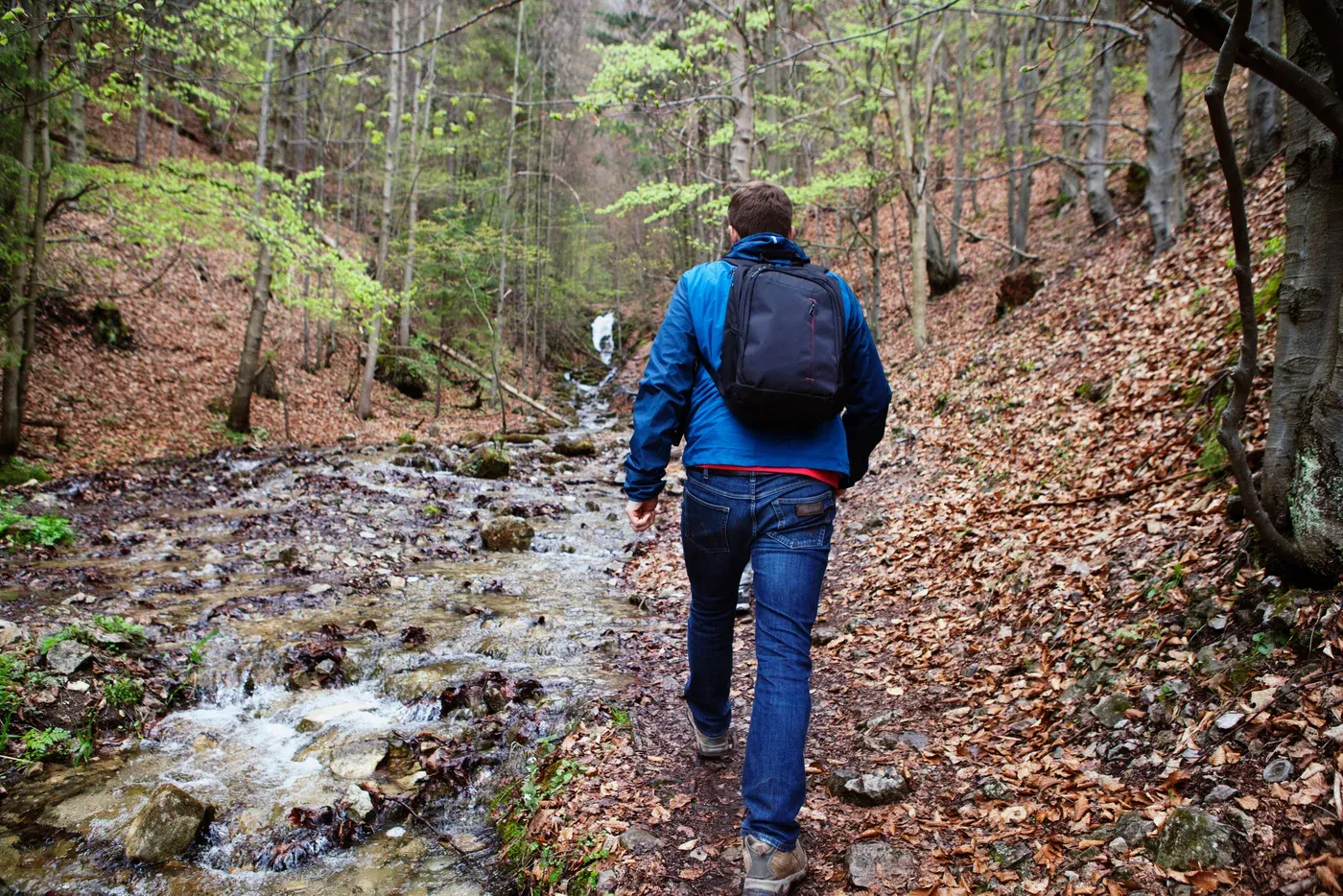
The Toronto hiking trails that give you the best workout are the ones with real elevation and uneven ground: the Mast and Vista trails in Rouge National Urban Park, the natural-surface trails of Crothers Woods in the Don Valley, and Glen Stewart Ravine in the Beach. Turn any of them into training by hiking at a pace that makes you breathe hard on the climbs, going a little longer each week, and adding a loaded backpack once the distance feels easy.
The best Toronto trails for a fitness hike
For fitness, choose trails by climbing and surface, not by scenery. These have the most of both, with distances and ratings from Parks Canada and the City of Toronto:
| Trail | Where | Distance and rating | Fitness value |
|---|---|---|---|
| Mast Trail | Rouge National Urban Park | 2.5 km one way, 1–2 hours, moderate to difficult | The hardest rated trail in the park, on a 200-year-old former logging route |
| Vista Trail | Rouge National Urban Park | 1.5 km one way, 1–2 hours, moderate | Leads to a two-level viewing platform with valley views |
| Monarch Trail | Rouge National Urban Park | 7.4 km loop, 2–3 hours, moderate | Gently rolling, long enough for a proper endurance session |
| Crothers Woods | Don Valley | About 10 km of natural-surface trails | Forest trails the City describes as ideal for hiking or mountain biking |
| Sun Valley Trail | Crothers Woods | 1.3 km loop, beginner, one steep 100 m section | Good for hill repeats on the steep section |
| Glen Stewart Ravine | The Beach | 11-acre ravine with steep wooded slopes | A staircase from Balsam Avenue and a boardwalk along the creek |
| Milkman’s Lane | Rosedale to the Don Valley Brick Works | 300 m gravel lane | Links Rosedale with the valley floor; walk it up and down for repeats |
Rouge distances are from Parks Canada. City trail details are from the City of Toronto trails page.
Longer, flatter options for endurance days
Not every hike needs to be steep. For long, steady sessions where you’re building time on your feet:
- Northeast Trail, Rouge: 10.7 km one way through marsh and fields, rated easy, with seven boardwalks.
- Central Trail, Rouge: 10.5 km one way along two creeks, rated easy.
- Humber River Recreation Trail: one of Toronto’s longest, following the Humber River with many access points. The City notes some sections run on roads.
- Charles Sauriol Conservation Area: a paved trail north of Eglinton and east of the Don Valley Parkway, usable year-round, passing under the “Rainbow Bridge” you see from the highway.
- Earl Bales Park: well-maintained trails through a deciduous forest of tall trees, shaded in summer.
How to turn a hike into a workout
A stroll and a training hike look the same from a distance. The difference is effort and progression. Three levers make a hike count:
- Pace on the climbs. Push hard enough on uphill sections that you can only speak in short sentences, then recover on the flats.
- Time on your feet. Add 10 to 15 minutes to your longest hike each week.
- Load. Once a two-hour hike feels easy, carry a backpack with water and a few kilograms of weight. Start around 5 kg and add 1 to 2 kg every couple of weeks, only if your back and knees feel fine the next day.
A hilly hike with a pack counts towards the CSEP guideline of 150 minutes of moderate to vigorous activity a week, and it does more for your legs than flat walking.
A 6-week trail plan
Do one longer hike on the weekend and one shorter hill session midweek, alongside two strength sessions.
| Week | Weekend hike | Midweek session |
|---|---|---|
| 1 | 75 min, Monarch Trail or Humber River, no pack | 30 min: 5 repeats of Milkman’s Lane or the Sun Valley steep section |
| 2 | 90 min, same route, faster on climbs | 35 min: 6 repeats |
| 3 | 90 min, Mast Trail out and back, 5 kg pack | 35 min: 6 repeats, 5 kg pack |
| 4 | 105 min, Crothers Woods loops, 5 kg pack | 40 min: 8 repeats |
| 5 | 2 hours, Northeast Trail, 6–7 kg pack | 40 min: 8 repeats with pack |
| 6 | 2 hours or more, mixed Rouge trails, 7 kg pack | 30 min easy; recovery week |
If you’re training for a specific trip, such as a multi-day hike, the hiking trip training guide adds the strength work and pack-weight targets to build towards.
Safety on Toronto trails
Toronto’s ravines feel remote quickly. Parks Canada’s advice for the Rouge applies everywhere: stay on marked trails, use caution at road crossings, and know that some trails have steep grades and steps. There’s no food or water on Rouge trails or at the trailheads, so carry what you need. In winter, the Rouge trails are not salted or cleared, and High Park’s unpaved trails aren’t maintained either, so bring traction cleats. Tell someone your route if you’re hiking alone on natural-surface trails, and check for closures before you go; Parks Canada lists the Rouge Marsh Trail as closed at the time of writing.
What to do this week
Pick one trail from the first table and hike it at a steady pace, timing yourself. Repeat the same route in two weeks and compare. If the climbs are your weak point, the Toronto stair workouts build the same muscles in less time. And if you’d like hiking, strength training and eating planned together with a weekly check-in, see weekly coaching.
Questions people also ask
What is the hardest hike in Toronto?
Among trails with official ratings, the Mast Trail in Rouge National Urban Park is the toughest: Parks Canada rates it moderate to difficult, at 2.5 km one way along a former logging route. In the Don Valley, Crothers Woods has steeper natural-surface sections than the paved trails.
Where can I hike inside the city without driving out of Toronto?
The Don Valley trails, including Crothers Woods, the Lower Don and Taylor Creek, and the Humber River Recreation Trail all have access points in the city. Glen Stewart Ravine in the Beach and Milkman's Lane in Rosedale are also inside the city grid.
Can you hike Toronto trails in winter?
Yes, but with care. Parks Canada says Rouge trails are not salted or cleared of ice and snow, and High Park's unpaved trails aren't maintained in winter. Traction cleats and poles help, and paved trails like Charles Sauriol are usable year-round.
Is hiking good exercise for men over 40?
Yes. A hilly hike works your legs and heart, loads your bones, and is easier on the joints than running. Adding a loaded backpack and hills turns it into strength-endurance training.