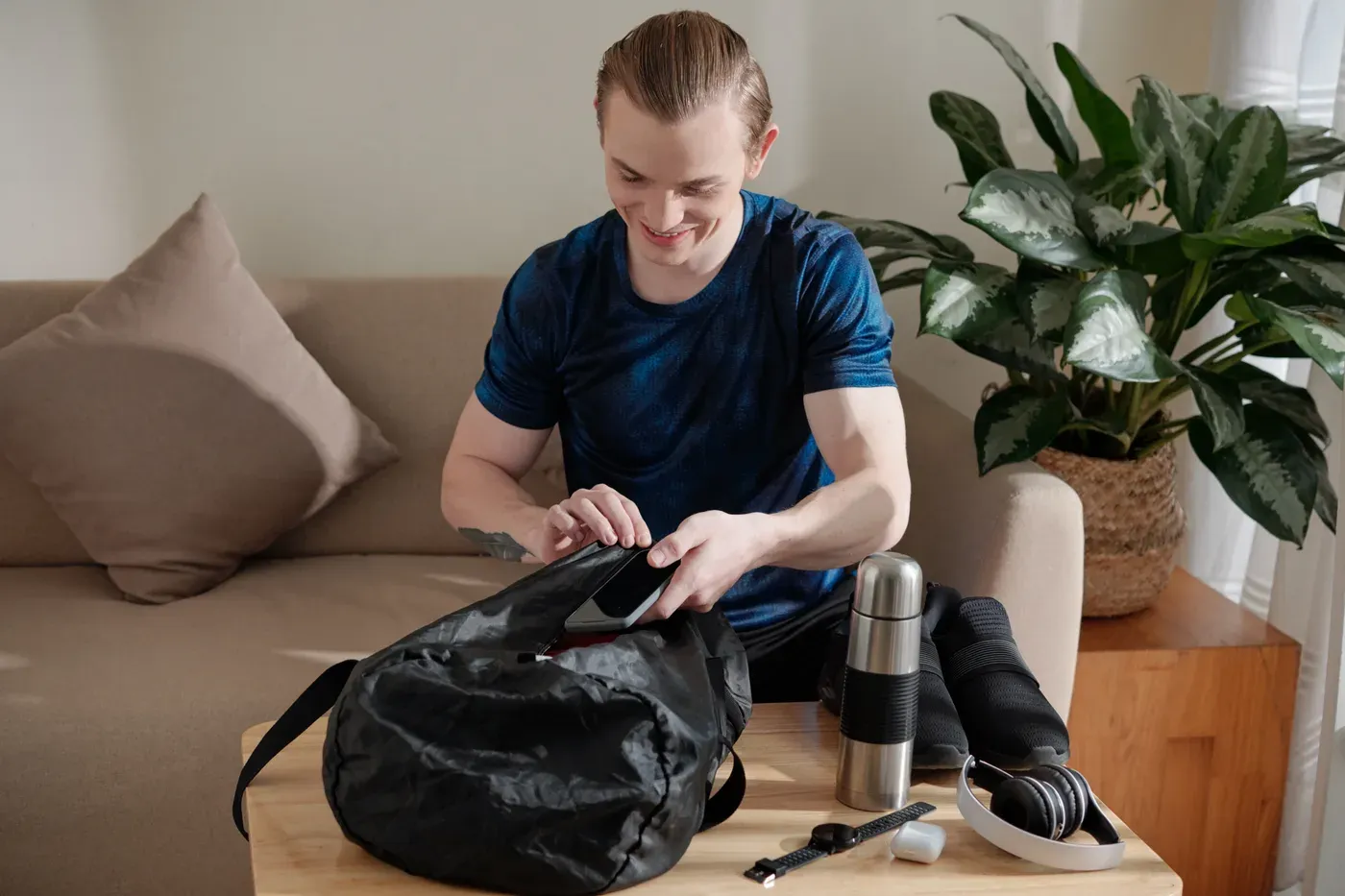
You find time to work out by deciding on a weekly minimum first and then finding slots to fit it, not by waiting for a free hour to appear. For most busy men over 35, the minimum is two 45-minute, three 30-minute or four 20-minute strength sessions a week, plus walking. Audit one week of your calendar, find the slots that are realistically yours, and book them as recurring appointments. The time usually exists; it’s just never been assigned.
Pick a weekly minimum that fits your life
Canada’s 24-hour movement guidelines recommend at least 150 minutes a week of moderate-to-vigorous activity and muscle-strengthening work at least twice a week. Brisk walking counts toward the 150, so the time you need to find for dedicated training is smaller than it sounds.
Choose one of these templates. Each fits roughly 90 minutes of strength training into a week:
| Template | Sessions | Best for | What a session looks like |
|---|---|---|---|
| 2 × 45 min | Two gym visits, e.g. Tuesday and Saturday | Long workdays, free weekend mornings | Full-body: squat or leg press, a press, a row, a hinge, plus two accessories |
| 3 × 30 min | Mon / Wed / Fri, before work or at lunch | Predictable schedules, office gym or nearby gym | Full-body, 4–5 exercises, short rests |
| 4 × 20 min | Most days at home with dumbbells | Parents, remote workers, unpredictable days | Upper/lower split, two exercises supersetted, 3–4 rounds |
The 2-day-a-week workout and the 30-minute gym workout are written programs for the first two templates.
Audit your week in 15 minutes
Before deciding you have no time, look at where it actually goes. Take last week’s calendar and your phone’s screen-time report and mark these:
- Fixed commitments: work hours, commute, kids’ drop-offs and activities.
- Recovery time you need: 7 to 9 hours of sleep. The CSEP guidelines recommend this range, and cutting it to train is a bad trade.
- Soft time: scrolling, TV, waiting during kids’ practices, the second half of a lunch hour, the commute itself.
Most men find two or three blocks of soft time worth 20 to 45 minutes. Common ones:
| Hidden slot | How to use it |
|---|---|
| Kids’ hockey, soccer or swim practice | A gym near the arena, or a brisk walk around the neighbourhood |
| The hour after kids’ bedtime | A 20-minute home session before the couch |
| Lunch hour | 30 minutes in the building or nearby gym, eat at your desk after |
| Commute | Walk or bike part of it; see active commuting in Toronto |
| 30 minutes of morning phone time | Train first, check email after |
Make the time non-negotiable
Finding a slot is half the job. Protecting it is the other half.
- Book it as a recurring meeting with a title that isn’t “gym” if you share your calendar. Colleagues schedule over blank time, not over meetings.
- Pick slots other people are less likely to take. Early mornings and lunch hours tend to survive better than 6 p.m., which competes with work overruns and family dinner.
- Pack the night before. Bag by the door, shoes in it. The decision is already made when you wake up.
- Have a fallback. If the 45-minute gym session dies, do 15 minutes at home: squats, push-ups, band rows, planks. Something keeps the streak; nothing breaks it.
Which time of day works best depends on your body and job as much as your calendar. The best time to work out on a busy schedule compares morning, lunch and evening training.
Make each minute count
When time is short, the program matters more. Three rules keep short sessions effective:
- Lift, don’t wander. Compound movements (squat, hinge, press, row) train more muscle per minute than machines one at a time.
- Superset. Pair two exercises that don’t compete, such as a press and a row, and alternate them with short rests. It shortens the session noticeably without reducing the work.
- Track the numbers. Write down your weights and reps. Progress is what makes 30 minutes worthwhile, and you can’t see it if you don’t record it.
Cardio can mostly live outside the gym: walking meetings, a walk after dinner and weekend activities with the family.
A real week for a busy dad
Here’s one example of fitting the 3 × 30 template around a full-time office job and two kids in sports:
| Day | Slot | What |
|---|---|---|
| Monday | 6:00–6:30 a.m. at home | Dumbbell full-body session |
| Tuesday | Evening practice, 7:00–8:00 p.m. | 45-minute walk around the arena neighbourhood |
| Wednesday | 12:15–12:45 p.m. office gym | Full-body session |
| Thursday | — | Walk after dinner |
| Friday | 6:00–6:30 a.m. at home | Full-body session |
| Saturday | Morning | Family bike ride or hike |
| Sunday | Evening | 10 minutes to book next week’s slots |
No session in that week takes more than an hour, and most of the walking happens while waiting for someone else.
Start this week
Choose your template, find the slots, and book them for the next four weeks before you close this page. If you’ve tried this before and it fell apart by week three, the gap is usually accountability rather than planning; how to stay consistent with working out covers that. And if you’d like someone to build the schedule around your real calendar and adjust it when work blows up, coaching for busy professionals does exactly that.
Questions people also ask
What's the minimum amount of exercise worth doing?
Two strength sessions a week plus regular walking covers the essentials for most men. Canada's guidelines recommend at least 150 minutes of moderate-to-vigorous activity a week and muscle strengthening at least twice a week; brisk walking counts toward the 150.
Are 20-minute workouts worth it?
Yes, if they're focused. Four 20-minute sessions of supersetted strength work add up to as much training as two longer gym visits, and they're easier to fit around work and family.
How do I work out with young kids?
Train before they wake, during a sports practice you'd otherwise sit through, or at home after bedtime. A pair of adjustable dumbbells in the basement removes the commute to the gym, which is often the real time cost.
What if my schedule changes every week?
Plan on Sunday instead of setting fixed days. Look at the coming week, find the slots, and book them. Keep one short at-home session ready for weeks when every slot disappears.