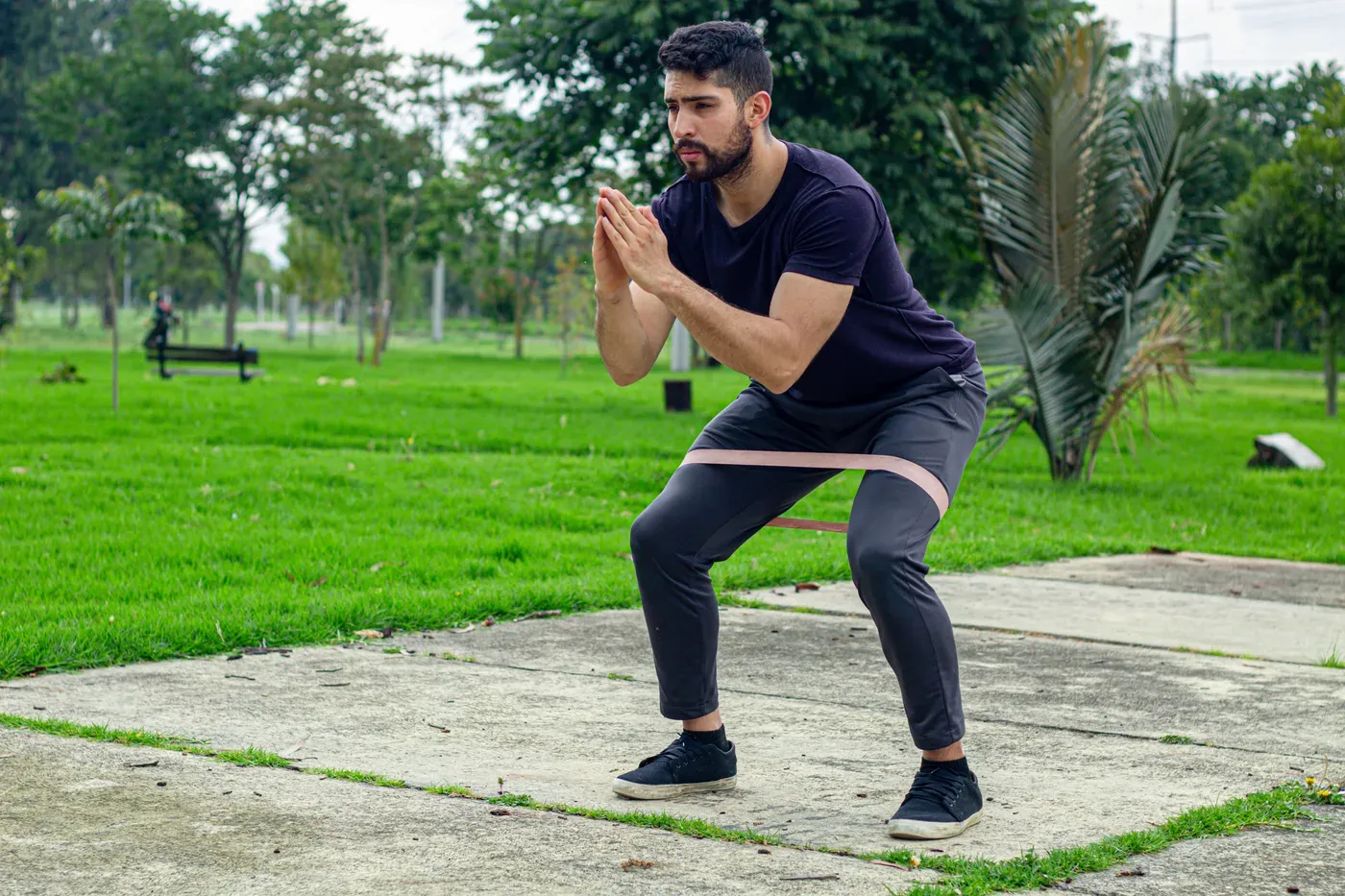
A good military workout for men over 40 trains what soldiers actually need: lifting and carrying awkward loads, short sprints with getting up and down off the ground, and walking with weight. This plan uses the Canadian Armed Forces FORCE evaluation as its blueprint. Three sessions a week cover strength, sprint-and-drop intervals and a sandbag circuit, with a loaded ruck walk on the weekend. You run a mock FORCE test in weeks 4 and 8 to see how you stack up against the published standards.
What the FORCE evaluation measures
The FORCE evaluation is the CAF’s annual fitness test. Its four components and the published minimum standards are:
| Component | Task | Standard |
|---|---|---|
| 20-metre rushes | Two shuttle sprints (20 m there, 20 m back), dropping to the prone position every 10 m, 80 m total | 51 seconds or less |
| Sandbag lift | 30 consecutive lifts of a 20 kg sandbag from the floor to above 1.0 m, alternating between two bags 1.25 m apart | 3 minutes 30 seconds or less |
| Intermittent loaded shuttles | 10 shuttles of 20 m there and back, alternating carrying a 20 kg sandbag and running unloaded, 400 m total | 5 minutes 21 seconds or less |
| Sandbag drag | Carry one 20 kg sandbag and drag at least four on the floor over 20 m without stopping | Completed without stopping |
CFMWS says the components reflect common field tasks such as escaping to cover, sandbag fortification, stretcher carries and vehicle extraction. This plan isn’t an official CAF program; it borrows the test’s structure because it’s a well-designed measure of practical fitness.
Before you start
Fill in the CSEP Get Active Questionnaire. Sprinting and repeated floor-to-standing transitions push your heart rate high; if the questionnaire flags anything, or you have heart disease or high blood pressure, see your doctor first. You’ll also need a 20 kg sandbag (or substitutes), a pull-up bar, a box or bench about 40 cm high, and 20 m of flat ground.
The weekly layout
| Day | Session | Time |
|---|---|---|
| Monday | Strength | 50 min |
| Wednesday | Rushes and intervals | 30 min |
| Friday | Sandbag circuit | 40 min |
| Saturday or Sunday | Ruck walk | 45–75 min |
| Other days | Easy walking | — |
Monday: strength
| Exercise | Sets × reps | Rest | Notes |
|---|---|---|---|
| Sandbag or trap bar deadlift | 4 × 5 | 2–3 min | Builds the floor-to-waist part of the lift |
| Pull-up or band-assisted pull-up | 4 × 3–8 | 2 min | Lat pulldown if you can’t yet |
| Step-up, holding a sandbag in a bear hug | 3 × 8 per leg | 90 s | 40 cm box |
| Push-up | 3 × 10–20 | 90 s | Floor-to-standing strength for rushes |
| Farmer’s carry | 4 × 40 m | 60 s | Heavy dumbbells or kettlebells |
Wednesday: rushes and intervals
| Block | Work | Rest |
|---|---|---|
| Warm-up | 5 min jog or brisk walk, 5 slow get-downs to prone and back up | — |
| Get-up drill | 6 × (lie prone, stand up, jog 10 m) | 30 s |
| Rush intervals | Rounds of 40 m: sprint 10 m, drop prone, up, sprint 10 m, turn, repeat back | 90 s between rounds |
| Finish | 5 min easy walk | — |
Friday: sandbag circuit
Do the circuit as rounds; rest 2 minutes between rounds.
| Exercise | Per round | Notes |
|---|---|---|
| Sandbag lift to a 1.0 m platform | 10 lifts, alternating two bags 1.25 m apart (or one bag, turning) | Hinge and drive with the legs; don’t round to lift |
| Loaded shuttle | 2 × 20 m there and back carrying the bag, alternating with 2 unloaded shuttles | Bear hug or shoulder carry |
| Sled push or backward sandbag drag | 20 m | Stand tall on the drag; walk backward |
| Sandbag carry, bear hug | 40 m |
No platform? Lift the bag onto a sturdy table or the tailgate of a vehicle at about 1.0 m. Check that it can’t move.
Weekend: ruck walk
Walk with a weighted backpack on a varied route: trails in a ravine, hills or stairs. Start with 10 kg (22 lb) for 45 minutes at a brisk walk and build per the table. Use a pack with a hip belt, and wrap weights so nothing shifts.
Eight-week progression
| Week | Rushes (Wednesday) | Sandbag circuit (Friday) | Ruck |
|---|---|---|---|
| 1 | 4 rounds at a jog, step down to prone | 2 rounds, 15 kg bag | 10 kg, 45 min |
| 2 | 5 rounds at a jog | 2 rounds, 20 kg | 10 kg, 50 min |
| 3 | 5 rounds, faster | 3 rounds, 20 kg | 12 kg, 55 min |
| 4 | Mock test: one timed 80 m rush set | Mock test: 30 lifts, then 10 loaded shuttles, timed | Rest or easy walk |
| 5 | 4 rounds, easy | 2 rounds | 10 kg, 45 min |
| 6 | 6 rounds, near sprint | 3 rounds; faster transitions | 14 kg, 60 min |
| 7 | 6 rounds, sprint | 3 rounds, 2 lifts more per round | 15 kg, 70 min |
| 8 | Mock test | Mock test, plus a 20 m drag of a loaded sled or bags | 15 kg, 75 min |
Monday strength progresses separately: add 2.5 to 5 kg to the deadlift and add a rep to pull-ups whenever every set is clean.
Warm-up for every session
Five minutes of easy jogging or brisk walking, then 10 bodyweight squats, 10 glute bridges, 5 inchworms, 10 arm circles each way and 3 easy get-downs to prone. Before the sandbag circuit, add 5 light deadlifts with the bag.
Joint substitutions
| Joint | Change |
|---|---|
| Knees | Rushes at a fast walk; step-ups to a 25 cm box; drag instead of loaded shuttles |
| Lower back | Lift the bag from a raised start (on a step) for the first 3 weeks; bear-hug carries only |
| Shoulders | Push-ups on a bench; lat pulldown instead of pull-ups; avoid shouldering the bag |
| Feet or Achilles | Ruck on flat routes, lighter pack, good boots or trail shoes |
Pain that sharpens during an exercise means stop it for that session. Persistent pain should be assessed by a physiotherapist before you push for test times.
How to tell it’s working
The mock tests are your measure. Compare your week 4 and week 8 times against the published standards, and against each other. Your ruck pace should improve at the same load, and the sandbag should feel more manageable each Friday. If your times are going backwards, you’re likely under-recovered: cut the Wednesday rounds and keep the ruck easy for a week.
Bottom line
Train the tasks, measure against a real standard, and build the load slowly. For a bodyweight-only version of tough, practical training, try the calisthenics workout. If your goal is a police fitness test rather than the military, see police fitness test prep. Printed programs with logs are in the FITWITHIM programs.
Questions people also ask
What is the CAF FORCE test?
The FORCE evaluation is the Canadian Armed Forces' annual fitness test. It has four parts: 20-metre rushes, a 20 kg sandbag lift, intermittent loaded shuttles with a 20 kg sandbag, and a sandbag drag, each designed to reflect common military tasks.
Do I need a sandbag for this workout?
It helps. A training sandbag you fill to 20 kg (44 lb) is inexpensive. Without one, use a 20 kg dumbbell or kettlebell for lifts and carries, and a sled or a weighted backpack for drags and loaded shuttles.
Is a military-style workout safe after 40?
It can be, if you build up gradually. Rushes and loaded shuttles involve getting down and up off the floor quickly, sprinting and carrying, so this plan starts with walking pace and lighter loads. Fill in the CSEP Get Active Questionnaire before starting.
Will this plan prepare me for enrolment?
It trains the same qualities the FORCE evaluation measures, but it is not an official preparation program. If you're applying to the Canadian Armed Forces or Reserves, check current requirements with a recruiter.